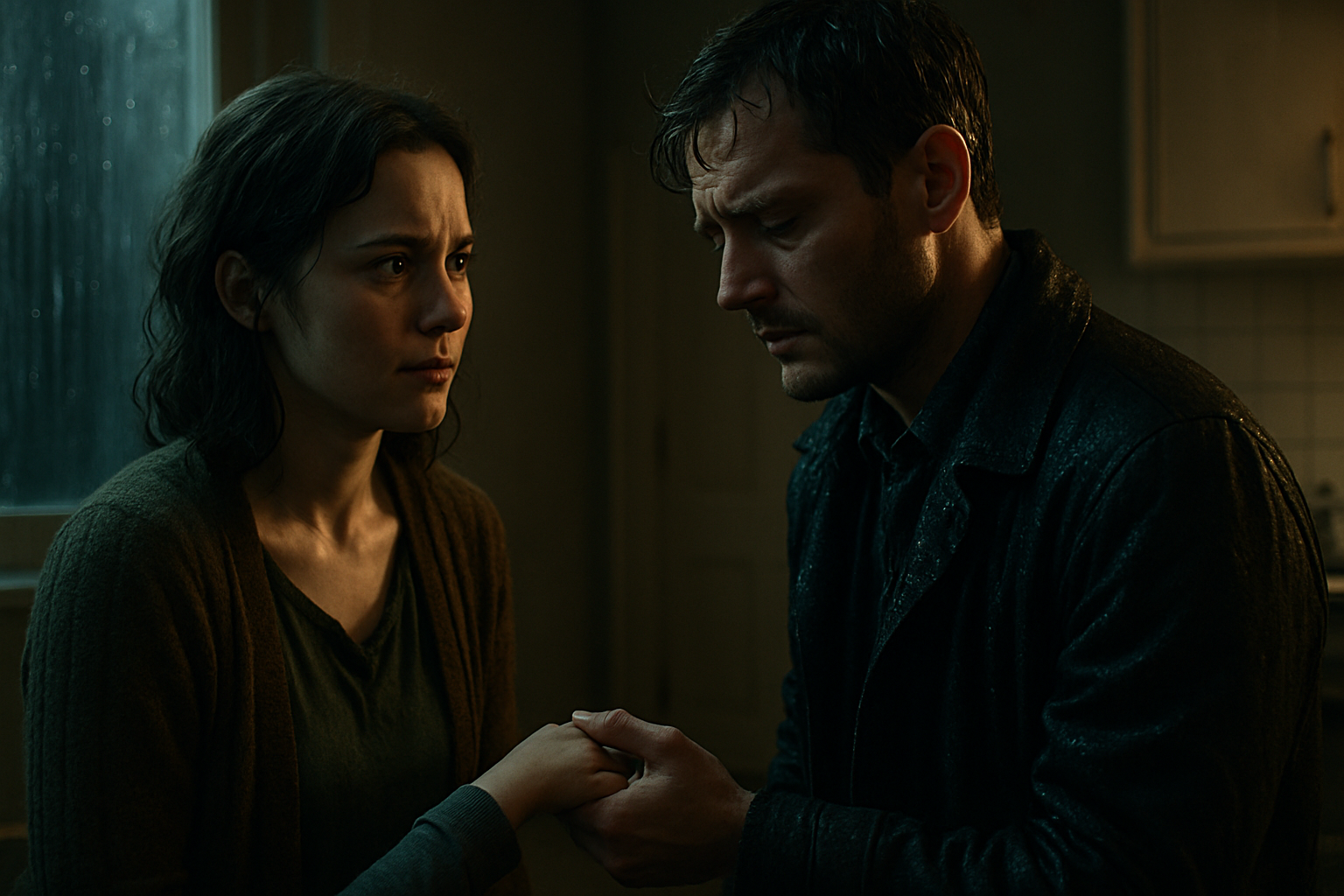
“So I sat on the bathroom floor for an hour. Then I got up. I made an appointment. I applied for help. I told my mother. And I started raising my son.”
He wanted to explain.
His schedule. His handlers. His mother. The loneliness. The women who meant nothing because they were not Elise.
But explanations were not answers.
“I’m sorry,” he said.
Elise looked toward the stairs.
“Be sorry quietly. He doesn’t need another adult making feelings his job.”
Graham stayed one night.
Then three.
Then the reporters found them.
A neighbor’s niece recognized the black SUV outside Elise’s row house and posted a blurry photo. By noon, entertainment accounts had linked it to Graham’s security team. By three, a long-lens camera caught Graham walking Miles home from school.
The resemblance was clear enough to need no confirmation.
By dinner, the internet had named the scandal for them.
SECRET SON.
BILLIONAIRE DAD HIDES FAMILY.
WHO IS ELISE ROWAN?
Elise put her phone face down and pressed both hands flat beside it.
She did not cry.
Graham wished she would. Tears would have given him something to comfort. This calm made him useless.
Miles came downstairs.
“They found us,” he said.
“Yes,” Elise replied.
“Are we leaving?”
Elise glanced at Graham before she could stop herself.
He saw how much she hated needing him.
“I have a secure apartment in Harbor East,” he said. “Private elevator. Garage access. We can stay there until it cools down.”
“Your world,” she said.
“Temporarily.”
“Your world is never temporary. It spreads.”
He had no answer.
She was right.
Miles adjusted his backpack. “Statistically, controlled relocation is safer than emotional resistance.”
Elise stared at him. “You are too young to sound like a crisis consultant.”
“I read.”
They packed for a week.
Graham’s apartment looked like money had tried to imitate comfort and missed. High ceilings. Cold furniture. Windows wide enough to make the harbor look staged. Fresh flowers on the table. A refrigerator stocked with sparkling water, berries, and food no child wanted.
Miles walked through the living room with his hands behind his back.
“This place has no personality.”
“It has good security,” Graham said.
“That’s not the same thing.”
Elise laughed before she could stop herself.
Graham looked at her and wanted, desperately, to hear that sound again.
Life in the apartment became an awkward experiment.
Graham did not know how to live with people without arranging services around them. Elise had no patience for men who mistook money for effort.
He bought Miles a drone, a telescope, a marble chessboard, and a limited-edition space model that cost more than Elise’s first car.
Miles examined them gravely.
“You don’t have to buy me things.”
“I wanted to.”
“Why?”
Because I missed eight birthdays and do not know how to survive the guilt.
But Graham only said, “I thought you’d like them.”
“I already have a chessboard. Marble chips easily.” Miles looked at the drone. “Poor battery life. The telescope is acceptable.”
“Acceptable,” Graham repeated.
“The mirror alignment is manual. You’ll need help.”
“I can help.”
“Do you know how to calibrate a Newtonian reflector?”
Graham hesitated. “No.”
Miles nodded. “I’ll teach you.”
That evening, they sat on the floor with telescope parts spread between them. Graham tightened the wrong screw twice. Miles corrected him without mockery, which somehow felt worse and kinder.
“You don’t have to be perfect,” Miles said after the third apology.
Graham looked at him.
“Is it that obvious?”
“Yes. But I’m eight, not a board of directors.”
The sentence hit him hard.
Later, Miles pointed the telescope toward a break in the clouds.
“Look.”
Graham leaned in and saw a cluster of stars sharpen into impossible clarity.
For one quiet moment, he was not a scandal or a billionaire or a man who had lost nine years. He was a father looking through a telescope his son had taught him to use.
“That’s incredible,” he whispered.
“I know,” Miles said, and laughed.
It was brief. Bright. Unguarded.
Graham stayed bent over the eyepiece because his eyes had begun to burn.
At the door that night, Miles asked, “Are you planning to leave again, or should I emotionally prepare differently this time?”
Graham understood then that children ask questions adults spend whole lives avoiding.
“I don’t know how to answer that yet,” he said.
Miles nodded, disappointment moving over his small face.
“That’s still an answer.”
Four days later came the gala.
Graham’s publicist, Beatrice Lane, insisted they attend. Absence looked like guilt. Silence looked like shame. Elise wanted to tell Beatrice where to put her strategy, but reporters had started shouting Miles’s name outside the building.
Hiding, Miles observed, made them look hunted.
So Elise wore a black dress she already owned and refused the stylist Graham offered. Miles wore a navy blazer Graham had bought without permission. It fit perfectly, which irritated Elise more than if it hadn’t.
The gala glittered under chandeliers like frozen explosions.