Never again.
The recording had been made eleven days before Michael died.
Michael had confronted Grant about missing money from a family business account.
Grant owed nearly half a million dollars.
Michael intended to tell Rachel.
He also planned to remove Grant from anything connected to Noah’s future trust.
The audio ended with Grant saying:
“You take everything away from me and you’ll regret it.”
Michael replied:
“You did this to yourself.”
The official investigation into the crash had found nothing suspicious.
But investigators now reexamined the vehicle records.
Michael had taken his car to Grant’s garage two days before the mountain trip.
Grant had replaced part of the braking system.
The part recovered after the crash had been classified as damaged by impact.
A second examination suggested otherwise.
Someone had tampered with it before the accident.
Grant denied everything.
He denied threatening Michael.
Denied sabotaging the car.
Denied deliberately harming Noah.
Denied planning to steal the trust.
His explanation remained simple.
He was the person who had helped everyone.
The person nobody appreciated.
The person everyone blamed once something went wrong.
But the evidence kept growing.
And then Noah remembered one final thing.
A conversation.
He had heard it months earlier while pretending to sleep in the back seat of Grant’s car.
Grant had been speaking on the phone.
At the time Noah had not understood.
Now he remembered the words.
“If they classify him permanently disabled, I can unlock it.”
Pause.
“No, Rachel has no idea.”
Another pause.
“And the kid does exactly what I tell him.”
The prepaid phone recovered from the garage contained the other half of that conversation.
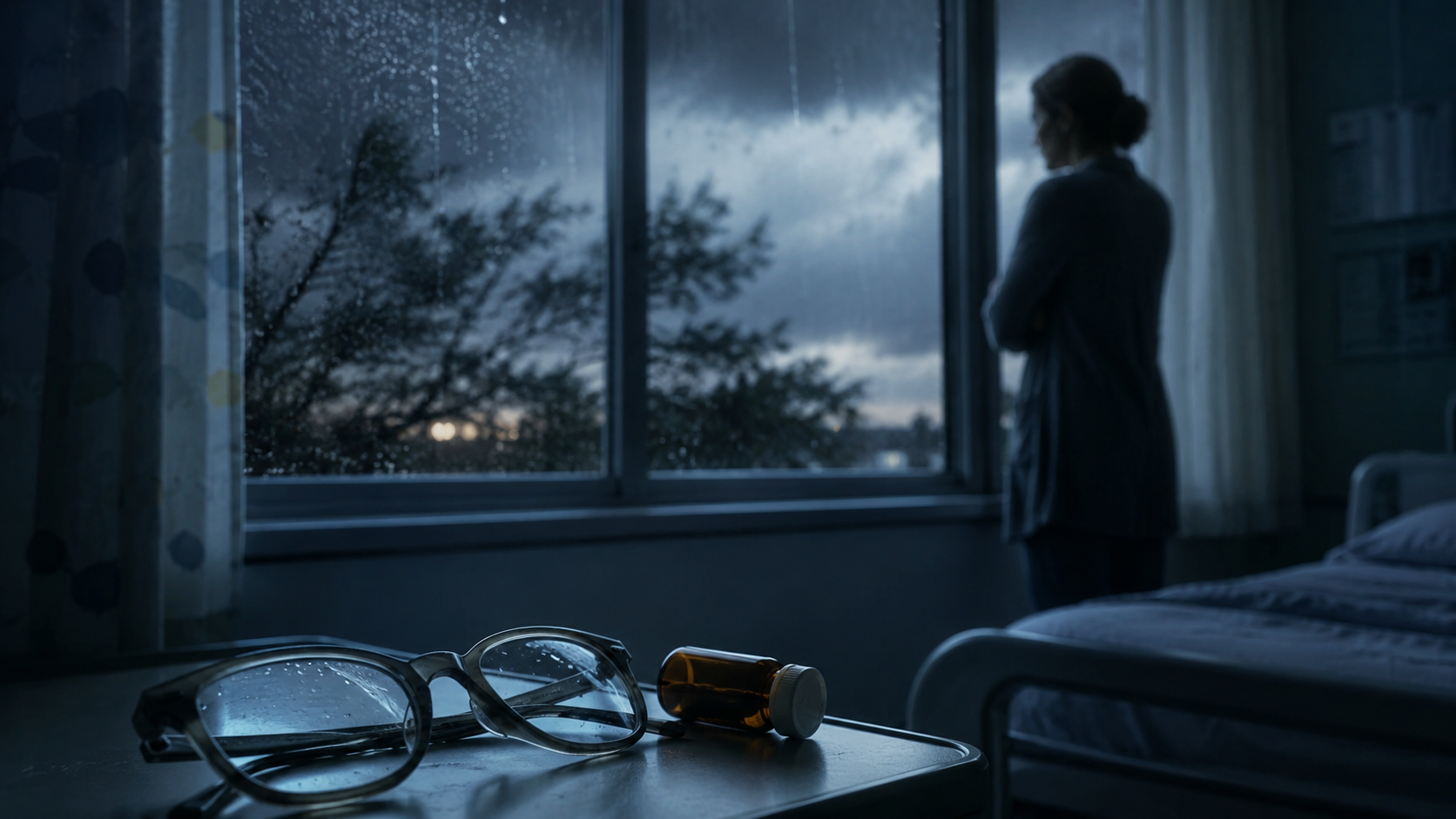
Three weeks later, Noah left the hospital without his gray glasses.
There was no dramatic miracle.
No crowd.
No reporters.
Rachel refused every interview.
Noah’s eyes still required treatment.
Doctors believed repeated misuse of the medication had caused inflammation and severe sensitivity, but they were cautiously optimistic that permanent damage would be limited.
For Noah, the hardest part was not seeing again.
It was being seen.
At school, everyone knew something had happened.
Teachers watched him carefully.
Friends asked questions.
Some children whispered.
Noah hated pity more than anything.
So Mara gave him a challenge.
“Photography.”
He stared at her.
“You want the formerly blind kid to take pictures?”
“Exactly.”
“That’s messed up.”
“Probably.”
He smiled.
Mara handed him an old camera.
“Take one picture every day of something you’re glad you can see.”
At first he thought it was stupid.
Then he tried.
Day one:
His mother asleep on the couch with a book on her chest.
Day two:
Steam rising from spaghetti.
Day three:
A muddy dog jumping against a fence.
Day four:
Orange light beneath a storm cloud.
Day five:
His own reflection in a dark window.
He nearly deleted that one.
Instead he kept it.
Grant’s trial began seven months later.
Rachel attended every day.
Noah attended only once.
When he walked into the courtroom, Grant looked at him.
For the first time since the hospital, their eyes met.
Grant looked older.
Smaller somehow.
Noah had once believed Grant controlled everything.
The house.
The doctors.
His mother.
Whether she lived.
Whether he saw.
Whether he spoke.
Now Grant could not even stand unless a guard allowed it.
Noah understood something then.
Fear could make another person seem enormous.
Truth changed their size.
The prosecutor asked whether Noah wanted to testify.
He did.
Grant’s lawyer spoke gently.
“Your uncle took care of you for many years, correct?”
“Yes.”
“He brought you to school?”
“Yes.”
“He attended your soccer games?”
“Yes.”
“He stayed with you after your father died?”
“Yes.”
“He told you he loved you?”
Noah looked at Grant.
“Yes.”
The lawyer paused.
“Is it possible that some of the things you remember happened differently because you were frightened?”
Noah considered the question.
“No.”
“You’re certain?”
“Yes.”
“How?”
Noah looked around the courtroom.
Then back at Grant.
“Because being afraid was the whole point.”
No one spoke.
Grant looked down.
The jury convicted him on multiple charges involving Noah.
The investigation into Michael’s death lasted longer.
Eleven months after Noah entered St. Catherine’s Hospital, prosecutors added a homicide charge.
Rachel did not celebrate.
There are victories that do not feel like winning.
She sold the house on Hawthorne Street.
She moved with Noah to a small place near the river.
No extra bedroom.
No permanent guest room.
No memories of medicine bottles hidden behind cereal boxes.