No garage.
No locked toolbox.
No Grant.
On the first night, Noah complained that his room was too bright.
Rachel laughed so hard she cried.
“What?”
He grinned.
“You spent a year telling everyone you couldn’t see, and now you’re complaining about the curtains?”
“The sun is aggressive.”
“The sun is the sun.”
“It needs boundaries.”
She threw a pillow at him.
He caught it.
They both stopped.
For an instant Rachel remembered all those months when she believed he could not have seen the pillow coming.
Noah saw the thought cross her face.
“Mom.”
“I’m okay.”
“You’re doing the thing.”
“What thing?”
“The sad face you pretend isn’t a sad face.”
She sat on the edge of his bed.
“I keep thinking about what I missed.”
“You didn’t know.”
“I’m your mother.”
“He was good at lying.”
“So was I, apparently.”
Noah shook his head.
“He taught me.”
Rachel looked at him.
“He made every truth feel dangerous.”
That sentence stayed with her.
Because it explained more than doctors ever could.
Grant had not controlled Noah simply by frightening him.
He had altered the meaning of honesty.
Tell the truth, and Mom dies.
Tell the truth, and doctors hurt you.
Tell the truth, and the family disappears.
Silence becomes love.
Fear becomes responsibility.
Obedience becomes protection.
Once Noah believed those things, Grant barely needed to threaten him anymore.
Noah had become his own prison guard.
Rachel pulled him close.
“You know what truth means now?”
Noah rested his head against her shoulder.
“What?”
“Freedom.”
He thought about it.
“That sounds like something from a terrible inspirational poster.”
Rachel laughed.
“You’re impossible.”
“I can see the poster, though.”
She laughed harder.
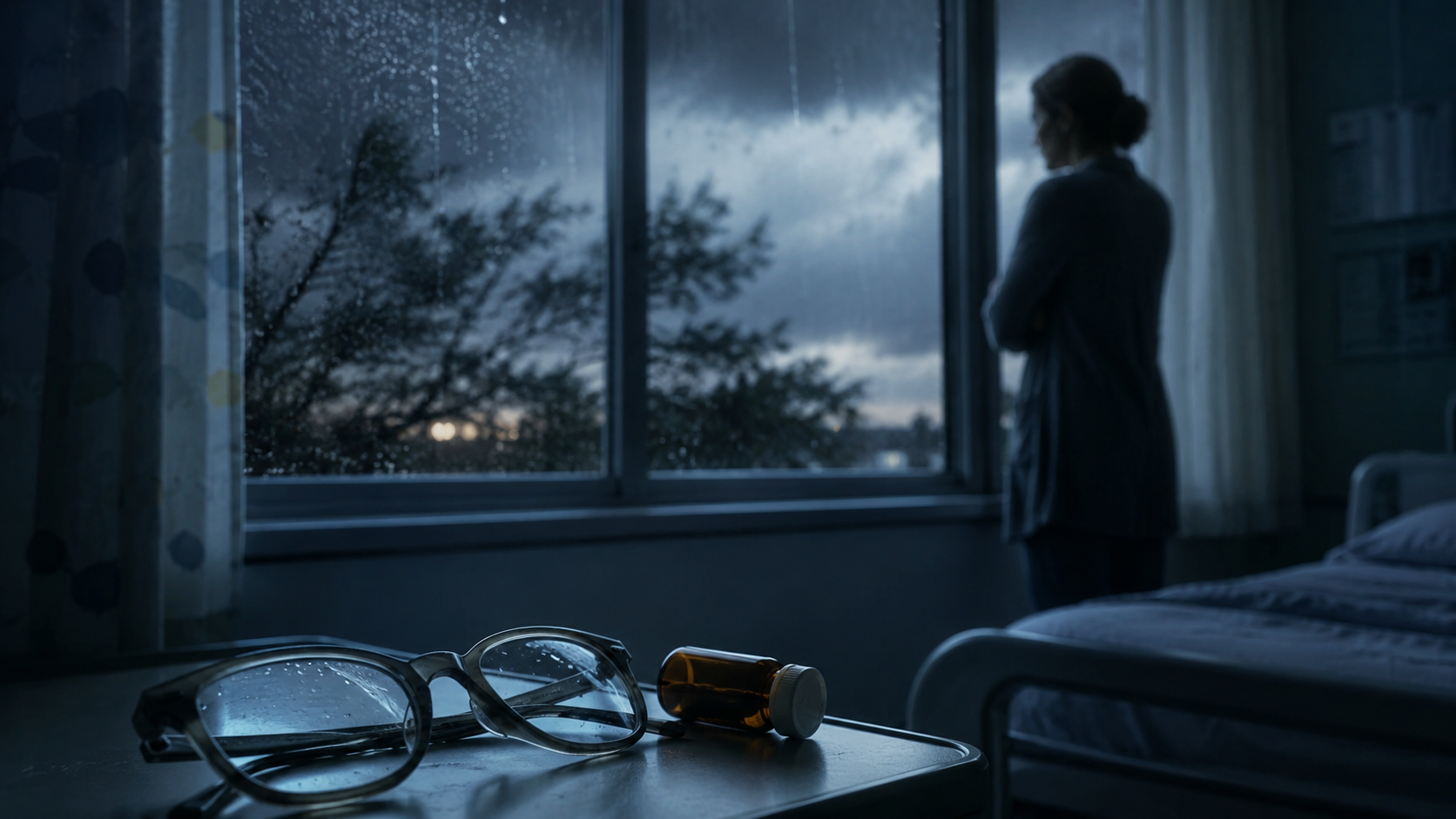
A year after the rainy afternoon at St. Catherine’s, Mara received a package.
Inside was a photograph.
Rain covered a kitchen window.
Individual droplets were perfectly sharp.
Beyond the glass stood Rachel beneath a yellow umbrella, laughing at something outside the frame.
On the back, Noah had written:
Day 365.
Beneath that:
I used to think seeing meant knowing what was in front of you. It doesn’t. Sometimes people look at something every day and still don’t see it.
Mara placed the photograph on her desk.
Months later, when she became a full-time rehabilitation specialist, patients sometimes asked about it.
She never told them Noah’s entire story.
It belonged to him.
She only said a boy had taken it after a difficult year.
But there was one detail Mara never forgot.
The first moment in the hospital.
The rain.
The moving branch.
The tiny motion of Noah’s eyes.
Everyone had been searching for an explanation inside medical scans, neurological tests and laboratory results.
Yet the first real answer had appeared in something almost invisible.
A child looking at the rain.
And being terrified that someone might notice.