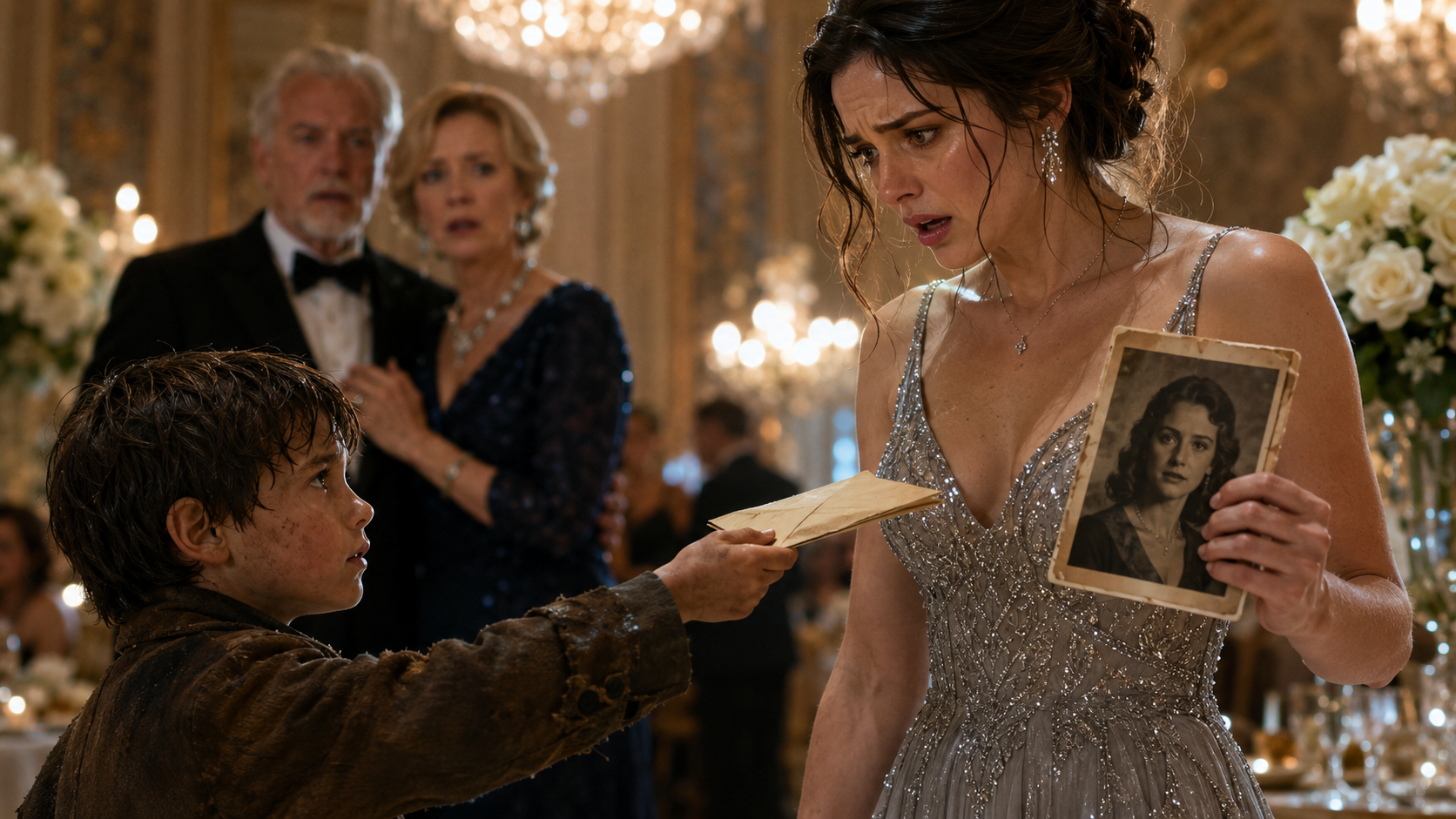
“From poverty. From instability. From a woman who could not care for two infants.”
“My birth mother?”
Vivienne begins to cry quietly.
Malcolm does not.
“Yes,” he says. “Your birth mother. Her name was Maribel Vale. She was nineteen. No husband. No money. No family who would help her. She gave birth in a public hospital and disappeared twice in the first week.”
“That sounds like a woman who needed help.”
“It sounds like a woman who could not provide a future.”
“So you took one of her babies?”
“We adopted you.”
“Did she agree?”
Silence.
Your mother covers her mouth.
Your father looks away.
A new kind of cold moves through you.
“Did she agree?” you ask again.
Malcolm’s voice hardens. “There were papers.”
“That is not what I asked.”
“There are always papers.”
You stare at him.
For the first time, you understand that the law can be used the same way wealthy people use curtains.
Not to protect.
To hide.
“What about Lena?”
Vivienne whispers, “Maribel kept her.”
“Why?”
Your mother’s tears spill freely now.
“Because she came back.”
The corridor is silent.
“What?”
“She came back,” Vivienne says. “Two days after signing. She was hysterical. She said she didn’t understand what she’d done. She said the medication, the exhaustion, the social worker, all of it—she said she wanted both babies.”
Your father cuts in. “She had no legal ground.”
You turn on him.
“She was a teenage mother who had just delivered twins.”
“She signed.”
“And you made sure she stayed poor enough not to fight.”
His expression changes.
There.
There is the truth.
Not guilt.
Not love.
Calculation.
“What did you pay for?” you ask.
Malcolm says nothing.
You step closer.
“What did you pay for?”
Vivienne grips your arm. “Serena, please. We can talk at home.”
You pull away.
“Home is a word people use when they haven’t been stolen.”
Your mother flinches.
Your father’s face darkens.
“You will not speak to your mother like that.”
“My mother?” you say. “Which one?”
He goes still.
The cruelty of it hangs in the air.
You do not take it back.
“Where is Maribel Vale?”
Vivienne looks down.
Your father answers. “Dead.”
“How?”
“Overdose.”
“Did you confirm that?”
He hesitates.
Just once.
But now you are watching every breath.
“You didn’t,” you say.
Vivienne whispers, “We were told.”
“By whom?”
No answer.
“By whom?”
Your father exhales. “A lawyer.”
“What lawyer?”
“This is enough.”
“No. This is the first honest conversation we’ve ever had.”
He steps toward you, lowering his voice.
“Listen carefully. Whatever fantasy that child’s mother put into his head, you are still an Ashford. You have responsibilities. You have a name. You have a position that can be destroyed by reckless accusations.”
You stare at him.
A few hours ago, those words might have worked.
Name. Position. Reputation.
The holy trinity of your childhood.
But now all you can see is Milo’s wet shoes on marble. A hospital bracelet. Your mother’s face draining of color. A twin sister who lived somewhere beyond the Ashford walls and still managed to send her son to you.
“You’re worried about the family name?” you ask.
“I’m worried about you.”
“No,” you say. “You’re worried I’ll open the wrong door.”
Malcolm’s silence is enough.
You walk past him.
He catches your arm.
Not hard enough to hurt.
Hard enough to remind you he believes he still can.
“You leave this building with that boy,” he says quietly, “and you will regret it.”
You look at his hand on your arm.
Then you look at him.
“Take your hand off me.”
Something in your voice makes him release you.
You return to the ballroom.
Nobody applauds now.
The mood has shifted. People can smell scandal the way animals smell smoke. Conversations stop as you pass. Your father’s donors pretend not to stare. Your mother’s friends lower their eyes.
Hannah is near the coatroom with Milo. He is sitting on a velvet bench, holding a plate piled with food. He is eating carefully, like he has been taught not to seem too hungry.
Dr. Ellis, your family physician for twenty years, stands beside him with a concerned expression.
“Is he hurt?” you ask.
“Undernourished, exhausted, possibly feverish,” Dr. Ellis says. “He needs a proper examination.”
Milo looks up quickly.
“I’m not sick.”
You kneel in front of him.
“No one is saying you did anything wrong.”
His shoulders relax a little.
“Are we going to find my mom?”
“Yes.”
The word comes out before you know how.
Before you have a plan.
Before you know whether Lena Vale is alive, dead, hiding, arrested, hospitalized, or already erased the way your family erased everything inconvenient.
But the promise is made.
And for the first time all night, Milo looks almost like a child again.
You stand.