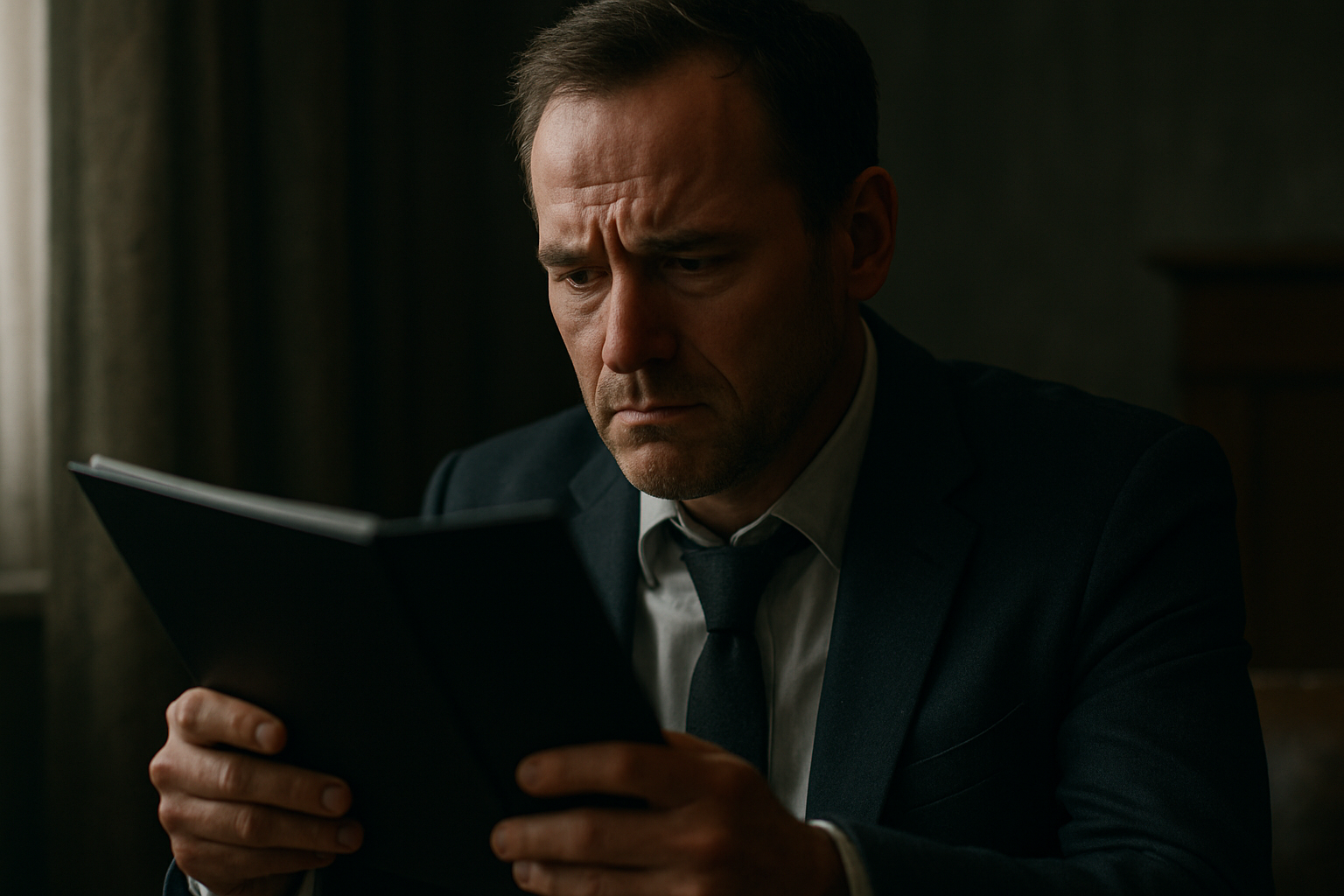
Adrian fought until the doors opened.
Then he did something worse.
He looked at Finn and smiled.
Not warmly.
Not even angrily.
It was a promise. The kind men like him make when they still believe fear travels farther than law.
Finn trembled.
So I stepped into Adrian’s line of sight.
“You don’t get to haunt him,” I said.
Adrian’s smile thinned.
“You can’t protect him forever.”
“No,” I said. “But I can teach him the difference between power and love. That’s something you never learned.”
The elevator doors closed on his face.
Only then did Finn begin to cry.
He cried like a much younger child, with his whole body. The way he had not let himself cry at the gate. Or in the motel. Or on the mornings when he asked if Dad was still mad.
I sank to the hallway floor in my cheap black dress and held him while attorneys stepped around us and strangers looked away with the awkward mercy people offer when they cannot fix what they have seen.
When he quieted, I wiped his cheeks with my sleeve.
“You were brave.”
He shook his head.
“I was scared.”
“Being brave means you were scared and still told the truth.”
He thought about that.
Then he asked, “Are we poor?”
The question was so practical, so Finn, that I nearly smiled through tears.
“We are not what he said we were,” I answered. “And whatever happens with money, we are not alone.”
That afternoon, I hired a new attorney named Anika Rao.
She had silver hair, sharp glasses, and the calmest voice I had ever heard. She listened without interrupting, except to ask questions that told me she understood both money and men who used it as a weapon.
By four o’clock, she had filed emergency motions.
By six, a locksmith had changed the doors at the house Adrian had made into a battlefield.
By seven, Finn and I stood in the foyer with two overnight bags.
Home does not always welcome you back at once.
Sometimes it must be reclaimed one room at a time.
Finn stared at the family portrait on the wall. Adrian had insisted on it two years earlier. In it, he wore a navy suit and rested one hand on my shoulder, the other on Finn’s.
I remembered that day. Adrian had criticized Finn’s smile, then mine, then the photographer’s lighting.
The final picture showed three people arranged like proof of happiness.
“Can we take it down?” Finn asked.
I lifted it from the wall.
The wallpaper behind it was brighter, a pale ghost of what had been covered.
I carried the frame to the garage and placed it face down on a shelf.
Not broken.
Not burned.
Just removed.
When I came back, Finn had folded his blazer carefully over the banister.
Children from chaotic homes often become careful with objects because objects, unlike adults, can sometimes be controlled.
“Do you want dinner?” I asked.
He nodded.
“Can we have pancakes?”
“For dinner?”
He looked guilty for asking.
That broke my heart in a new place.
“Pancakes are an excellent dinner,” I said.
So we made pancakes at 7:43 on a Thursday night in the kitchen where Serena had once opened wine and Adrian had once reviewed investments while ignoring the child building blocks at his feet.
Flour dusted the counter. Batter dripped on the floor.
The first pancake came out shaped like a lopsided moon.
Finn smiled.
Small as it was, it felt like the first honest thing the house had seen in years.
Later, after he fell asleep in my bed with every light on, I walked through the rooms alone.
The house had been Adrian’s favorite symbol. Four bedrooms. White brick. Wide porch. Old maple tree.
He loved watching people admire it.
He had not loved the life inside it unless that life made him look successful.
At midnight, I entered his office.
The drawers were mostly empty. He had cleaned them out before filing for divorce, certain I would never return.
But arrogance leaves residue.
In the bottom drawer, under old clinic brochures, I found a blue folder labeled PROPERTY TAXES.
Inside was a photograph.
Adrian as a boy, maybe ten, standing beside a man who looked like an older, harsher version of him. His father, I guessed. The man’s hand gripped Adrian’s shoulder too tightly.
The boy was smiling without joy.
I sat in Adrian’s chair for a long time.
There are moments when pain asks you to become simple. It wants villains without childhoods. Monsters without mothers. Crimes without causes.
But understanding is not absolution.
Whatever had been done to Adrian as a boy did not excuse what he had done as a man.
I put the photograph back.
The months that followed were not clean or cinematic.
They were paperwork. Therapy appointments. School meetings. Lawyer calls. Locksmith receipts.
They were nights when Finn woke from dreams he could not explain. Mornings when I opened bank statements with shaking hands even after the accounts were frozen.
Fear does not vanish just because evidence appears.
Reporters called after Adrian’s arrest. They called him a prominent medical investor. They called me a wife turned whistleblower.
I hated that phrase.
It sounded clever. Almost glamorous.