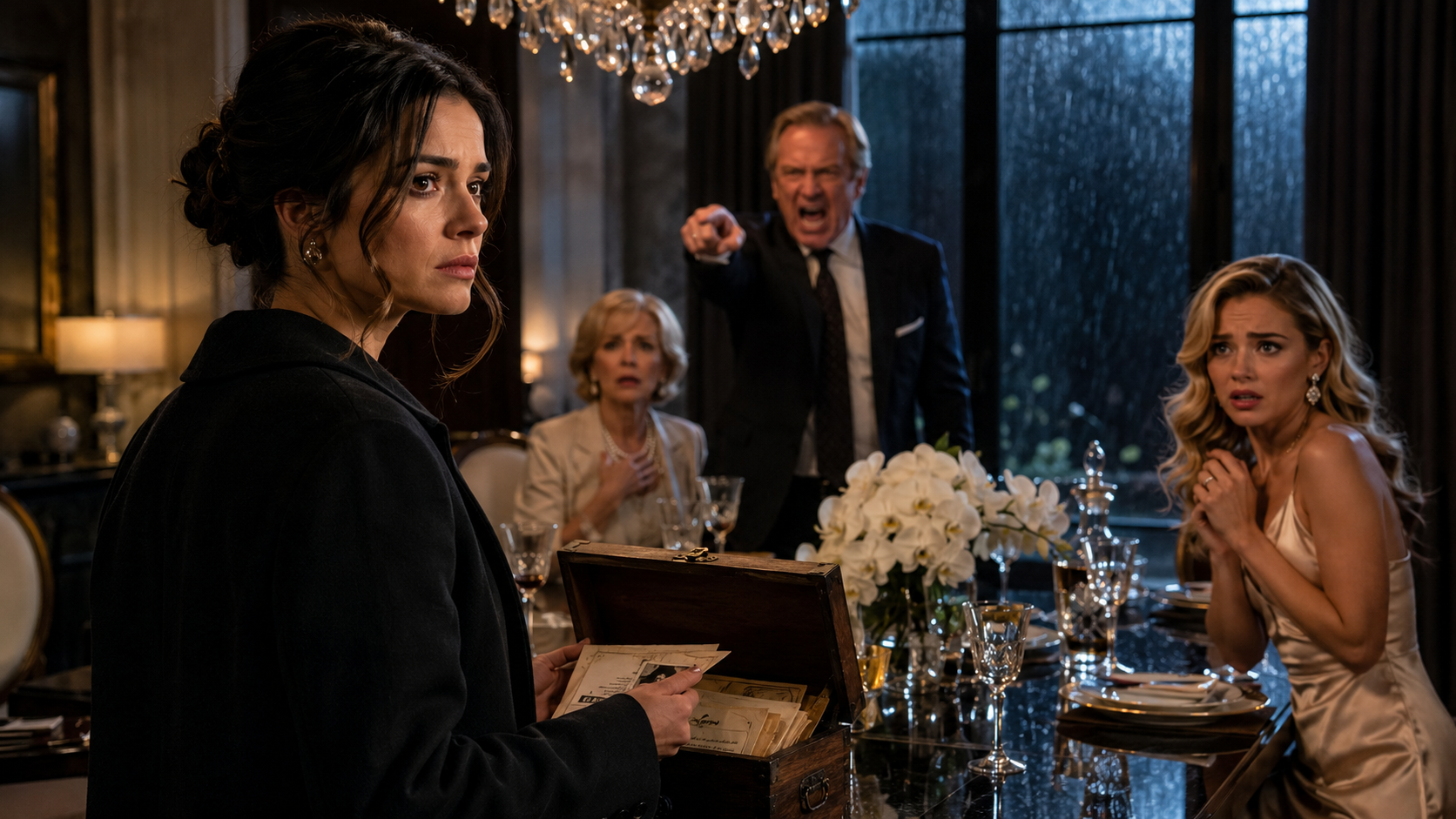
“No. Ancient history is dead. This has been living in every room I entered.”
Clara’s mouth pressed into a thin line.
Mara reached into the box again and removed three bank copies clipped together.
“These are checks from Grandma Ruth. One for my tuition deposit. One for housing. One for supplies. All written to me. All endorsed and deposited into an account I did not control.”
Malcolm’s face darkened.
“That account was a family account.”
Mara nodded slowly.
“That’s what I thought you might say.”
She removed another document.
“So I asked the bank for archived records. It took months. Do you know what those records show?”
No one answered.
Mara looked directly at Clara.
“They show that two weeks after Grandma’s first check cleared, a payment in almost the exact same amount went to Clara’s study-abroad program in Florence.”
Clara’s chair scraped softly against the carpet.
“That is not fair.”
Mara laughed once.
It surprised even her.
Not because anything was funny.
Because the sentence was so perfectly absurd it broke something loose inside her.
“Not fair?”
Clara’s cheeks flushed.
“I didn’t know where the money came from.”
“No,” Mara said. “But you never asked.”
“That is not the same thing.”
“It is when you keep accepting gifts from a hand you refuse to look at.”
Julian turned to Clara.
“Is that true?”
Clara’s eyes flashed at him.
“Don’t start.”
That was new.
Mara saw several relatives notice it too.
Clara had always performed sweetness for audiences. But panic was not sweet. Panic was quick, sharp, and honest.
Malcolm slammed one hand lightly on the table.
“Enough. I will not sit here while you twist old financial decisions into some fantasy of persecution.”
Mara lifted another folder.
“We haven’t reached fantasy yet.”
Her father stared at the folder.
For the first time that evening, his confidence flickered.
Mara saw it.
So did Clara.
So did Irene, who whispered, “Mara, please, there are things you don’t understand.”
Mara faced her mother.
“Then explain them.”
Irene opened her mouth.
Closed it.
Her silence filled the room more completely than any confession could have.
Mara nodded once.
“That’s what I thought.”
She took out a photograph next.
An old one.
Faded around the edges.
Mara at nineteen, standing beside Grandma Ruth on the porch of the lake cottage. Mara was laughing in the picture, head tilted back, hair loose in the wind. She barely recognized that girl. Not because she had changed physically, but because that girl still believed love could be earned by being easy to overlook.
Grandma Ruth had written on the back:
My brave girl, before they taught her to apologize for breathing.
Mara held it for a moment, then placed it on the table.
Her aunt Patricia made a soft sound.
“I remember that summer,” Patricia said. “Ruth was so proud of you. You won that design award.”
Mara looked at her.
“Yes.”
Patricia’s brow furrowed.
“But Malcolm said Clara helped you with the submission.”
Clara looked away.
Mara smiled, but there was no happiness in it.
“Of course he did.”
She opened a small envelope and removed a printed email chain.
“This is from the award committee. Grandma saved it because she was the one who picked me up when I received the certificate. Not Clara. Not Dad. Not Mom.”
Irene began crying quietly.
Mara did not stop.
“I want everyone here to understand something. I am not bringing this up because I need applause for things I did as a teenager. I’m bringing it up because every time I achieved something, the story changed before it reached this family. If I succeeded, Clara helped. If I failed, I was fragile. If Grandma loved me, she was interfering. If I objected, I was jealous.”
Clara stood again.
This time she did not pretend calm.
“You are jealous.”
The words landed hard.
There it was.
The center of the thing.
The label they had pinned to Mara so many times it had started to feel like her name.
Mara looked at her sister.
“No. I was lonely.”
Clara blinked.
Mara continued, voice low.
“I was lonely while sitting at tables full of relatives. I was lonely in family photos where I was standing two feet away from everyone else. I was lonely when Mom corrected my tone but never your cruelty. I was lonely when Dad called your confidence leadership and my sadness weakness. That is not jealousy, Clara. That is what happens when a child grows up beside a favorite and everyone tells her the hunger she feels is envy.”
For a moment, Clara looked almost wounded.
Almost.
Then her face hardened.
“You always do this,” she said. “You make everything sound poetic so people forget how exhausting you are.”
Mara nodded.
“There she is.”
Clara’s nostrils flared.
“What is that supposed to mean?”
“It means you can only stay graceful when nobody challenges the script.”