He learned to guide a motorized chair with shoulder movements.
He learned to eat with adaptive tools.
He learned to sign documents electronically without anyone touching the pen for him.
The first time he sent Nora a message he had typed entirely by himself, it said:
I chose these words without help.
Nora cried for twenty minutes.
Their marriage remained legal while the courts untangled Evangeline’s contracts, payments, and threats. Nora visited Silas twice a week. Sometimes they spoke about the case. Sometimes about Lucia. Sometimes about nothing at all.
One rainy afternoon, Silas watched Nora repair a torn coat sleeve in the rehabilitation center’s common room.
“You can divorce me,” he said.
Nora did not look up. “I know.”
“I will not contest anything.”
“I know.”
“You do not owe me companionship because my mother purchased it.”
Nora set down the coat.
“No,” she said. “I don’t.”
He nodded, trying to hide the hurt.
“But I also do not owe fear a quick decision,” she continued. “For the first time in months, no one is forcing me to choose. I would like to know what I want before I sign anything.”
Silas looked at her.
Nora picked up the needle again. “Besides, someone has to beat you at chess.”
He laughed.
It startled them both.
It was the first sound Nora had heard from him that did not carry shame inside it.
In court, Evangeline’s defense was reputation.
Her lawyers spoke of charity luncheons, church donations, widowed dignity, and a mother’s devotion to an injured son. They described Nora as a desperate opportunist. They described Silas as emotionally damaged. They described Rowan as a troubled but loving brother.
Then Mrs. Rowe testified.
She walked to the stand in a plain gray dress, hands folded tightly in her lap.
She admitted she had stayed silent for years.
She admitted she had watched young women leave Blackthorne House in tears.
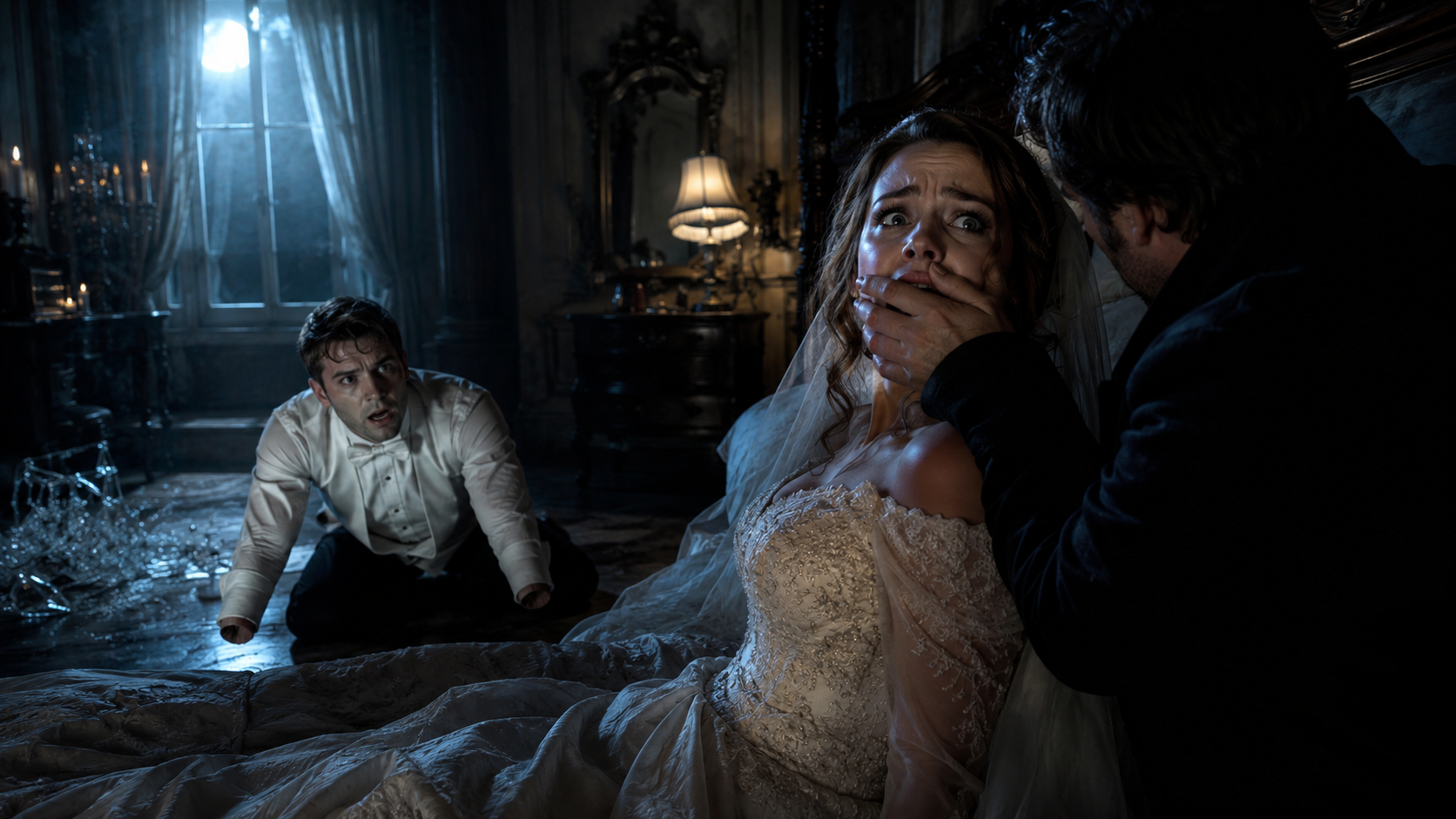
She admitted Evangeline had ordered sedatives placed in Nora’s wedding-night drink.
She admitted Silas had been controlled, neglected, and humiliated inside his own home.
Evangeline stared at her as if hatred alone could kill.
Mrs. Rowe looked back and said, “I was afraid of you for fifteen years. I am still afraid. But I am more ashamed than afraid now.”
That sentence changed the room.
The former glassworks employee who had witnessed Silas’s accident was found in another state. He testified that Rowan shoved Silas during their fight and that Evangeline paid him to disappear.
Doctors testified that Nora had sedatives in her blood.
Therapists testified that Silas had been deliberately denied independence.
Accountants testified that Blackthorne money had been used to silence workers, bribe inspectors, and control legal claims.
Rowan’s attorney tried to suggest Nora had exaggerated everything because she regretted marrying a disabled man.
The prosecutor stood and answered with one sentence.
“A woman who is drugged, locked inside a house, threatened through her mother’s medical care, and cornered by the family that bought her has not consented to anything.”
The jury understood.
Rowan was convicted of assault, unlawful restraint, conspiracy, fraud, and crimes connected to Silas’s injury and the factory cover-up.
Evangeline was convicted of conspiracy, witness intimidation, financial crimes, abuse of a vulnerable adult, and coercion related to Nora and Lucia’s medical care.
At sentencing, Evangeline wore black and held her gold cross.
The judge looked at her for a long time.
“Lady Blackthorne,” he said, “public virtue does not erase private cruelty. You used motherhood as a weapon, wealth as a chain, disability as a prison, and charity as camouflage. This court sees no holiness in that.”
Evangeline’s face tightened.
She received a long sentence.
Rowan received longer.
Blackthorne Glass was placed under outside control. Money was set aside for injured workers, unpaid families, environmental cleanup, and Silas’s care. Nora’s contract was declared void because it had been signed under coercion.
For the first time since she had stepped into Blackthorne House, Nora owed them nothing.
Six months later, Lucia’s health stabilized. She was not cured, but she was alive, receiving treatment through public assistance and a nonprofit medical program that Evangeline could not touch.
Nora rented a narrow storefront between a laundromat and a bakery.
She named it The Second Seam.
At first, people came for hems, buttons, wedding alterations, and winter coats.
Then Silas began helping her design clothing for people whose bodies the world forgot: shirts with magnetic closures, jackets that could be put on without hands, dresses that opened discreetly for medical ports, trousers shaped for wheelchair comfort, coats that did not bunch under seated backs.
Silas became her first consultant.
Then her business partner.
Their marriage changed slowly.