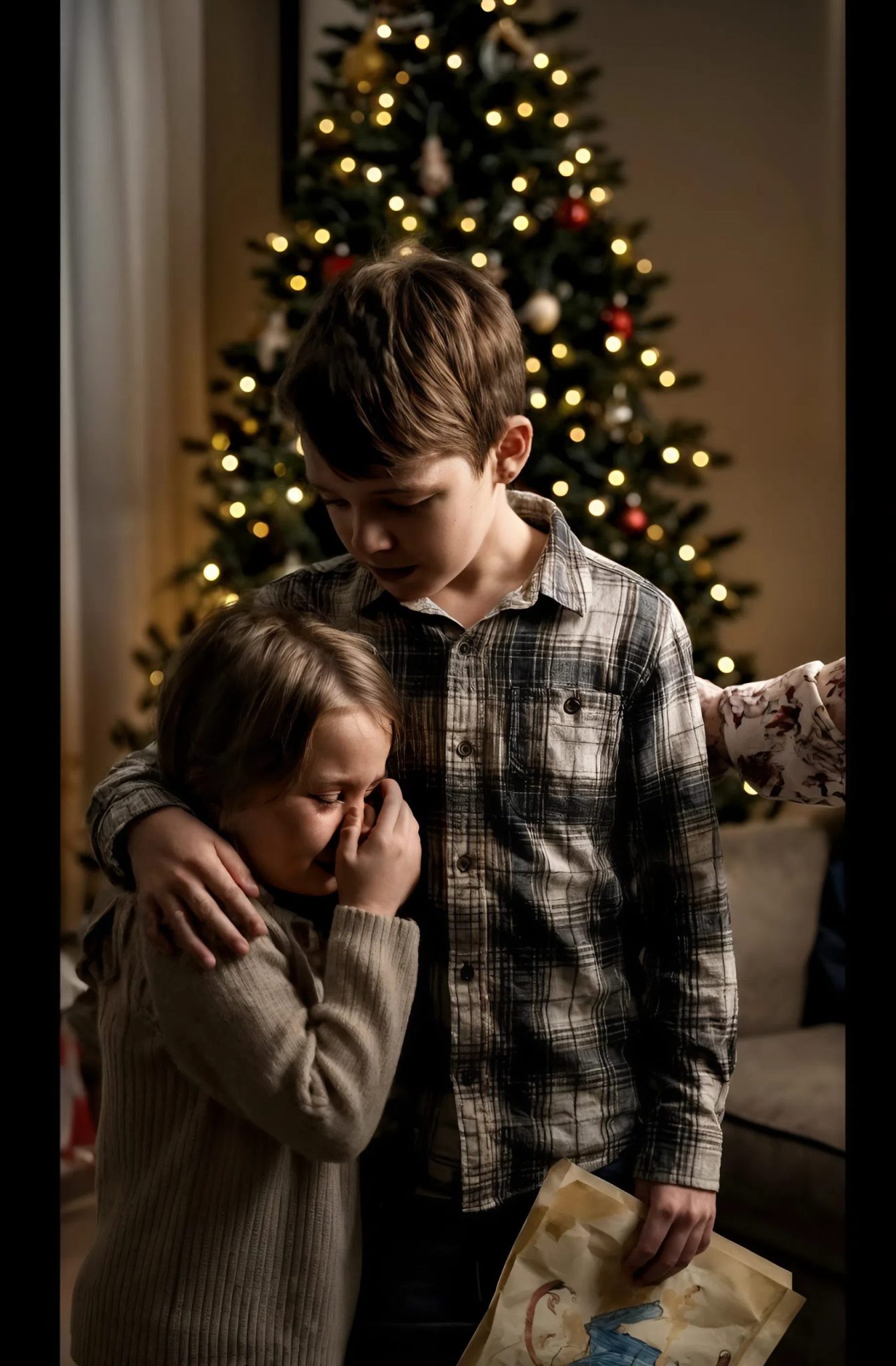
On Christmas Eve, my mother-in-law stared at my six-year-old daughter and coldly said:
‘Children born of a mother’s betrayal have no right to call me grandmother,’ immediately after pushing away a gift my daughter had made with her own hands.
Before I could say anything, my son stood up and uttered a single sentence.
The whole room fell silent.
I swear, no one else in the living room was breathing at that moment. The silence was not just an absence of sound — it was physically palpable: heavy, oppressive, like a void sucking out the oxygen and leaving us all gasping for breath. Even the cheap porcelain angel on my mother-in-law’s mantelpiece — the one that usually ‘looks’ disapprovingly at my shoes — seemed to want to cover its ears.
And me? I stood rooted to the spot. It was as if someone had opened my skull and pulled the power cord out of my brain. My mouth opened, closed, opened again… like a goldfish in the throes of emotional trauma. My six-year-old daughter Mia didn’t understand the words — not completely, not yet — but she understood the intonation. She understood rejection. Her face, usually so bright and steadfast, crumpled like wet paper forgotten in the rain.

And then I felt dizzy. I had to cling to the back of the dining chair so hard that my knuckles turned white. Not because I was afraid of losing consciousness, but because I needed something to hold on to so I wouldn’t fly over the coffee table and lunge at Sharon.
Just a minute ago, everything was so… normal. Well, according to Sharon. That is, excessively festive and deeply, frighteningly fake. Her Christmas tree shone with a maniacal glow. Cinnamon candles fought a losing battle against the smell of burnt ham coming from the kitchen. Presents were piled high in towers — a monument to seasonal consumerism and ostentatious generosity.
And, of course, favouritism flowed like cheap wine at a parents’ meeting.
Bella was the first to approach. Bella is my sister-in-law Melanie’s daughter: a golden child, the chosen one, the favourite of her grandparents. She handed Sharon a mug she had painted at school — a ceramic disaster covered in bumps and glitter that looked like it needed urgent hospital treatment.
Sharon gasped. It was the kind of gasp usually reserved for winning the lottery or religious revelations. She hugged Bella, cooing ecstatically about her ‘artistic genius,’ while my father-in-law Lawrence clapped his hands like an animatronic grandfather programmed for maximum enthusiasm.
Then there was my eldest son, Noah. He gave her a simple, sincere drawing of him and Sharon sledding. She giggled again, smoothed his hair, and said he was ‘such a talented little man.’ And then he was handed a box bigger than his torso. When he tore open the wrapping, there was a radio-controlled car with flashing LED lights and wheels that looked like it could cross Mars.
And then it was Mia’s turn.
She was given a small plastic doll. One of those that lie at the bottom of the bargain bin, with hair so sparse it looks like it has been through a bad bleaching. Sharon smiled at Mia with her thin, forced smile — the one she uses when she would rather be smiling at literally anyone else. But Mia didn’t notice. She was too happy, too innocent. My girl had been working on her drawing for several days. She held it with both hands, her eyes shining, bouncing on her toes like a puppy waiting for a treat.
She held out the drawing.
And the world collapsed.
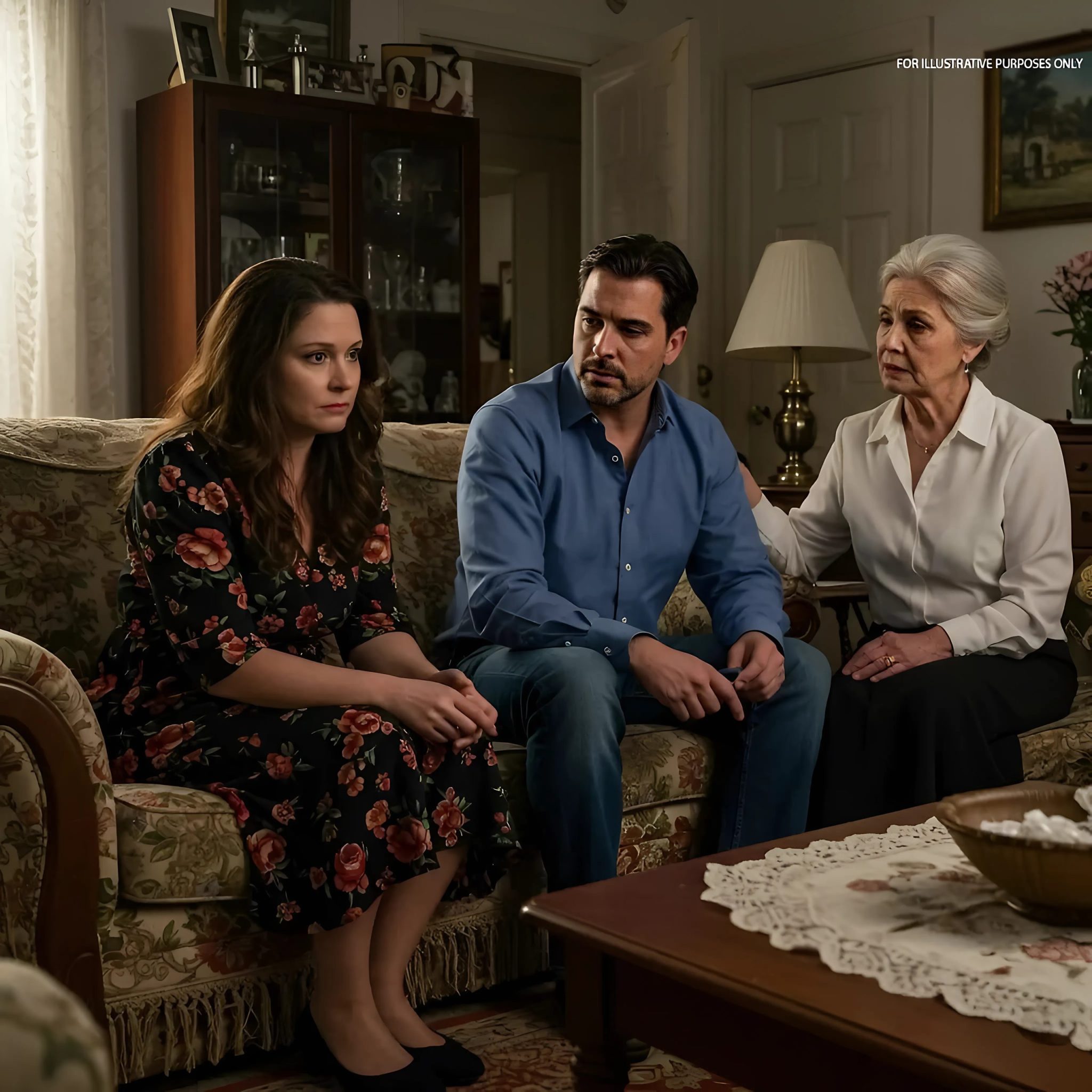
Sharon took the drawing. She looked at it. She looked at Mia. Then she looked at me — her eyes hard, cold as flint. And in the softest and most poisonous tone imaginable, she uttered a phrase that will echo in my head for the rest of my life:
‘Children born of their mother’s betrayal cannot call me grandmother, dear.’
I felt every word like a slap in the face. Mia froze. It was as if this phrase had pressed a ‘stop’ button in her little body. Her lips trembled. Her eyes filled with tears. And then the first tear rolled down her cheek — slow, heavy, the kind a child cries when the universe suddenly ceases to make sense.
Lawrence fidgeted, staring awkwardly at the carpet… but said nothing. Melanie looked as if she wanted to smile, but knew she couldn’t; she settled for a fake look of shock that never quite reached her eyes.
And my husband, Thomas? He looked as if he had been dunked underwater. His eyes were wide open, numb, his whole body frozen. He opened his mouth to speak, but no sound came out — the words stuck in his throat.
And I… I was shaking. Fury rose up my spine in electric, burning waves. I felt it in my teeth, in my fingers, in the frantic pounding of my pulse. But just before I exploded, just before the scream that had been building in my chest burst out, Noah stood up.
My eight-year-old boy. The one they adored. The one who, in their opinion, could not be wrong.