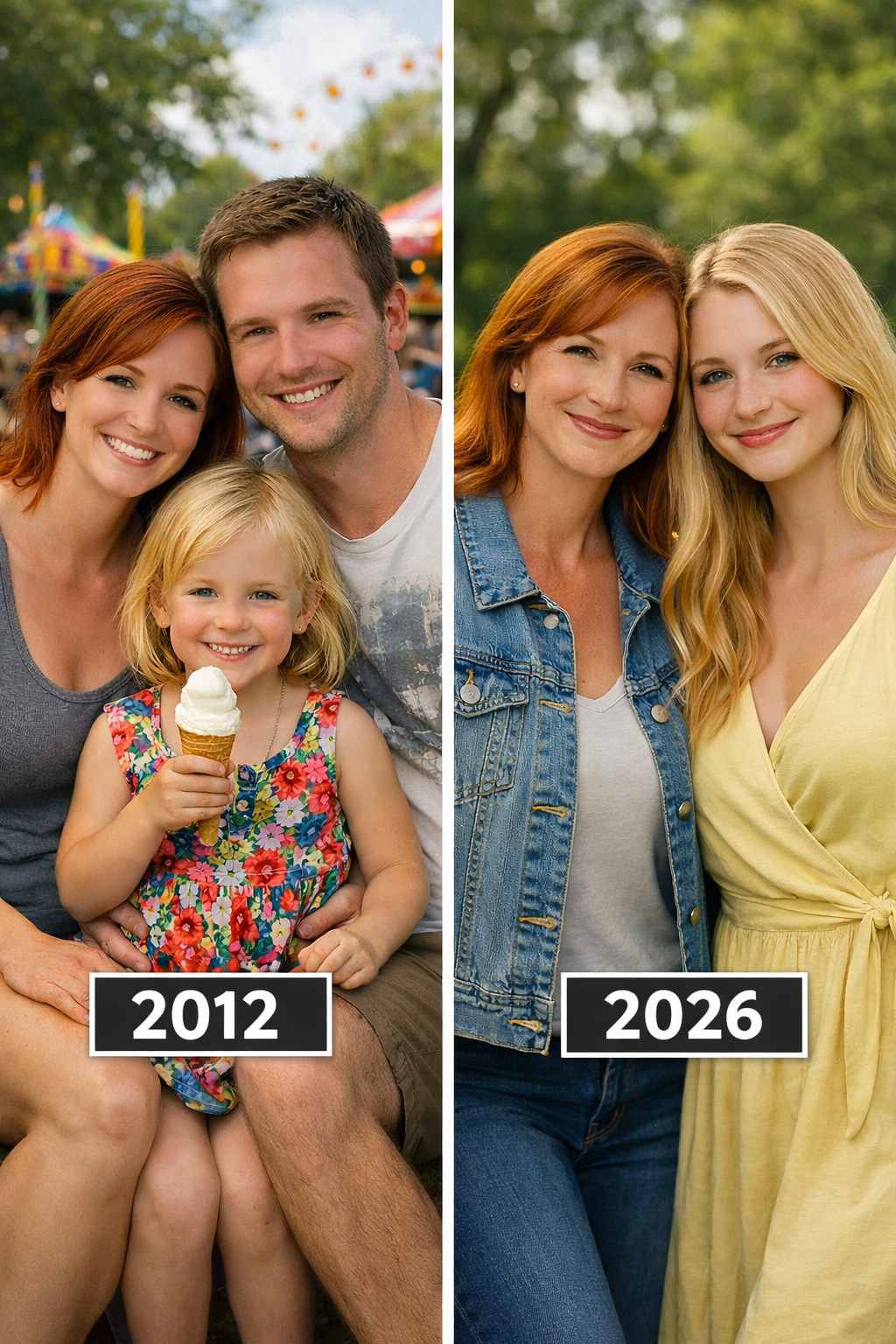
For the first four years of my life, my world was very small.
It was just my father and me in a little yellow house with squeaky floors, a crooked mailbox, and a kitchen that always smelled like coffee and butter. I didn’t know we were missing something because, to me, we were complete.

My father made everything feel magical, even the ordinary things.
He would lift me onto the kitchen counter while he made breakfast and say, “Supervisors sit up high.” Then he’d tap my nose with a flour-dusted finger and grin like I was the best thing that had ever happened to him.
“Are you my boss?” I once asked.
He laughed and kissed my forehead. “You’re my whole world, kiddo. That’s even bigger.”
I didn’t understand then how much love could be packed inside a tired smile.
I only knew that when he came home, the house felt warm again. I knew that when I had nightmares, he sat beside my bed until sunrise, pretending he wasn’t falling asleep himself.
My biological mother had died the day I was born.
Nobody told me that with those exact words when I was little, of course. Adults have a way of folding tragedy into soft sentences, as if gentler language can make grief smaller.
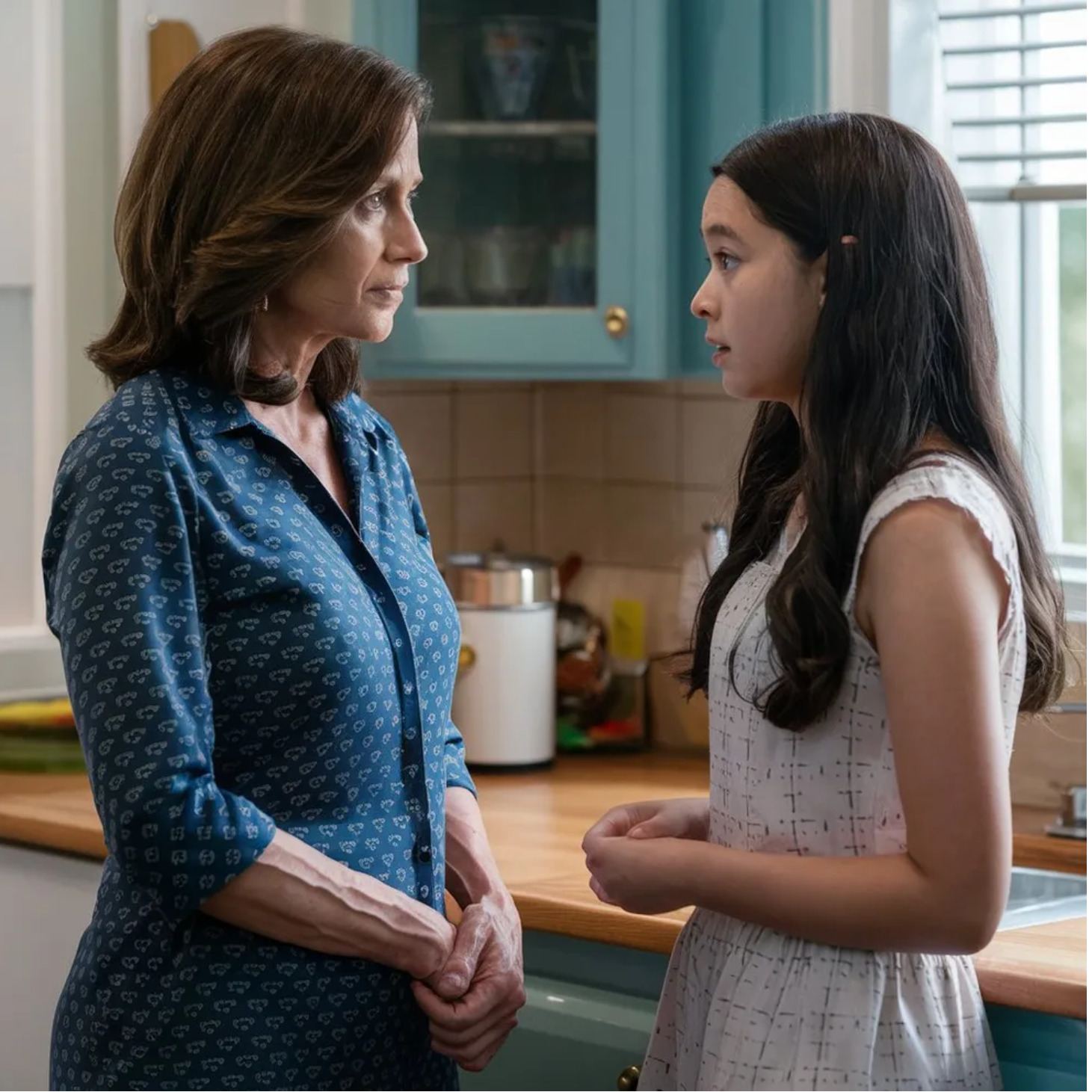
I remember the first time I asked about her.
Dad was standing at the stove flipping pancakes, and I was swinging my legs from the counter. Morning light poured through the window, turning everything gold.
“Did Mommy like pancakes?” I asked.
His hand stopped in midair for just a second. Then he turned the pancake too quickly, and it folded over on itself.
“She loved them,” he said quietly. “But not as much as she would’ve loved you.”
At four years old, I noticed the strange thickness in his voice, but I didn’t understand it.
I just nodded and accepted the answer the way children accept weather. Some things simply were, and that was enough.
For a while, life stayed that way.
There were daycare pickups, bedtime stories, and grocery store trips where I was allowed to choose one sugary cereal if I promised not to tell anybody. Dad tied my shoes badly, packed my lunches unevenly, and once sent me to preschool with two different socks.
He was imperfect in all the ways that made him mine.
Then, a few months after my fourth birthday, he brought Meredith home.
I remember the exact moment because I had been sitting on the floor in the living room, lining up crayons in rainbow order. The front door opened, and Dad stepped inside smiling in that nervous, hopeful way people smile when they care too much about what happens next.
Beside him stood a woman with chestnut hair and kind eyes.
She didn’t tower over me the way most adults did. Instead, she crouched down until her face was level with mine, her knees bent awkwardly on our old rug.
“I’ve heard you’re the boss around here,” she said.
I narrowed my eyes and immediately hid behind Dad’s leg.
He chuckled, embarrassed. “She’s shy.”
But Meredith didn’t reach for me, didn’t force a hug, didn’t tell me I was rude.
She only smiled and said, “That’s okay. I’d be suspicious too if someone walked into my house and claimed she’d heard about me.”
That made me peek out from behind his leg.
There was something different about her. She didn’t talk to me like I was cute or silly. She talked to me like I was a person whose opinion mattered.
The next time she came over, I decided to test her.
I had spent most of the afternoon making a drawing with three stick figures standing under a crooked blue sky. One was me with giant curly scribbles for hair, one was Dad with impossibly long arms, and one was Meredith in a purple dress because I had decided purple felt trustworthy.
When she came in, I marched up to her and held the paper out with both hands.
“For you,” I said seriously. “It’s very important.”
Her expression changed instantly.
She took the drawing like I had handed her something fragile and sacred, not cheap construction paper covered in crayon. “Thank you,” she said. “I promise I’ll keep it safe.”
Dad looked at her, and something passed between them that I couldn’t yet name. Relief, maybe. Gratitude. The first small breath after holding one too long.
After that, Meredith started showing up more often.
She read books in silly voices, let me “help” stir brownie batter, and listened carefully when I explained which stuffed animals were brave and which ones were absolutely not to be trusted. She never acted offended when I chose Dad over her. She seemed to understand that love wasn’t a door you walked through once, but a bridge you crossed slowly.
Six months later, she and Dad got married.
I wore a white dress with itchy lace and carried flower petals in a basket that was far too heavy for how small I was. I remember being more interested in the cake than in the ceremony, but I also remember the way Dad looked at Meredith.
He looked steadier.