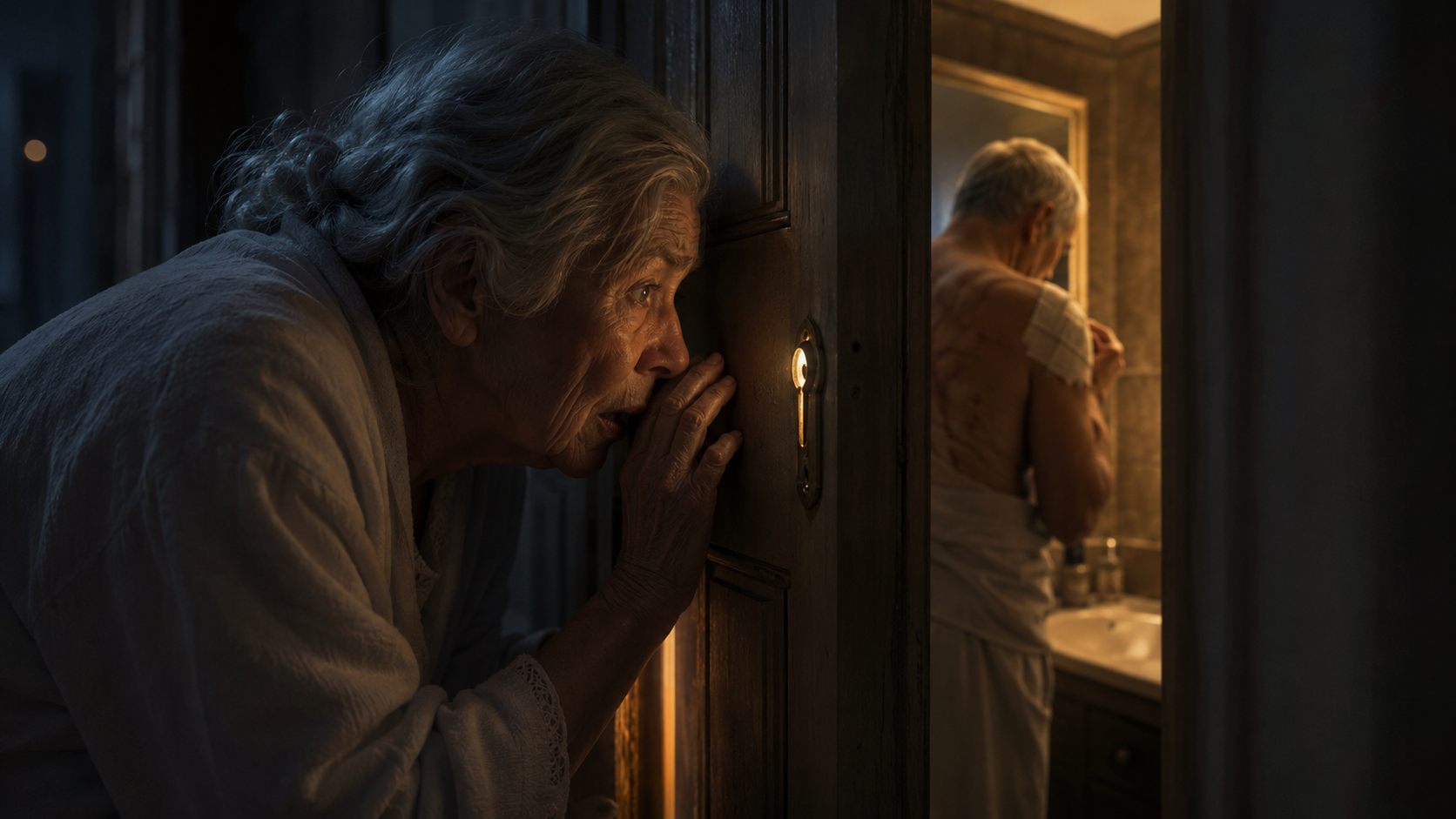
Evelyn looked at those photographs and wondered how many versions of her husband had been hiding in them.
“Tell me,” she said.
Thomas shook his head.
“Tell me enough to begin.”
He stared into the cup.
“My name was not Thomas Hart when I was born.”
Evelyn’s hands tightened around her mug.
“What was it?”
“Adam Vale.”
The name entered the kitchen like a ghost.
“I grew up in a county home in northern Idaho,” he said. “Not an orphanage exactly. Not a school, though they called it one. Children ended up there when no one wanted them, or when courts didn’t know where else to put them. Some of us had parents. Some didn’t. Some were simply inconvenient.”
Evelyn did not interrupt.
Thomas’s voice was flat, almost distant, as if he were reading from a report instead of opening his own chest.
“There was a doctor. A director. Men who came and went. We were told we were being helped. We were told our behavior was being corrected. We were told pain made us honest.”
Evelyn felt cold spread through her.
“How old were you?”
“When it started? Nine.”
She covered her mouth.
Thomas continued because stopping would have been worse.
“They used numbers because names made us too human. Mine was 317B. They burned it here when I was eleven after I tried to run.”
His hand went to the place below his collarbone.
Evelyn felt sick.
“I had a friend there,” he said. “A girl named Lila. She was smaller than me. Brave in a way children should never have to be brave. She stole food. Hid medicine. Lied to protect the younger ones. I thought she was fearless.”
His mouth trembled.
“She wasn’t fearless. She was tired of being afraid.”
“What happened to her?”
Thomas stared toward the window, where dawn had begun turning the glass gray.
“She got me out.”
Evelyn already knew the next part would hurt.
He swallowed.
“There was a fire in the east wing. I don’t know who started it. Maybe Lila. Maybe one of the older boys. Maybe faulty wiring, like the papers later said. Smoke everywhere. Doors locked. Alarms screaming. She found a key ring. Opened the laundry door. Pushed three of us out.”
He stopped.
Evelyn waited.
Thomas pressed both palms flat against the table as if trying to hold himself in the present.
“I went back for her,” he whispered. “I swear I did. But someone grabbed me outside. A firefighter, I think. Or police. I fought. I screamed. I told them there were children inside.”
His face twisted.
“No one listened fast enough.”
Evelyn reached across the table.
This time, he did not pull away.
“Lila died?” she asked.
Thomas nodded once.
The movement was barely visible.
“After the fire, there were investigations. Records disappeared. Names changed. Some people were charged for neglect, not for what they did to us. A woman from a church helped me. She said Adam Vale was dead on paper because the home had listed several children incorrectly. She gave me a choice no child should have to make: keep the name and be dragged through courts and reporters, or become someone else and survive.”
“So you became Thomas Hart.”
“I became nobody first.”
His eyes lifted to hers.
“Then I met you.”
Evelyn closed her eyes.
For decades, she had thought there was a locked room in her marriage because Thomas did not trust her enough.
Now she understood.
There had been a burning building inside him.
And every morning, he woke in it again.
“Why every dawn?” she asked.
Thomas looked ashamed.
“The fire started before dawn. Four-seventeen was the time they wrote in the report. The time the alarm was logged. My body remembers even when I don’t want it to.”
“And the wounds?”
“Old burns tear. Nerve damage. Skin that never healed correctly. I saw doctors when I was young, but they asked questions. Questions meant records. Records meant names. Names meant people finding me.”
“Who?”
He gave a small, exhausted smile.
“The living. The dead. Myself.”
Evelyn stood abruptly.
Thomas flinched.
She hated that he still expected punishment from movement.
“I’m calling Mara,” she said.
“No.”
“She is a medical professional.”
“No.”
“And Simon.”
“No, Evelyn.”
His voice rose, not with authority, but panic.
“They cannot see this.”
“They already live with it.”
He stared at her.
“They live with your silence,” Evelyn said. “They live with the way you step back when they reach for you. They live with the father who loves them from behind glass. You thought you hid the wound, Thomas. You only hid the reason.”
He covered his face.
“I wanted to protect them.”
“I know.”
“I didn’t want their lives stained by mine.”
“They are your children. Their lives are already made of yours.”
That broke something in him.
He bent forward, shoulders shaking, and the sound that came from him was not the cry of an old man. It was the cry of a child who had waited fifty years for someone to open a locked door from the outside.