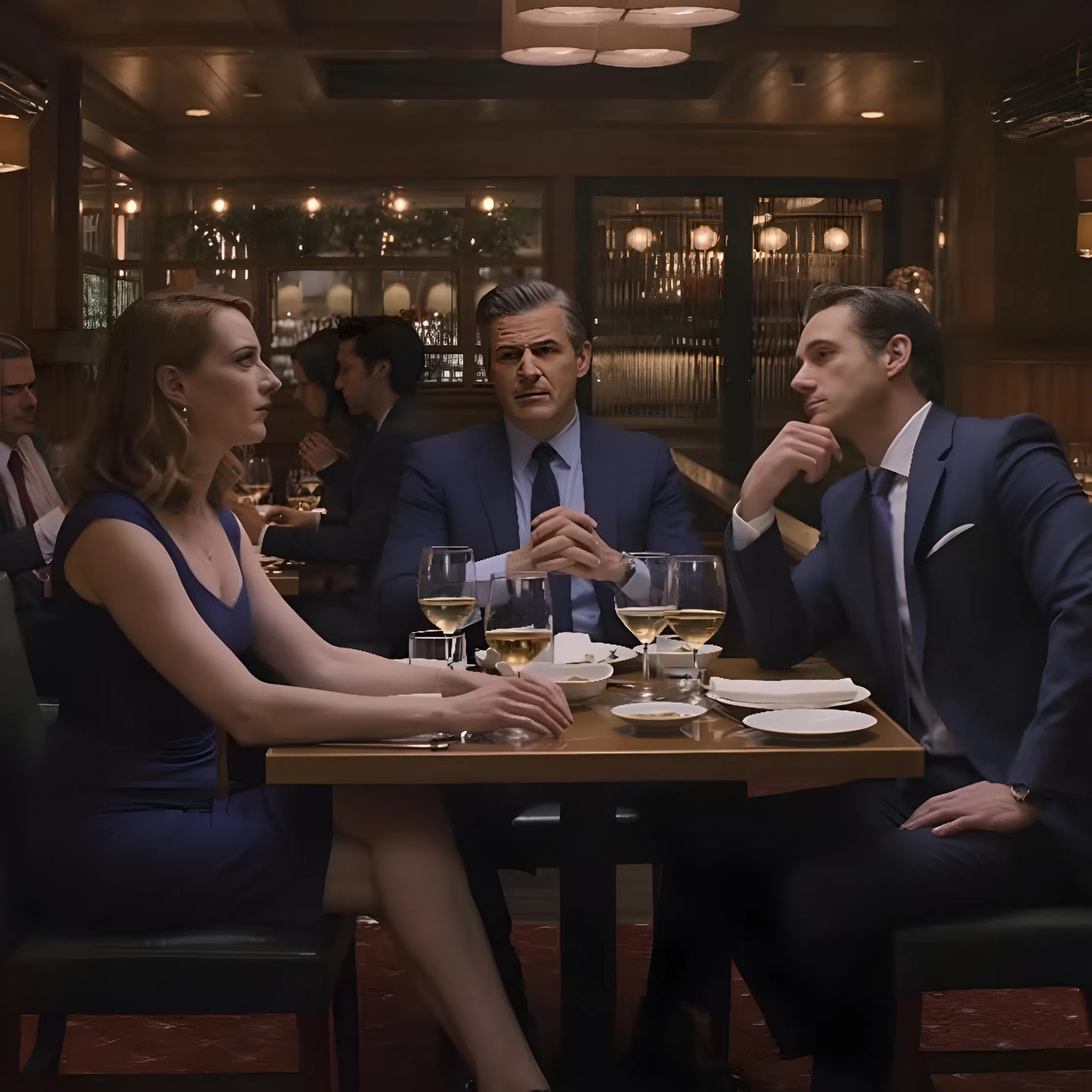
My husband invited me to an important business dinner with a Japanese client. I smiled, nodded, and seemed to play the role of the perfect trophy wife.
But he didn’t know that I understood every word of Japanese.
After I heard what he said about me to this client, everything changed forever.
Let me start from the beginning.
My name is Sarah, and for twelve years I thought I had a good family. Not perfect, but good enough. My husband, David, worked as a senior manager at a technology company in the Bay Area. I worked as a marketing coordinator at a small firm. Nothing spectacular, but I liked it.
We lived in a nice townhouse in Mountain View, took a holiday once a year, and from the outside, we probably looked like we had everything under control.
But somewhere along the way, something changed.
It’s hard for me to pinpoint when it started. Maybe it was David’s last promotion three years ago. Maybe it was a gradual change, so slow that I didn’t notice it until I found myself in a marriage that was completely different from what I had imagined.
David became much busier, more important. At least, that’s what he said. He worked late, travelled to conferences, and when he came home, he was either on the phone or too tired to talk.
Our conversations became monotonous.
‘Did you pick up my clothes from the dry cleaners?’
‘Don’t forget we’re having dinner with the Joneses on Saturday.’
‘Can you take care of the lawn? I don’t have time.’
I convinced myself that this was normal. That’s how it is after a decade of marriage. The passion fades, routine sets in, and you just work to keep things running smoothly.
I suppressed the loneliness that crept in during the evening silence when he locked himself in his home office and I sat alone on the sofa watching television that didn’t really interest me.
About fifteen months ago, I stumbled upon something that changed my path.
I was scrolling through my phone on a sleepless night when an ad for a free trial of a language app caught my eye: Japanese.
I had studied it for one semester in college when I was a completely different person with different dreams. I liked it—all the complexity, the elegance, the whole new way it opened up to view the world around me. But then I met David, got married, started working, and that dream ended up in a box labelled “unacceptable youthful pursuits”.
That night, lying in bed while David snored beside me, I installed the app out of curiosity. Just to see if I remembered anything.
I remembered more than I expected.
The hiragana characters came back easily, then katakana. Within a few weeks, I was hooked. Every night, while David worked late or watched the financial news, I sat at the kitchen table with my headphones on, studying my lessons.
I subscribed to a podcast for language learners. I started watching Japanese dramas with subtitles, and then without them.
I didn’t tell David. Not because I was hiding it, but because I had learned not to share things that he would reject.
Three years ago, I mentioned that I wanted to take a photography course.
He laughed — not cruelly, but in a way that made me feel small.
‘Sarah, you take pictures with your iPhone like everyone else. You don’t need a course for that. Besides, when would you even find the time?’
I learned to keep my interests secret. It was easier that way.
So Japanese became my secret, my inner world. And I was really good at it. Very good.
I practised every day, sometimes for two or three hours. I communicated with tutors on italki, joined online groups, and even started reading simple novels.
After a year, I could understand spoken Japanese quite freely. Not perfectly, but enough to follow films, understand podcasts, and have decent conversations with tutors.
It was like recovering a part of myself that I had buried. Every new word, every grammatical construction gave me the feeling that I was still capable of growth, that I was still more than just David’s wife.
One day in late September, David came home earlier than usual.
He looked really excited, full of a vitality I hadn’t seen in months.
‘Sarah, great news,’ he said, untying his tie as he walked into the kitchen where I was preparing dinner. ‘We’re close to finalising a partnership with a Japanese technology company. This could be huge for us. The CEO is coming next week, and I’m taking him to dinner at Hashiri. You should come with us.’
I looked up from the vegetables I was chopping.
‘To a business dinner?’ I asked.
‘Yes,’ he replied. ‘Tanaka-san specifically asked if I was married. In Japanese business culture, they want to know that you’re stable and family-oriented. It’s a good move.’
He opened the fridge and took out a beer.

‘You just need to look good, smile and be charming. You know, the usual.’
Something in his words bothered me, but I put it aside.
‘Sure, sure. When?’ I asked.