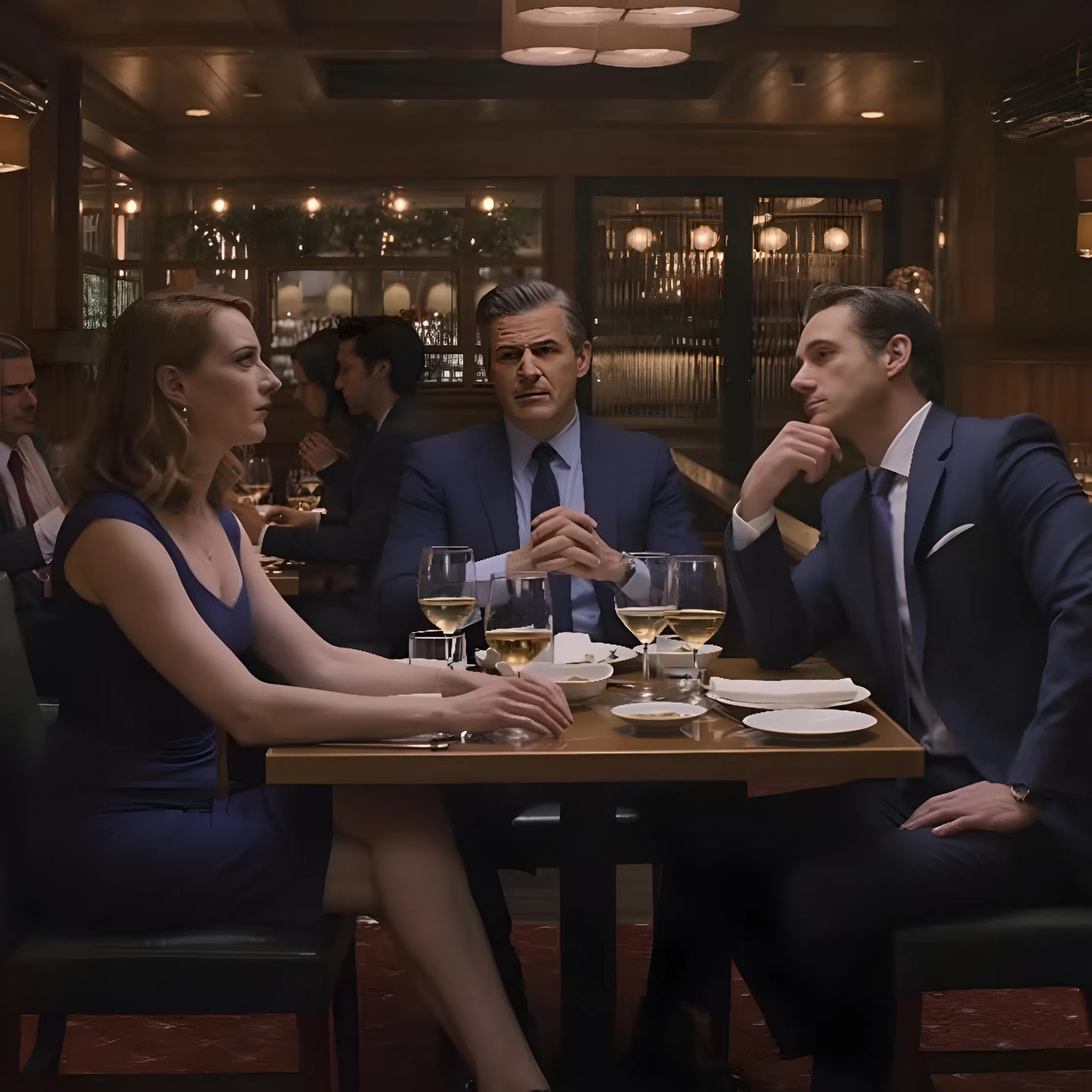
‘Next Thursday. At seven in the evening,’ he said. ‘Wear a dark blue dress, the one with sleeves. Conservative but elegant. And Sarah,’ he looked at me directly for the first time, “Tanaka doesn’t speak much English. I’ll be speaking mostly Japanese. You’ll probably be bored, but just smile, okay?”
My heart skipped a beat.
‘You speak Japanese?’ I asked.
‘I learned it while working with our Tokyo office over the years,’ he replied proudly. ‘I’m quite fluent now. It’s one of the reasons I’m being considered for the vice-president position. Not many executives here can negotiate in Japanese.’
He didn’t ask if I spoke it. He didn’t consider whether I had any interest or knowledge of it.
Why should he? In his mind, I was just a wife who would smile and look pretty while important people talked.
I went back to the chopping board, my hands moving automatically.
‘That sounds wonderful, darling. I’ll be there,’ I said.
After he left the room, I stayed at the table, my head spinning.
An opportunity had just fallen into my lap—a chance to really understand the conversation David considered private. To hear how he really spoke. How he presented himself. How he talked about our life when he thought I couldn’t understand.

Part of me felt guilty for even thinking about it. But a much bigger part of me, the part that was becoming increasingly invisible in my own marriage, wanted to know.
Needed to know.
The week dragged on like a month.
I spent every free minute refreshing my business Japanese vocabulary, practising polite phrases so that I would be ready to follow a professional conversation. I didn’t know what to expect. Maybe nothing important. Maybe I was worrying too much, being paranoid, looking for problems that didn’t exist.
Thursday arrived.
I wore a dark blue dress, as requested, complemented by modest heels and simple jewellery. I looked at myself in the mirror and saw exactly what David wanted: a presentable wife who would not embarrass him in front of important clients.
The restaurant was in San Francisco. Modern and expensive, it was a place with a waiting list of several months. David used his company account to reserve a table.
We arrived fifteen minutes early. David checked his appearance in his phone camera and straightened his already straight tie.
‘Remember,’ he said as we entered, ‘just be pleasant. Don’t try to participate in business conversation. If Tanaka-san addresses you in English, keep your answers short. We need him to focus on the partnership, not get distracted by small talk.’

I nodded, swallowing the bitter taste in my mouth.
Tanaka-san was already seated when we arrived. He stood up to greet us—a man in his fifties with silver-rimmed glasses and an impeccably tailored suit.
David bowed slightly. I followed suit.
They exchanged greetings in Japanese—formally and politely. I smiled, looking lost, and sat down in the chair David pulled out for me.
The conversation began in English. Superficial pleasantries. Tanaka praised the choice of restaurant, mentioned his hotel, asked if this was the first time we had hosted international partners. His English was actually quite good—better than David had expected—just a little accented.
Then, when the menu arrived, they naturally switched to Japanese.
I must admit, David was impressive. He spoke smoothly and confidently, clearly comfortable with the language. They discussed business forecasts, market expansion strategies, technical specifications. I only partially understood the technical jargon, but I grasped the structure and tone.
I sat quietly, sipping water, smiling occasionally when they looked my way, playing my part.
Then Tanaka turned slightly towards me and asked in Japanese what I did for a living.
David answered for me, not even giving me a chance to pretend I didn’t understand.
In Japanese, he said, ‘Oh, Sarah works in marketing, but it’s just a small company. Nothing serious. More of a hobby to keep her busy. She mainly takes care of our home.’

I kept a neutral expression on my face, but inside something stung.
A hobby.
I had worked in marketing for fifteen years, managed successful campaigns, built client relationships, but he had just characterised my entire career as a way to keep myself ‘busy.’
Tanaka nodded politely and did not pursue the matter.
Dinner continued. Several dishes were brought out, each one artfully arranged. I ate slowly, remained quiet, and listened.
I listened carefully, though.
David changed in Japanese—he became more aggressive, more boastful. He exaggerated his role in projects, took credit for team efforts, and presented himself as more central to the company’s success than he really was. It wasn’t crazy, but it was noticeable.
David, speaking Japanese, was a slightly inflated version of the David I knew.
Then the conversation changed.
Tanaka mentioned working life, the importance of family support in demanding careers.