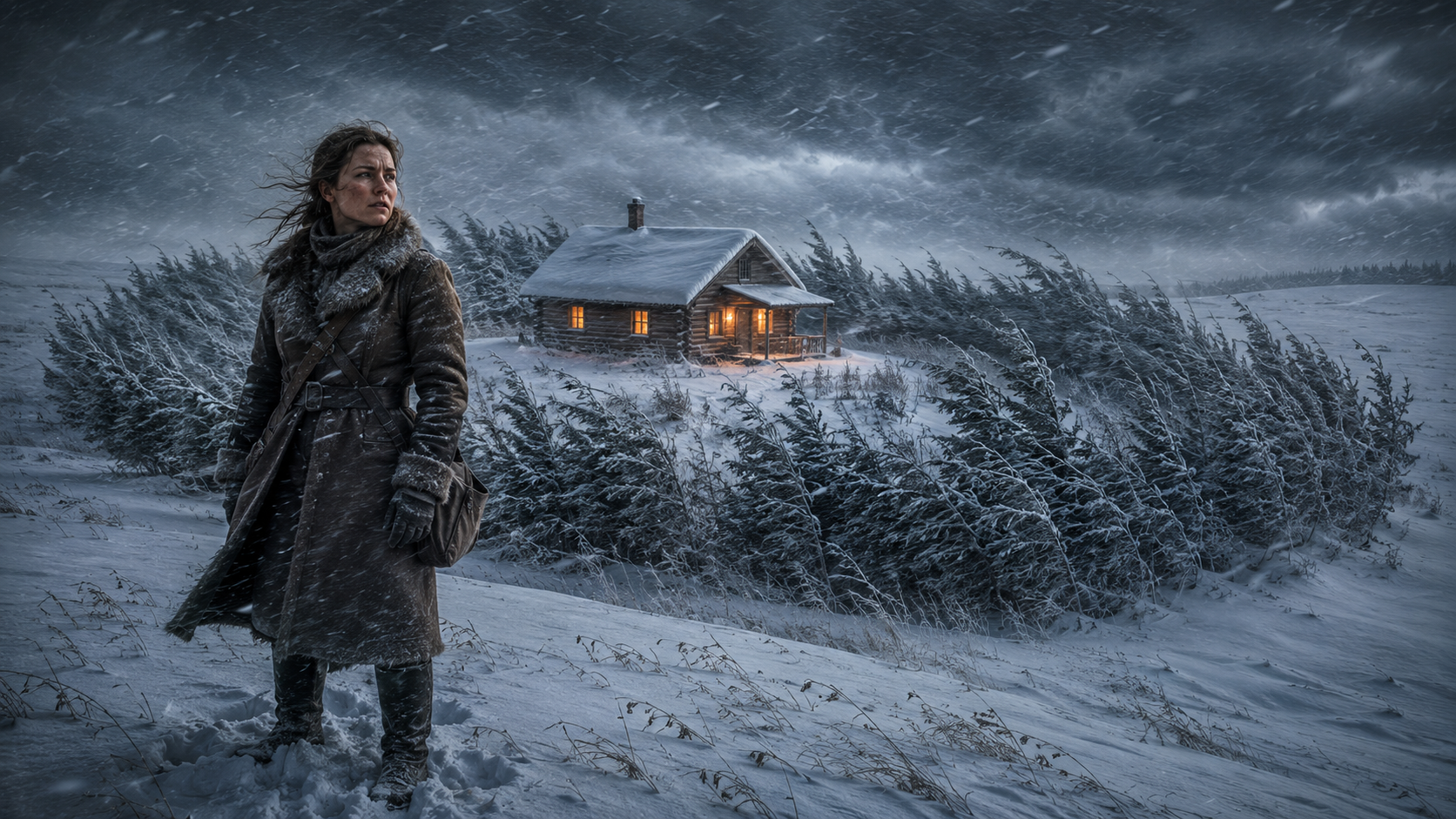
“Then why refuse?”
Clara pressed the sapling into the ground and packed soil around its roots with both hands. “Because I do not know yet what your help costs.”
Elias took off his hat. The gesture was small and old-fashioned. On another day it might have been charming.
Today it only made her tired.
“I work for Rourke,” he said. “That does not mean I belong to him.”
Clara looked past him, toward the immense pastureland rolling north of her cabin. Silas Rourke owned most of what the eye could reach. He owned the road through the hollow, the grazing rights above the creek, half the timber slope, the general store building, and enough debts in enough pockets that even men who hated him tipped their hats when he passed.
“No,” Clara said. “But many things that work for him end up acting owned.”
Elias accepted the blow without flinching.
“Fair enough.”
He put his hat back on and returned to the road.
Clara watched him go only long enough to know he was not looking back.
Then she planted another tree.
Three days later, Silas Rourke came himself.
He arrived in a polished black carriage with brass fittings that flashed under the cold spring sun. His driver stayed in the seat. Rourke stepped down as though the mud had been placed there by mistake and ought to apologize.
He was sixty, maybe more, but carried his age like a weapon. Silver hair, clean gloves, long coat, eyes pale and assessing. He looked at Clara’s cabin, then at the newly planted trees, then at Clara herself.
“Mrs. Voss,” he said. “You have been busy.”
“Yes.”
“May I come in?”
“No.”
His brows rose.
Clara held the door half-open and filled the space with her body. She was not a delicate woman. Grief had thinned her face but not her frame. Winter had taken sleep, softness, and two fingernails. It had not taken her size.
Rourke noticed.
Men always did.
“I will be brief,” he said.
“That would be kind.”
He smiled as though she had made a joke he could afford to forgive. “I am prepared to make a generous offer on this property.”
“It is not for sale.”
“You should hear the amount.”
“No amount changes the answer.”
“Everyone says that before the right amount.”
“Then everyone has been speaking to you. I have not.”
His smile cooled.
The wind moved around them, tugging at the loose strands of Clara’s hair. Behind Rourke, the young trees trembled in their shallow holes, each one no taller than a child.
“This land is poorly situated for a woman alone,” he said. “The rise takes the weather first. The road drifts over. The well is exposed. Your late husband chose a hard place to leave you.”
“My husband did not leave me the land. My father did.”
“Then your father chose poorly.”
“My father chose what he could pay for.”
“And now you can choose better.”
Clara’s hand tightened on the doorframe. “By selling to you.”
“By allowing a more practical man to fold this useless strip into a working range.”
There it was.
Not land.
A strip.
Not her home.
A problem to be folded away.
Rourke looked toward the saplings again. “And I see you are already spending money trying to tame weather.”
“I am slowing it.”
“With sticks?”
“With time.”
“Time is expensive.”
“So are mistakes.”
His eyes narrowed. “You believe I have made one?”
Clara glanced toward his broad north fields. They were open and scraped bare, the grass grazed low, the old brush lines cut out years before. She had seen the way snow raced across them in winter, nothing to slow it, nothing to hold it, nothing to soften the force before it struck her cabin.
“I believe you removed every living thing that stood between this hill and the ridge,” she said.
For a moment, Rourke’s face emptied.
Then he laughed softly.
“My dear Mrs. Voss, cattle cannot graze through trees.”
“No. But wind can gallop through absence.”
The driver shifted in his seat.
Rourke heard it. His smile returned, sharper this time.
“You have spirit,” he said. “The valley admires spirit in small amounts.”
“I will try not to spend it all at once.”
He stepped closer.
Clara did not step back.
“Winter nearly killed you,” he said quietly. “Everyone knows it. You burned furniture in February. You traded your wedding silver for flour. Ward found you half-frozen at the pump after the big drift.”
Clara’s cheeks burned, but she kept her eyes steady.
“That is not a reason to sell.”
“No,” Rourke said. “It is a reason to stop pretending endurance is the same as wisdom.”
She felt the words land because they were not entirely false.
Last winter had not made her brave. It had made her desperate. She had survived by inches, by stubbornness, by luck, by the mercy of a neighbor who found her before the cold finished its work.
But survival had taught her what comfort never would.
She knew where the wind struck first.
She knew where snow piled deepest.