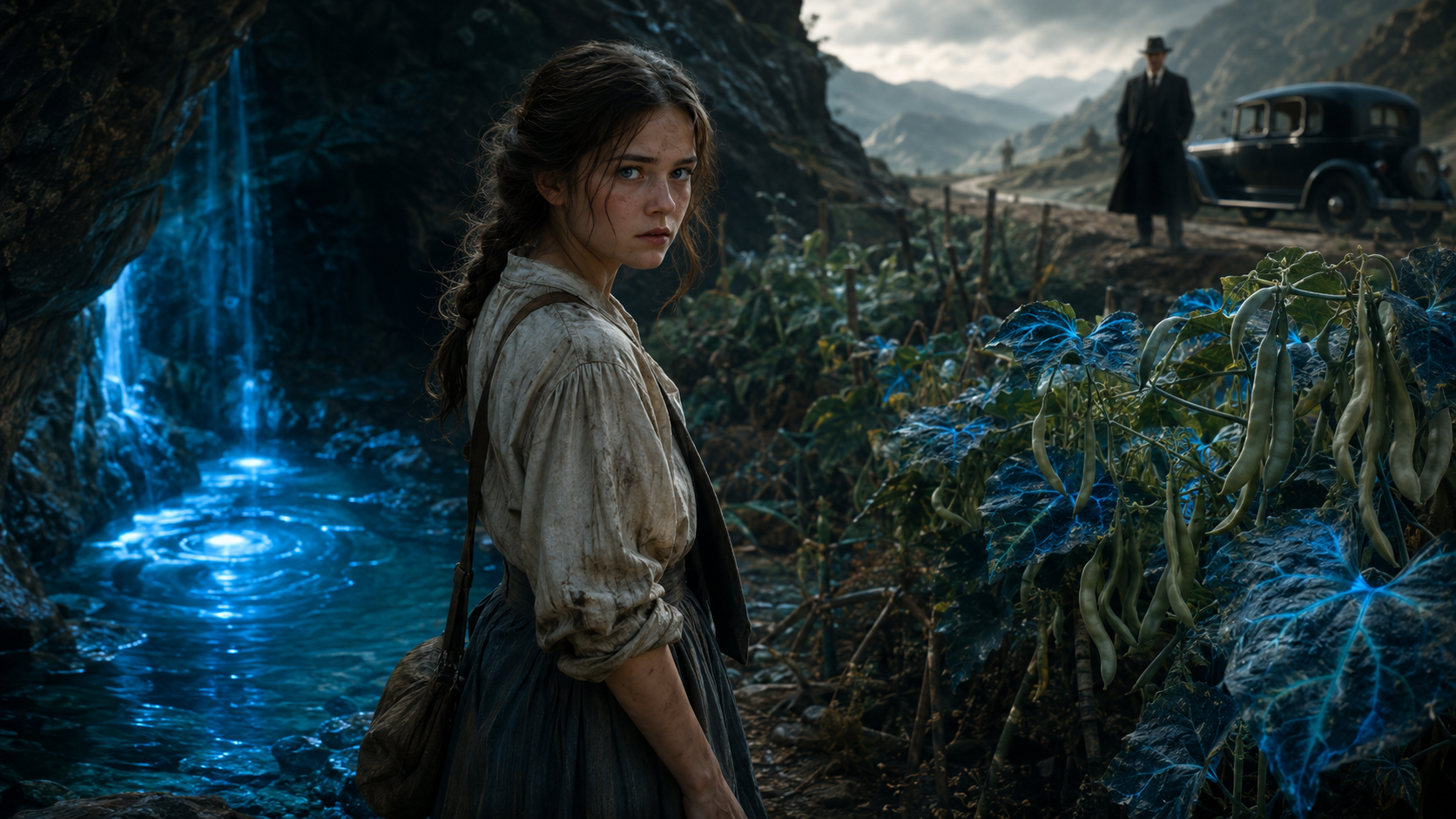
His voice thinned.
“I am sorry, Miss Voss.”
For years, Leona had imagined a Stone apology. In her mind, she was sharp, triumphant, merciless. She said perfect things. He shrank. The dead approved.
Reality was quieter.
An old man stood beside blue water with shame in his hands.
“I accept that you are sorry,” she said.
His eyes lifted.
“But forgiveness is not a receipt. You do not hand it over and close the account.”
“No.”
“What will you do?”
He reached into his coat and removed an envelope.
“I established a fund. For your school. In Irena Vale’s name. No Stone branding. No conditions.”
Leona took the envelope but did not open it.
“Why?”
“Because my grandchildren should inherit less money and less rot.”
That was the first Stone sentence she ever respected.
The fund built the east dormitory.
They named it Irena House.
Years softened some things and sharpened others.
Odelia Crane died at ninety-four after insulting a doctor, a mayor, and a bowl of hospital soup before breakfast. Rowan carved her marker himself.
SHE FED THE HUNGRY AND FRIGHTENED THE FOOLISH
Dr. Selene Marr died with soil beneath her fingernails and three honorary degrees on her wall. Her last letter to Leona said: Science does not make wonders smaller. It gives them roots.
Rowan died in winter, quietly, after seventy years of teaching wood to hold, doors to swing true, and Leona that shelter did not have to become a cage. She woke with his hand still warm in hers and the world suddenly too large.
Grief at seventy-eight is not easier than grief at seventeen. It is only better furnished. It has chairs, neighbors, casseroles, children, work, and places to sit while it breaks you.
Leona buried Rowan near the ridge where the blue water could sing underground.
On the day of his funeral, girls from the school lined the path holding seed packets. Farmers stood with hats in their hands. Chefs came in polished shoes that sank into the mud. Former Saint Brigid’s girls returned with daughters who had never learned to lower their eyes.
After everyone left, Leona stayed beside the grave until dusk.
“You built me a door,” she told him. “Then you taught me I could choose when to open it.”
The spring kept running.
In 1985, the state declared Vale & Voss Blue Hollow a protected agricultural heritage site. Officials arrived with speeches, as officials often do after ordinary people have finished the dangerous part.
A young man from the capital spoke of mineral balance, sustainable agriculture, Appalachian innovation, women’s leadership, and community land protection. He sounded sincere. Leona appreciated that. She also knew he had never carried water in a cracked kettle while dizzy with hunger.
When they asked her to speak, she stood beside the spring house in a navy dress, her white hair pinned beneath Odelia’s old church hat. Her hands were knotted with arthritis. Her voice was thinner than it had been, but it still belonged to her.
Hundreds had gathered.
Farmers. Students. Reporters. Former orphan girls. Stone grandchildren. Leona’s children. Leona’s grandchildren. People who had feared the water, people who had been fed by it, people who had grown rich near it, people who came only to see whether it was truly blue.
It was.
Under the glass roof Rowan had built, the pool shone turquoise in sunlight and indigo in shadow.
Leona looked at the crowd and saw the courthouse again. Mrs. Greaves on the steps. Alaric Stone laughing. Her crooked boot. Her one silver dollar.
“I was told this water was cursed,” she began.
The crowd quieted.
“I was told the land was worthless. I was told I was unsuitable, stubborn, ignorant, and alone. Some of that was true. I was stubborn. I was ignorant about many things. And I was alone.”
A few people smiled gently.
“But cursed is not always in the water. Sometimes it is in the story people tell about the water. Worthless is not always in the land. Sometimes it is in the eyes looking at it. And alone does not always mean unloved. Sometimes it means the people who need you have not found you yet.”
She turned toward the spring.
“This water was good before I came. Irena Vale knew it before me. Odelia gave me food when pride would have starved me. Rowan gave me a roof without asking me to become smaller beneath it. Dr. Marr gave the world proof. Farmers gave labor. Girls gave courage. Even the men who tried to take this place gave us a lesson worth keeping: if a gift is real, protect it from becoming a weapon.”
Her throat tightened.
“I bought Blue Hollow for one dollar because one dollar was all I had. But the spring was never cheap. It cost fear. It cost work. It cost learning the difference between warning and rumor. That is the lesson I hope remains after I am gone.”
A little girl in the front row raised her hand.
People laughed softly.
Leona pointed to her.
“Yes, ma’am?”