The girl asked, “Were you scared when you drank it the first time?”
Reporters leaned forward.
Leona could have lied. Legends prefer clean courage. Statues do not tremble. Newspaper heroines do not admit they nearly cried over a handful of strange water.
But girls need truth more than statues.
“Yes,” Leona said. “I was terrified.”
The child frowned.
“Then how did you do it?”
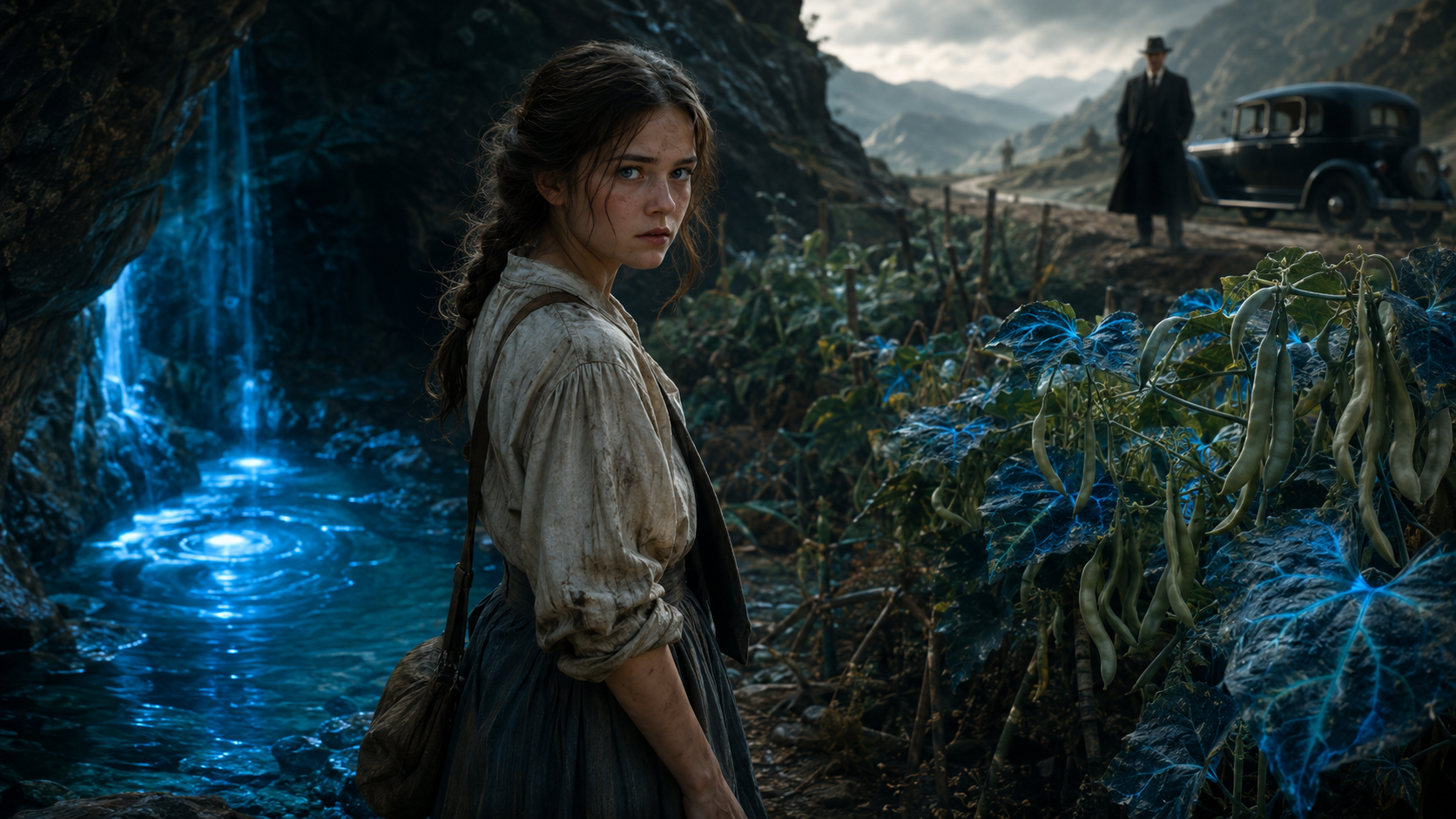
Leona looked at the spring and remembered her young hands, dirty and shaking, lifting blue coldness because thirst had left no room for pride.
“I was thirsty,” she said. “And I decided fear did not get to be the only voice in the room.”
That answer made more sense to the child than any grand speech. She nodded solemnly, as children do when adults finally stop decorating the truth.
Leona lived three more years.
Long enough to see Irena House full.
Long enough to taste the fiftieth generation of blue-crescent beans descended from the three stolen seeds.
Long enough to watch her granddaughter Mira take over the cooperative ledgers with the same sharp eyes Leona once used on court papers and seed trays.
Long enough to see a girl from Saint Brigid’s buy her own seven-acre farm with money earned from peppers grown in restored soil.
One April morning, Leona woke before dawn with Rowan’s side of the bed cold and the spring calling through the open window.
She was eighty-two.
Her knees hurt. Her hands curled stiffly. Her heart had become a room crowded with ghosts, but not an empty room. Never empty.
She dressed slowly, put on her boots, and carried a tray of seedlings to the original bed.
The soil there was black now. Rich. Loose. Alive with worms. Nothing like the gray stony ground that had greeted her when she arrived hungry and unwanted.
She knelt with difficulty.
The first seedling slid into the earth easily, its white roots eager.
“You and me,” she whispered, smiling at an old promise. “We still have work.”
Her daughter found her there after sunrise, one hand in the soil, the other resting on the tray. She said later Leona looked peaceful.
Leona would have preferred to look busy.
The spring still runs.
Visitors stand beneath Rowan’s glass roof and stare at the impossible blue. Guides explain iron minerals, limestone, phosphate, trace nutrients, soil biology, cooperative law, and the stories of Irena Vale and Leona Voss. Children press their noses to the rail. Farmers fill measured tanks. Former orphan girls return with families and point to the dormitory where they first learned that the word no could be holy.
The Stone name is on the scholarship fund now, but only below Irena’s.
Not because money deserves forgiveness.
Because people can choose what kind of ancestors they become.
On a stone near the spring are words Rowan carved for Leona before their first child was born. He made her close her eyes while he worked, and when she opened them, she pretended to scold him for being sentimental.
The stone says:
THIS WATER WAS ALWAYS GOOD.
WE WERE AFRAID OF THE COLOR.
LEONA DRANK ANYWAY.
It leaves out that she was afraid.
But now you know.
She was afraid when Saint Brigid’s turned her out with one silver dollar. Afraid when the clerk stamped her deed. Afraid when Alaric Stone laughed. Afraid when she knelt beside the blue pool. Afraid when the beans grew too fast. Afraid when people came to stare. Afraid when powerful men offered fortunes with one hand and threats with the other.
Fear walked beside her most of her life.
But it never got to hold the deed.
The land nobody wanted became a farm.
The spring everybody cursed became a promise.
The orphan they called unsuitable became old enough to watch other girls stand straight.
And all of it began because one hungry girl bought a forgotten blue well for one dollar, drank the water everyone feared, and planted three stolen beans in soil the world had mistaken for dead.