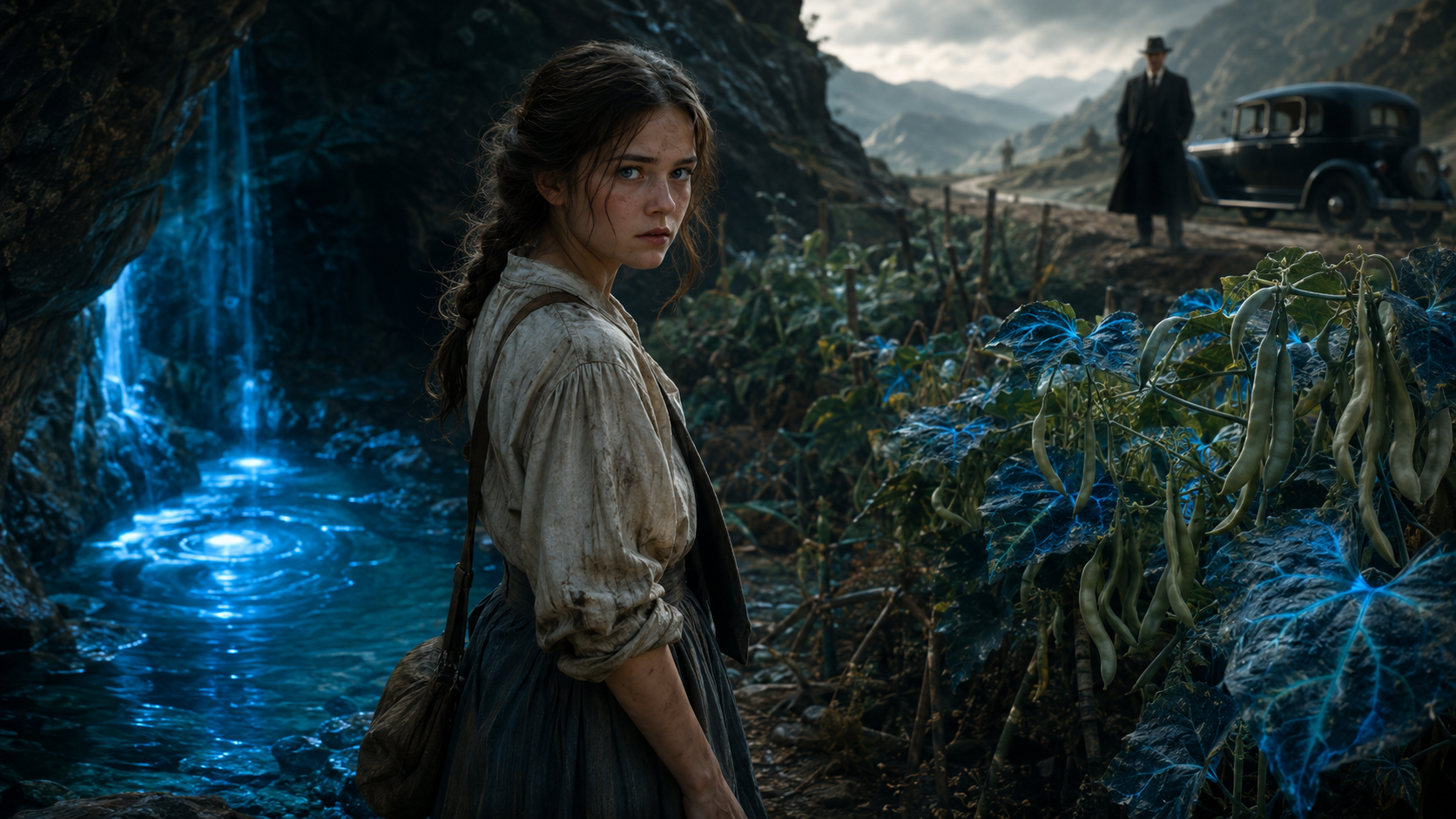
The first six girls arrived in 1952.
They stepped down from a county bus in stiff donated dresses, each wearing the guarded look Leona remembered from mirrors.
One girl, thin as twine, stared at the fields.
“Do we work for food?”
“No,” Leona said.
“For beds?”
“No.”
“Then why are we here?”
Leona handed her a trowel.
“To learn what living things need.”
“What if we’re bad at it?”
“Then the plants will tell us. And we’ll try again.”
The program began with six girls, two cabins, a classroom with mismatched desks, and a garden plot of their own. They learned compost, irrigation, seed saving, bookkeeping, tool repair, cooking, contracts, wages, and how to say no without asking forgiveness afterward.
Leona made them practice.
“No, sir.”
“No, ma’am.”
“No, I will not sign what I have not read.”
“No, that price is not fair.”
“No, gratitude does not mean obedience.”
The first time they laughed.
The second time they shouted.
The third time, some of them cried.
A person can live a long time before discovering her own voice belongs to her.
The highest offer came in 1964.
By then Alaric Stone was dead, Caspian was aging, and Stone Agricultural Works had merged with a national chemical company whose lawyers smiled without warmth. They offered Leona and the cooperative three million dollars for exclusive development rights to the spring’s mineral profile, seed branding, and distribution network.
Three million.
The board met in the packing barn because no room in Leona’s house could hold that much fear.
Some farmers wanted to sell.
“We could pay every debt.”
“We could buy tractors.”
“We could build the school twice over.”
A young member slammed his palm on the table.
“Easy for you to refuse. You already made your name.”
The words hurt because they were not entirely false. Leona was no longer the starving girl on the courthouse steps. Her house stood strong. Her boots fit. Her children had books, coats, and choices. Hunger had become a memory instead of a weather system.
She stood slowly.
“You’re right.”
The room quieted.
“I am not where I was when I bought this land. I eat every day. My roof holds. My children have never licked rain from their sleeves because thirst was cheaper than milk. So yes, you should ask whether I’m protecting the spring or protecting my pride.”
No one moved.
“But listen to me. Three million dollars is not kindness. It is a price. And prices are how powerful people teach hunger to speak for them. If we sell the source, this place becomes a product before it remains a promise. They will take what fits in a can and leave behind everything that made it alive.”
The young farmer looked down.
Leona softened her voice.
“I know debt. I know fear. I know what a number looks like when your family needs more than your hands can earn. So we will not answer fear with speeches. If we refuse, we need a plan.”
Rowan, gray at the temples now, unfolded papers he had been drafting for months.
Measured expansion. Member-owned bottling for agricultural use only. University partnership. Soil school certification. A seed catalog. Restaurant contracts. Honey production. A reserve fund for bad seasons. Legal defense. Scholarships.
Not as easy as three million.
But theirs.
The vote was close.
They refused.
The newspapers called Leona foolish, stubborn, visionary, ungrateful, heroic, backward, and brilliant depending on which editor needed which weather that week.
Orders doubled.
Then tripled.
Chefs from Washington and New York bought the blue-crescent beans. Farmers bought seed packets and soil lessons. The cooperative built the school, repaired the north road, funded dormitories, and purchased the neighboring ridge before developers could turn it into summer houses.
By 1972, people called Leona Voss a millionaire.
She disliked the word.
It sounded too much like a person who believed money could measure a life.
But the ledgers were honest. The dollar parcel now supported families, students, seed savers, widows, girls from institutions, and farmers who had once laughed at her basket in the market.
One autumn afternoon, Caspian Stone came to Blue Hollow for the last time.
He was thin, white-haired, and alone. Leona found him standing near Irena Vale’s memorial stone beside the spring house. Rowan had carved the stone years earlier.
IRENA VALE
WHO KEPT THE WATER WHEN FEAR WAS PROFITABLE
Caspian read it for a long while.
“My grandfather would have hated that,” he said.
“I know.”
“My father too.”
“I know that as well.”
He removed his hat.
“I came to apologize.”
Leona waited.
“My family lied about this place. We profited from the fear we encouraged. We allowed Mrs. Vale to be remembered as unstable because she would not sell. We tried to take from you what we failed to take from her. I told myself I was different because I used better manners.”