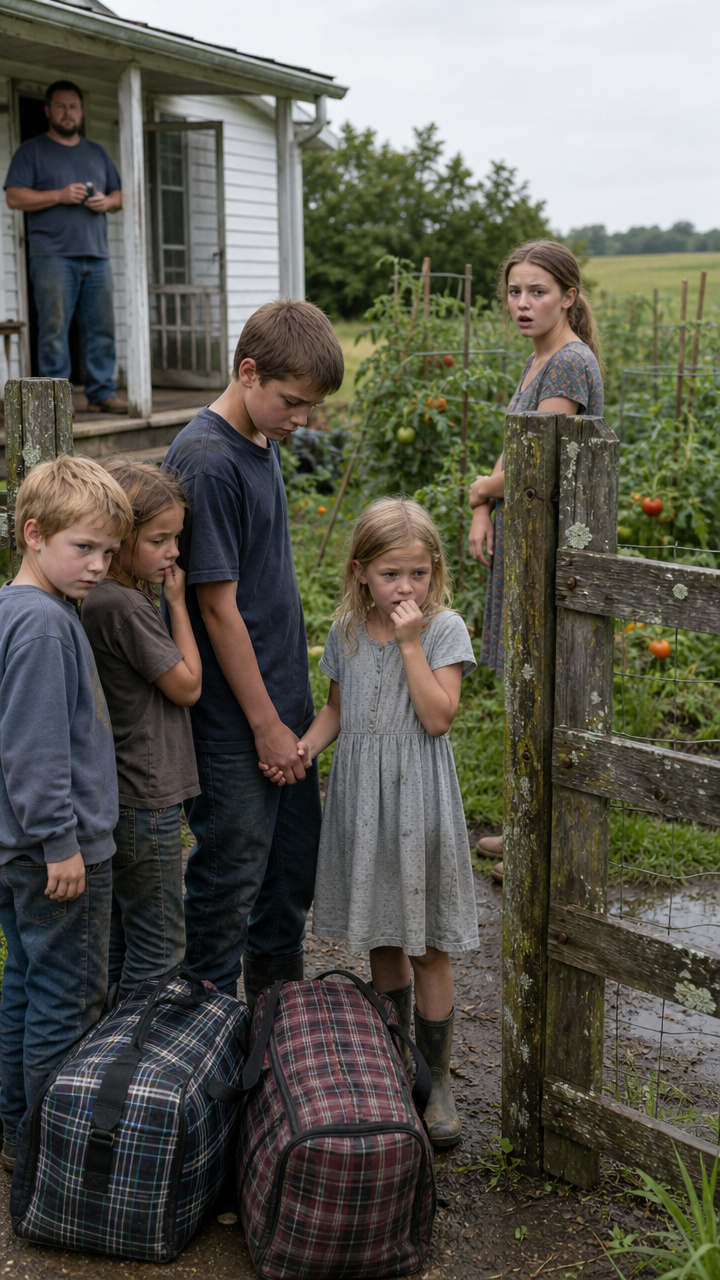
“Grandpa, Mom says only failures stay in the country.”
“Your mother buys bread already sliced and packed,” Arthur replied calmly. “She probably thinks loaves grow beside the pasta. But you now know how many buckets of water have to be carried to the roots before tomatoes will set properly. A person should know how to use his hands. Then he won’t be helpless anywhere—in the country or in the city.”
Connor was quiet for a moment. Then he pulled a sheet of graph paper from his pocket. It had been folded into quarters, the creases worn soft.
“I worked it out,” he said. “How much we’ve eaten here. Roughly, using store prices. It’s a lot. I’ll pay it all back when I’m grown.”
Arthur took the paper and studied the long column of numbers written in careful childish handwriting. Then he handed it back.
“You’ve already overpaid me for the firewood,” he said. “And for the fence, too. Your grandmother and I are in debt to you now, Connor. So sit still and stop inventing problems.”
The boy sniffed loudly and began carving faster.
“Sometimes, at home, there are still five days until Mom gets paid,” he said, staring at the shavings near his shoes. “And the little ones are hungry. So I… Well, you found it. I understand.”
“We did,” Arthur admitted. “But don’t hide anything anymore. In this house, bread belongs on the table, not beneath a pillow.”
At the beginning of August, the first white apples ripened, and soon the Antonovka trees began to bend beneath their own fruit. The orchard looked heavy and full; in places, the branches nearly touched the grass.
The children picked the apples carefully, wrapped each one in newspaper, and packed them into wooden crates. Connor now assigned the work himself: one person on the ladder, another catching the apples below, and someone else carrying the crates to the shed.
Not a single apple was crushed underfoot.
On August twentieth, an engine rumbled outside the gate again.
Diane arrived as loudly as ever, sunburned and wearing a new dress.
“Well, my little bandits, are you still alive? Did you eat enough free fruit? Did your stomachs survive?”
Then she fell silent in the middle of the yard.
The paths had been swept clean. The weeds along the fence had been cut down to their roots. The fence itself stood straight, freshly painted with the leftover green paint Arthur had stored in the shed for five years. A neat stack of firewood rose beside the building. On the porch, the twins were scrubbing their sandals with brushes. Lily was wiping the jars for the compote with a towel.
Connor emerged from the orchard carrying a sack of apples over his shoulder. During the summer, he had grown noticeably taller and broader, his skin darkened to a coppery brown.
“Connor! What are you doing, working as a laborer? Put that heavy thing down!”
“Good afternoon, Aunt Diane,” he replied, lowering the sack carefully onto the wooden platform. “We don’t throw the sacks down. These are winter apples. If they’re bruised, they’ll rot before November.”
At the table, Diane was strangely quiet. She kept looking at the children, who sat peacefully, did not fight over the spoons, and wished everyone a pleasant meal before eating.
“Margaret,” she whispered, leaning toward her cousin, “what have you been giving them? At home, they could destroy the whole apartment in a day.”
“Nettle tea,” Arthur answered from the end of the table. “Very healthy. And if you refuse to go into the garden, it bites your legs.”
After tea, Diane opened her bags.
“All right, then. We’ll take some berries, a few jars of compote, and perhaps three sacks of apples. I’ll give the driver a little, and he can put everything in the trunk. It all grew for free anyway. The land belongs to everyone.”
Connor, who had been standing near the door, stepped forward until he was directly in front of the bags.
“No, Aunt Diane. Nothing here grew for free.”
“What did you just say to me?”
“Grandpa and we spent the whole summer protecting this orchard from disease,” the boy replied, meeting her gaze steadily. “We watered it every day. We carried water from the well in buckets because the pump burned out, and Grandpa had to rebuild it. Grandma stayed up at night sealing jars so we’d have food in winter. Grandpa set aside a crate of apples for each of us to take home to our mothers. But we won’t let you take them away by the sack and give them to someone else. This is our work.”
The kitchen became so quiet that the cricket behind the stove could be heard chirping.
Diane’s face reddened. She drew in a breath, clearly preparing to deliver one of her familiar speeches about ungrateful, heartless relatives. Then she looked at the five calm faces before her.
The twins stood beside Connor.
Lily held Zoe’s hand.
“Well, choke on your apples,” Diane hissed, grabbing the handles of her empty bags. “Miserable cheapskates.”
“Have a safe trip, Diane,” Margaret said quietly without getting up. “I’ve already packed jam in the children’s backpacks—two jars each. Just be careful not to break them on the way.”