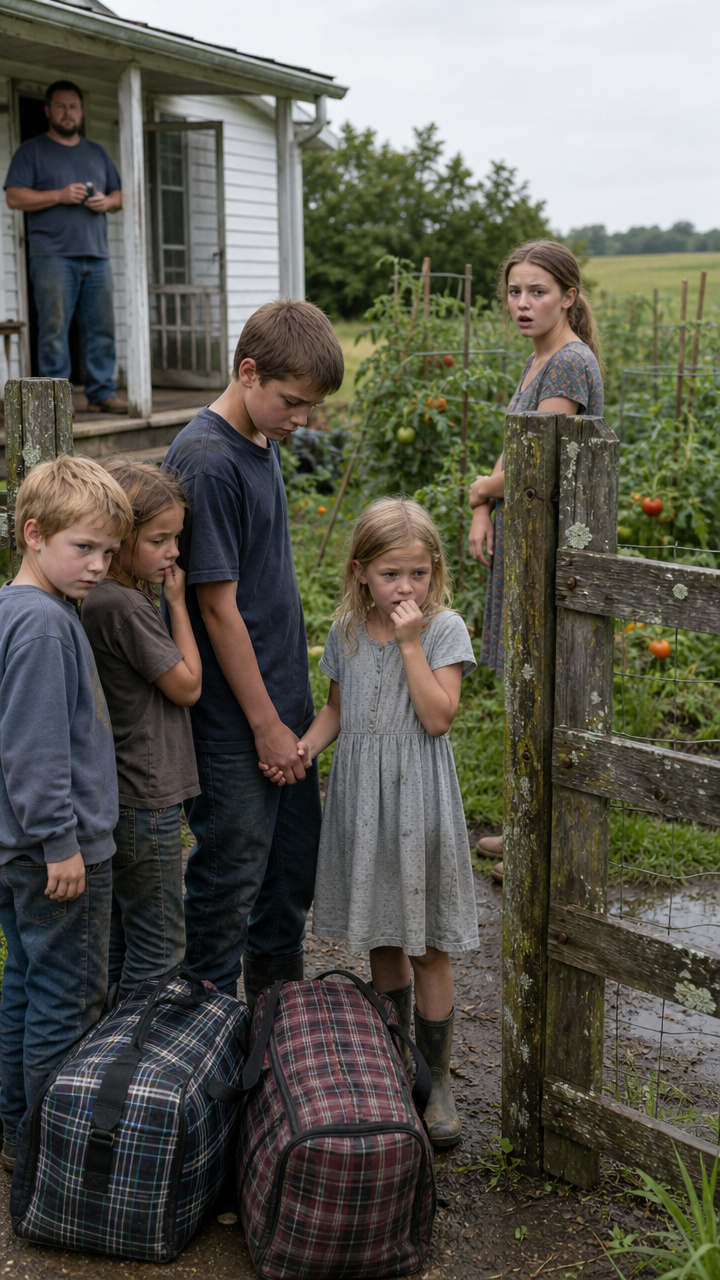
“Then it has finally found a purpose,” her husband answered. “Listen to me, old girl. We’re not going to cry over this. I led a crew for forty years. Half the men couldn’t string two words together after payday, and I still kept order. They want fruit? They’ll have fruit. But they’ll have it by our rules. Everyone up at six tomorrow.”
“Arthur, they’re children.”
“Zoe is little. She gets special treatment. The rest have arms and legs. Go to bed. Tomorrow will be long.”
Morning did not begin with a rooster. It began with Arthur striking the handle of a wooden tool against an empty bucket.
“Up! The washbasin is outside. The water is cold, but it clears unnecessary thoughts out of your head immediately!”
Connor crawled out from beneath the blanket, furious and rumpled, his eyes red from lack of sleep.
“Grandpa, we’re on vacation.”
“You are,” Arthur agreed. “The garden isn’t. No one informed it about the holidays.”
Breakfast was a large cast-iron skillet of fried potatoes, a bowl of pickles, and tea brewed from currant leaves. Lucas prodded the potatoes with his fork and frowned.
“Do you have cereal? With chocolate milk?”
“Grandma keeps cereal at the pharmacy,” Arthur said without blinking. “It’s drawn on an advertisement. Perhaps you thought cereal grew beside the pasta. If you don’t want potatoes, there are apples on the tree. They’re still green, though. Your stomach may twist so badly you won’t make it to the other end of the garden.”
The twins exchanged a glance and quietly picked up their spoons.
After breakfast, Arthur lined everyone up beside the shed. Two hoes, buckets, and a watering can were waiting there.
“Your grandmother says everything here grows for free. Let me explain this to the city children: the only thing that grows for free is the weeds along the fence. If you want sweet cherries, you treat the tree for aphids and weed the soil. If you want strawberries that don’t rot, you cut off the runners. Connor, you’re coming with me along the boundary. Ethan and Lucas, fill the barrel with water. Lily, you’re helping Grandma with the beds. Zoe stays on the porch and puts beetles in this jar. Here’s a stick for you, commander.”
“I won’t! They’re disgusting!”
“No beetles in the jar means no potatoes on your plate. That’s all. Time starts now.”
On the third night, Margaret was changing the pillowcases when her fingers touched something hard beneath Connor’s pillow. She pulled out half a loaf of bread wrapped carefully in a T-shirt.
For nearly two minutes, she stood there holding it.
Then she put it back, smoothed the pillow, and left the room without a word.
She never mentioned it to Connor. Instead, from that day on, she placed a plate of food on the kitchen table every evening and covered it with a clean towel. A week later, the bread disappeared from beneath the pillow on its own.
For the first few days, the children tested one another’s limits. Connor deliberately dropped the scythe in the grass, sat on a log, and tried to catch a signal on his old button phone, stretching his arm as high as possible.
Arthur never raised his voice.
He only said:
“Lunch is at one sharp. Anyone who isn’t here on time reheats his own meal. The stove is open.”
On the fourth day, Connor approached the woodpile himself.
“Where’s the axe?”
“On the nail in the shed. Spread your feet wider, or you’ll strike your shin.”
At first Connor chopped clumsily and angrily, as if every log had personally offended him. His palms reddened, then blistered. He wrapped them in adhesive tape so no one would notice.
Half an hour later, Arthur came over, took the axe from him, pointed out the crack in the log, and showed him where to strike so the weight of the tool—not his back—would do the work.
Connor tried again.
The log split with a dry, ringing crack.
For the first time since arriving, the boy’s expression changed.
By the middle of July, the house had settled into a routine of its own.
Ethan and Lucas carried twenty buckets of water each day and collapsed into bed at night without asking for anything. Lily learned to weed the carrots without pulling out the young shoots. Zoe carried every weed she pulled to Grandma and presented it with solemn pride.
They made jam in a large copper basin in the summer kitchen. The girls removed the pits from cherries with hairpins, staining their fingers deep burgundy and leaving them sticky. They took turns skimming the foam with a wooden spoon because any attempt to do it simultaneously ended in shouting.
One evening, already half asleep, Zoe wrapped her small hand around Margaret’s finger.
“Mommy, don’t go.”
Her eyes flew open at once, frightened by what she had said.
“It’s all right, sweetheart,” Margaret murmured, keeping her hand where it was. “Go back to sleep. I’m here.”
Later, Margaret sat for a long time in the darkness on the edge of the folding bed, unable to make herself stand.
In the evenings, Connor sat on the porch with Arthur. The boy carved a bird from a piece of birch while the old man smoked and watched the garden.