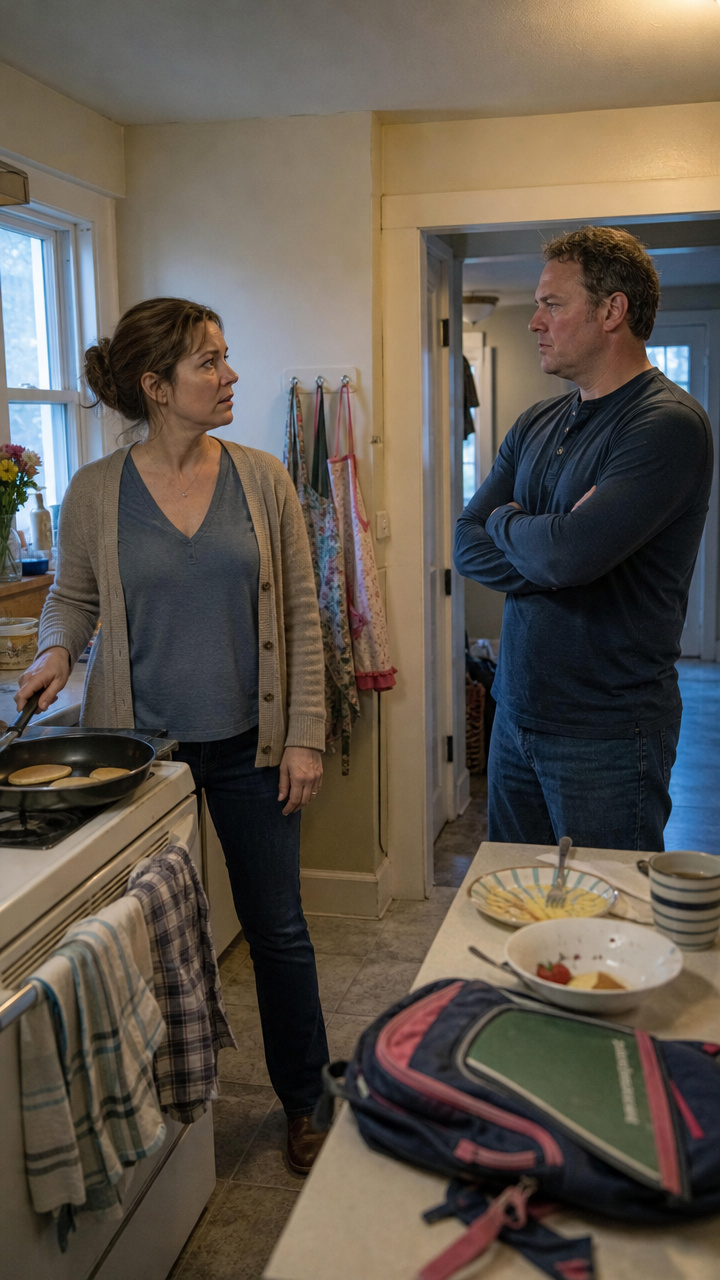
These days, that spark returned only when he argued with Claire about money or repeated one of his mother’s lessons. Over the past two years, both had become more frequent.
After retiring, Eleanor had grown bored. She developed the habit of calling her son three times a day, offering advice and explaining how he ought to live. Mark absorbed every word.
Claire finished breakfast, washed the dishes, and opened her laptop. She brought up the spreadsheet where their income and expenses were divided by month and category, illustrated with charts, and balanced down to the last dollar.
She had maintained that file for five years—the entire time since they had taken out the mortgage. Mark had no spreadsheet. Instead of calculations, he relied on phrases such as approximately and I do have a job.
That evening, he came home gloomy and silent, sulking like an old owl. He ate dinner, dropped heavily onto the couch, and turned on a soccer match.
Claire waited until the children were asleep. Then she sat beside him and placed a folder on the coffee table.
“What’s that?” he asked without taking his eyes off the screen.
“Bills.”
“What bills?”
“My personal expenses for the past three years. That’s what you wanted, isn’t it? Your mother said I should pay for everything myself. Fine. I calculated it all.”
Mark glanced first at the folder and then at his wife. Finally, he opened it. Inside were neatly organized printouts, with the totals highlighted in bright marker.
“Beauty appointments,” Claire began in the calm tone she used at work. “Six hundred dollars a year. Four visits, only basic cleaning and routine care. No injections, no expensive procedures. Even my moisturizer comes from the pharmacy and costs less than twenty dollars.”
“The gym is forty dollars a month. That’s the same gym you told me to join because, according to you, I had ‘let myself go after the second child.’ My phone plan is thirty dollars. The cheapest one available.”
“My credit card is in my name, yes. But I used it to pay for Emily’s textbooks, Lucas’s braces, and the winter tires for your car.”
“Do you remember when you wanted to buy the tires on installments? I suggested paying in full so we wouldn’t waste money on interest. That’s what my credit card was used for.”
Mark turned the pages, moving his lips as he silently read. Claire knew perfectly well that he had expected to find something else.
He had been counting on shouting, tears, and a scene he could later describe to his mother by saying, You were right. She really is hysterical.
Instead, there were only numbers in front of him. Numbers were much harder to argue with.
“Listen,” he began uncertainly. “That isn’t what I meant.”
“It is exactly what you meant,” Claire cut in. “You repeated your mother’s words almost word for word. Now turn the next page.”
He did.
The next table contained his own expenses.
“Your car—fuel, insurance, and maintenance—costs around a thousand dollars a month. The garage is another two hundred. Your Friday nights out with friends cost between four and five hundred.”
“The new phone you bought on credit without discussing it with me costs another two hundred every month for two years. Altogether, those expenses have already gone over five thousand dollars.”
“And I still contribute half of our household income. Yet you call me a woman living off you. Your mother thinks the same thing, and you come into the kitchen to issue commands.”
Silence settled over the room. From the kitchen came the steady sound of water dripping from the faucet.
Mark closed the folder, set it aside, and rubbed both hands over his face.
“I didn’t know you tracked everything in that much detail,” he muttered.
“Did you think financial analysts receive their diplomas for having pretty eyes? Mark, I’ve managed our budget for five years. I even know how much you spend on coffee from the machine at work.”
“Two coffees a day at four dollars each. That comes to roughly two hundred and fifty dollars a month. It may seem insignificant, but I know about it. You don’t even know what Lucas’s braces cost because you have never once asked. Yet you come home and announce, ‘Mom told me to.’”
Mark said nothing.
Claire looked at her husband and thought about how marriages sometimes fall apart. Not because of affairs or drinking, but because of endless calls from a mother-in-law and a grown man’s refusal to think for himself.
“So what happens now?” he asked quietly at last.
“Now,” Claire replied, sliding a second folder toward him, “we change the entire financial arrangement. Starting this month, we will each have a separate personal budget.”
“We’ll divide the shared expenses equally and pay them according to the bills. I’m opening a separate account for my salary, and you’ll have one for yours. The mortgage, utilities, and everything the children need will still be paid for together. The rest of our money will belong to each of us individually.”
“But that’s not very—” He hesitated. “That’s not how a family is supposed to work.”