When he left, I spent an hour rehearsing how I would greet the buyer.
‘Don’t worry, there will be offers,’ he said.
Smile. Offer coffee. And don’t cry.
I didn’t want to part with the diner. I really didn’t. But there was no other way to survive. I couldn’t offer my house as collateral because it needed too much work… and I couldn’t lose it — it was the only home my daughter had ever known.
And so, when the bell rang again, I bit my lip.
Smile. Offer coffee. And don’t cry.
Please let it be a buyer, I thought.
But it wasn’t.
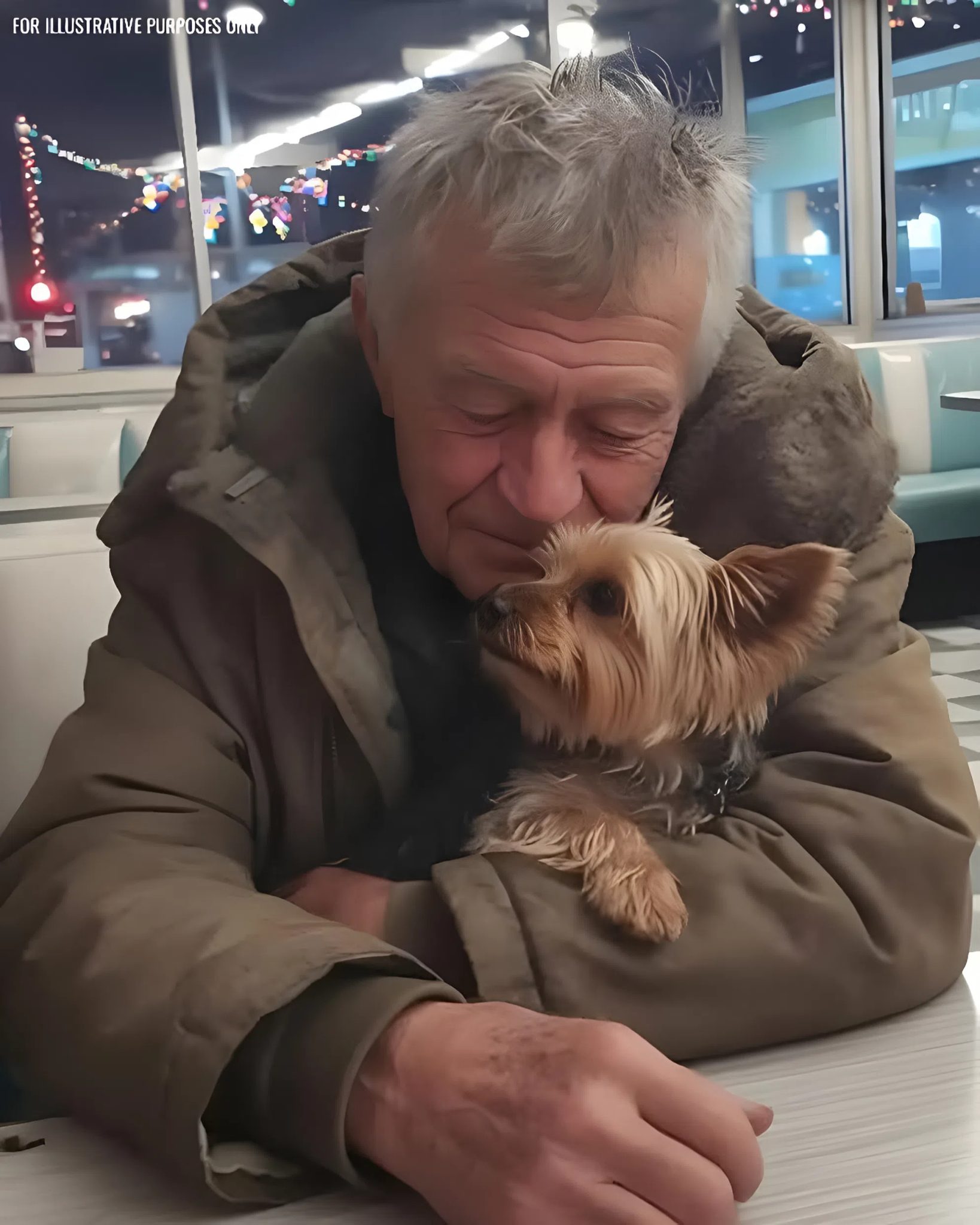
An old man stood in the doorway. He looked uncertain, as if he had lost his way and didn’t want to be a burden. His coat hung on him like a coat hanger, the sleeves were too long, and one trouser leg was turned up, as if it had been put on the wrong way round.
Next to him was a tiny dog with multicoloured fur and ears that were too big. It looked like a creature assembled by a child from old toys and dreams.
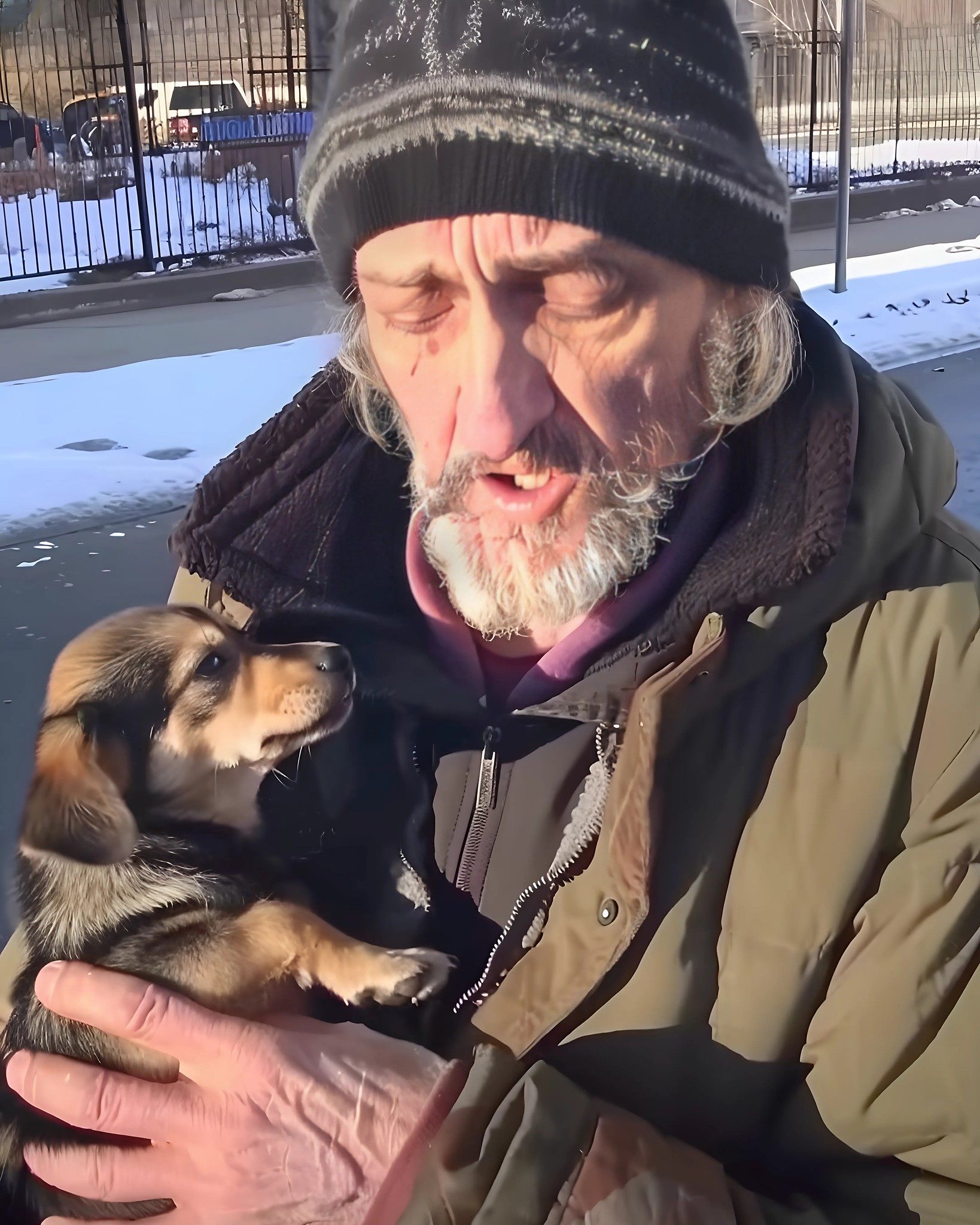
‘Good evening, madam,’ the old man said quietly. ‘What’s the cheapest thing on the menu?’
He was already counting the money in his head. I could see it.
And then I heard my grandfather’s voice: ‘We feed people, kid. Not empty wallets.’
‘What’s the cheapest thing on the menu?’ he repeated.
I came out from behind the counter and smiled.
‘Why don’t you sit down?’ I said. ‘I’ll make you something nice, I promise.’
‘I don’t want charity,’ he said, his eyes darting around the room. ‘I have a little. I can pay something.’
‘It’s not charity,’ I said, wiping my hands on my apron. ‘You can pay me with your company. It’s been a very slow day.’
He froze. His fingers twitched towards his pocket, but stopped. Pride flashed in his eyes, but he nodded.
‘Thank you,’ he said quietly. ‘Pickles and I just wanted to take a break…’
I went back to the kitchen and moved as I had before, when my daughter was still alive — as if food mattered, as if it would make someone part of the house. I made a meat casserole, as my grandfather had taught me, with onions and a little ketchup on top.

‘Pickles and I just wanted to take a break…’
I mashed the potatoes by hand, added real butter and milk, and sautéed the green beans with garlic. I even toasted a few slices of bread and put a pat of butter in a bowl.
I hadn’t done this in months — not since I stopped believing in ‘special moments.’
Before serving, I set aside a small piece of meatloaf and a couple of slices of leftover sausage on a small plate. It was for Pickles, that silly little dog.
When I brought everything to the table, I placed a full plate in front of the old man and put the saucer with the dog food next to it. Pickles looked at me as if I were a magician.
‘For me?’ asked the old man, his voice trembling slightly.
‘For you,’ I replied with a smile. ‘And this is for him.’
Pickles licked the plate as if it were the best thing he had ever tasted.
‘And this is for him.’
We talked, or rather, I talked. He asked gentle, open-ended questions.
‘How long have you had this place?’
‘Do you cook everything yourself?’
‘Do you live nearby?’
And somehow, these simple questions opened the floodgates for me.
I told him about the day my daughter died. I told him about how my husband left and how I held my grandfather’s old mug tightly, whispering into the kitchen air, asking what I should do next.
He didn’t interrupt or offer solutions.
He just nodded, saying softly, ‘That must have been painful’ or ‘I’m sorry you had to go through all that.’
When he got up, he took a few crumpled banknotes out of his pocket.
‘I’m sorry you had to go through all that,’ he said.
‘No,’ I said, shaking my head. ‘You’ve already paid. I told you, your company is more than enough.’
He slowed his pace, his gaze searching for mine.
‘Thank you, dear, for the meal… for letting Pickles in. And… for seeing me.’
Then he turned, called Pickles, and stepped out into the cold. The bell rang again behind them.
And I thought that was the end of it.
Closing the snack bar was harder than usual that night. The key creaked in the lock as if it didn’t want to turn. I stood on the pavement for a while, wrapped in my coat, watching my breath melt into the cold air.
The street was empty — empty in the way it is when you feel like you’re the only living person in the world.
The silence followed me home.
I thought it was the end.
I left the lights off when I entered the house. I didn’t need them. The layout hadn’t changed in 20 years. I threw my keys into the bowl, took off my shoes and went into the bathroom.
The water took a long time to heat up. I stood there hugging myself while the pipes rattled behind the walls. When the steam rose, I stepped under the stream, and it burned me.
And then I cried.
‘Grandpa, help me,’ I whispered through the water.
And I cried.