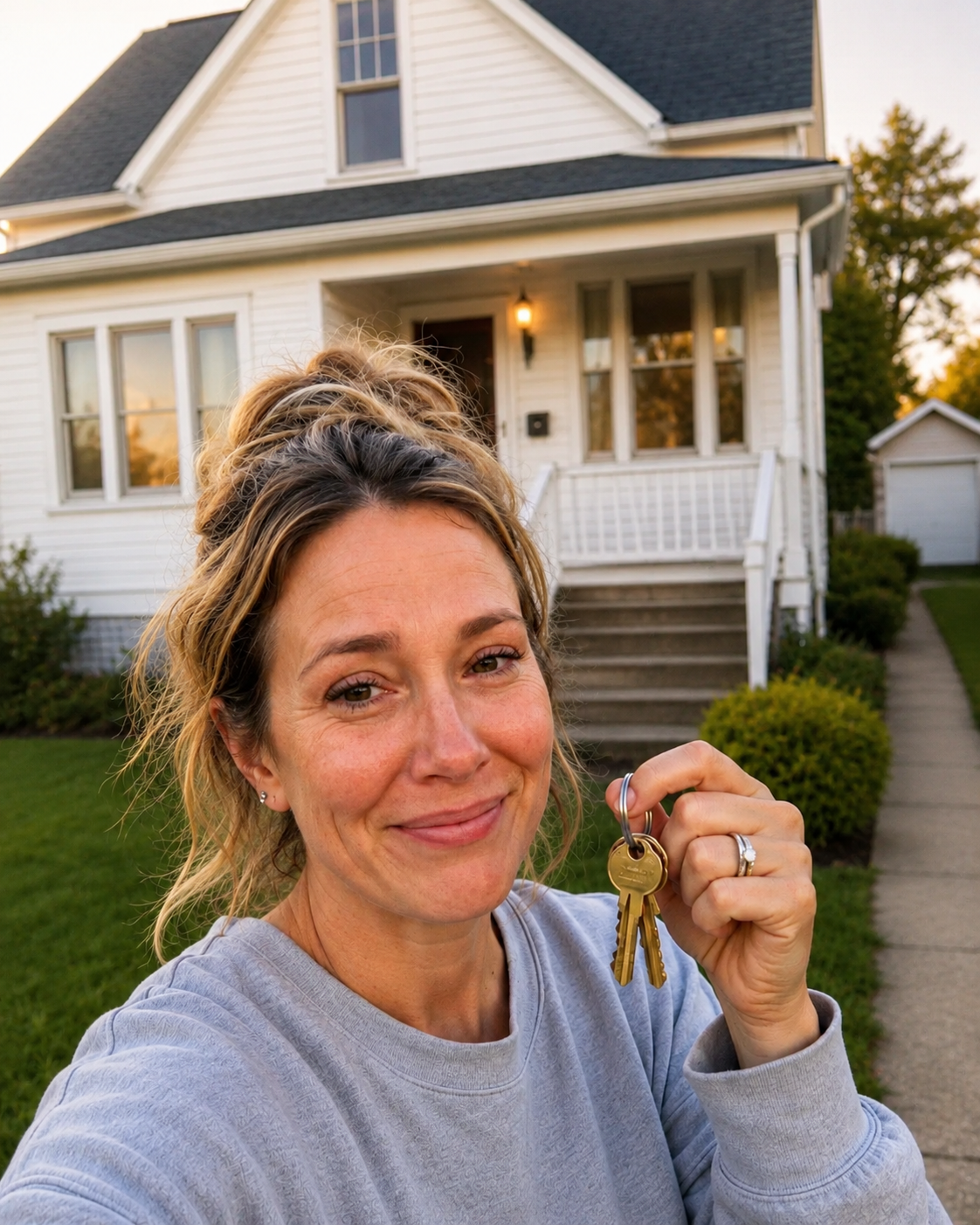
I Bought My Childhood Home at Auction – On My First Night Back, My Mother Called Crying and Said, ‘Please Tell Me You Haven’t Found the Room Your Father Sealed Off’

I bought back the house where I grew up believing it would finally mend the scar my father left behind. Instead, on my very first night there, a tearful phone call from my mother led me to a hidden room concealed behind the pantry—and what waited inside shattered everything I thought I knew about the day we lost that home.

I was thirty-one years old, standing in the kitchen with a carton of takeout noodles in one hand and a utility knife in the other, when my mother, Catherine, called and asked in a trembling voice,

“Astrid… tell me you haven’t found it.”

I stopped mid-bite.

“Found what?”

Behind the pantry shelves, there was a section of wall that looked strangely different—too smooth, too deliberate compared to everything around it.

On the other end of the line, my mother made a small, broken sound.

She was crying.

“The room,” she whispered. “The one your father made me swear I would forget.”

For a moment I couldn’t speak.

“Mom… what room?”

Suddenly, I wasn’t thirty-one anymore.

I was sixteen again, standing barefoot in the rain as strangers carried our furniture out of the house.

People always assumed we sold it.

We didn’t.

We lost it.

At least, that was the story I had lived with for two decades.

Dad had fallen behind on payments.

Dad had ignored notices.

Dad had failed us.

That was what everyone believed.

That was what I believed.

I still remembered that morning.

My mother stood frozen in the driveway with both hands pressed against her mouth while my younger brother, Asher, cried over a garbage bag filled with his school trophies.

“Where’s Dad?” he kept asking.

Again and again.

“Where’s Dad?”

Our father sat on the porch, staring at the wet wooden boards beneath his feet as if they held answers no one else could see.

Then Uncle Tom arrived.

Late.

Holding two coffees.

No umbrella.

No urgency.

No shame.

“Come on, Drew,” he told my father. “Keep your head up.”

Dad never looked at him.

He never looked at any of us.

After that day, we moved into a cramped apartment above a laundromat where the floors rattled whenever the dryers ran.

My mother never spoke about the house again.

Not once.

But I never stopped thinking about it.

Every bill I paid ahead of schedule.

Every overtime shift.

Every cheap meal eaten while staring at spreadsheets.

Every dollar transferred into savings.

People admired my discipline.

What they didn’t realize was that I wasn’t disciplined.

I was haunted.

I spent years trying to ensure I would never lose anything the way we lost that house.

Then, twenty years later, opportunity arrived unexpectedly.

The last owner, Mr. Walter, passed away.

The property went up for auction.

I registered before fear had a chance to talk me out of it.

When the paperwork was finally placed in front of me, the auctioneer smiled and asked,

“Planning to renovate and sell?”

I shook my head.

“No.”

My voice broke despite my efforts.

“I’m bringing my home back.”

That evening, before stepping inside, I called Asher.

“You actually did it?” he asked.

“I did.”

Silence lingered between us.

Finally he said,

“Does it still look the same?”

I studied the cracked concrete steps, the leaning mailbox, and the rusty chain where a porch swing once hung.

“No,” I answered softly.

“It looks smaller.”

“That’s what happens when childhood becomes memory,” he replied.

Then, after a pause:

“You okay being back there?”

I stared at the front door.

“No,” I admitted.

“But I’m here.”

Inside, the house smelled exactly the way forgotten homes do—dust, old wood, and traces of cleaning products that hadn’t been used in years.

I walked from room to room touching walls and doorframes.

The pantry door still stuck near the bottom.

Dad used to repair it every winter.

“Old houses complain when they’re cold,” he’d say.

I placed my hand against the wood.

“You missed a lot, Dad.”

Later, while eating dinner on the kitchen floor, I began making a renovation list.

That was when I pulled one of the loose pantry shelves forward.

A stream of cold air slipped through the gap.

I leaned closer.

And saw it.

A section of wall that didn’t belong.

No cracks.

No aging.

No visible seams.

Just a carefully concealed barrier hidden behind shelves that likely hadn’t been moved in years.

Before I could touch it, my phone rang.

Mom.

“Where are you?” she asked immediately.

“In the kitchen.”

“Near the pantry?”

My pulse quickened.

“Yes.”

A shaky breath escaped her.

“Astrid… please tell me you haven’t found it.”

“Found what, Mom?”

“The room.”

I stared at the wall.

“Mom,” I said slowly, “that’s not the kind of sentence you casually drop into a conversation.”

“Just answer me.”

“I haven’t found anything.”

It was a lie.

The moment we hung up, I stood motionless while the old house groaned around me.

Then I went into the garage.

Found an old hammer.

And came back.

I wasn’t sixteen anymore.

I was done living with unanswered questions.

The first strike hurt my wrists.

The second cracked the drywall.

The fifth opened a hole large enough to shine a flashlight through.

I expected something terrifying.

Something sinister.

Instead, what I found was almost disappointingly ordinary.

The hidden room was tiny.

Barely large enough for a folding table.

There was a metal filing cabinet.

Several boxes.

A single lamp.

Dust covered everything.

I widened the opening and climbed inside.

My flashlight landed on labels written in my father’s handwriting.

Mortgage.

Bills.

Tom.

A knot formed in my stomach.

I opened the first box.

Inside were letters.

Dozens of them.

Most written by Uncle Tom.

“Drew, I swear this is the last time.”

“Drew, I have nowhere else to go.”

“Drew, Mom would want us to help each other.”

Underneath the letters were copies of checks.

Loan agreements.

Payment schedules.

Handwritten notes from my father.

Tom missed another payment.

Mortgage due Friday.

Catherine says enough is enough.

Then I found an envelope.

My name was written across the front.

For Astrid. When she is old enough to understand.

My hands trembled.

For twenty years, my life had rested on one certainty:

Dad lost our house because he was irresponsible.

Because he failed.

Because he chose not to care.

That belief hurt.

But it was simple.

And simple truths feel safe.

Now that truth was beginning to collapse.

I called Mom.

“Come here,” I said.

“Astrid…”

“Now.”

She arrived less than an hour later wearing slippers and an oversized cardigan.

The moment she saw the broken wall, she covered her mouth.

Exactly the same way she had in the driveway twenty years earlier.

I held up one of the letters.

“Tell me these aren’t what I think they are.”

Tears immediately filled her eyes.

“Your father never wanted you children involved.”

I laughed bitterly.

“I became involved the day strangers carried my bed to the curb.”

“Astrid, please…”

“No.”

She slowly sat on the floor.

For a moment she looked impossibly small.

Then she picked up one of Tom’s letters.

“Your uncle was drowning,” she whispered.

“Bad decisions. Debt. Pride. Every time he promised things would improve.”

“And Dad kept saving him?”

“He believed every crisis would be the last.”

“And when it wasn’t?”

“He thought he could fix everything before you and Asher noticed.”

I laughed.

A harsh, painful sound.

“We noticed when we moved above a laundromat.”

She lowered her eyes.

That told me everything.

“You let me hate him,” I said.

“For twenty years.”

She cried harder.

“I thought protecting the family mattered.”

“No.”

I shook my head.

“You taught us that silence protects families. It doesn’t. It only protects the people who should be held accountable.”

The next morning I called Asher.

He arrived carrying coffee and donuts.

When he stepped inside the hidden room, he stopped cold.

“No way.”

I handed him one of Dad’s letters.

He began reading.

By the end, he had slid to the floor.

His voice cracked as he read aloud:

“Tom, if you cannot repay me this month, I have to stop. Asher’s belongings are gone. Astrid barely speaks to me anymore. I cannot continue saving my brother while failing my children.”

Asher lowered the paper.

“My trophies…”

I opened another box.

Inside were three dusty trophies.

His trophies.

Perfectly preserved.

“I thought they were thrown away,” he whispered.

“Dad must have saved them before we left.”

Asher stared around the room.

Then his expression hardened.

“Mom knew?”

I nodded.

“And Uncle Tom spent years showing up to holidays pretending nothing happened?”

“Yes.”

He looked at me.

“What are you going to do?”

I didn’t hesitate.

“Invite everyone over.”

The following evening, relatives filled the kitchen.

Folding chairs.

Takeout containers.

Forced smiles.

The atmosphere people create when they know something is wrong but hope dessert arrives first.

Then Uncle Tom walked in carrying supermarket flowers.

He smiled at me.

“Look at you. Buying back the old place. Your father would’ve been proud.”

I smiled back.

Then waited.

Later, while everyone sat around the table, he raised a plastic cup.

“To Astrid,” he announced.

“The one who finally fixed what Drew couldn’t.”

I stood.

Walked into the hidden room.

Returned carrying the letters.

Tom’s smile vanished.

“What’s that?”

“The truth.”

“Astrid,” he said carefully, “old letters don’t tell the whole story.”

“No.”

I placed the stack on the table.

“But twenty-seven of them tell enough.”

When Aunt Marlene reached for one, Tom stopped her.

“Private family matters don’t need to be discussed.”

Asher stepped forward.

“The family matters that cost us our home?”

The room went silent.

I read aloud from Dad’s letter.

“Tom, I cannot continue saving you while keeping my children safe.”

Nobody moved.

Tom’s face turned red.

“Your father chose to help me.”

“Yes,” I replied.

“He chose family.”

I looked directly at him.

“You chose to keep taking.”

Aunt Marlene stared at him.

“Tom… is this true?”

No answer came.

For the first time in my life, Uncle Tom had nothing to say.

Eventually he stood.

“You all want someone to blame.”

“No,” I answered quietly.

“I just wanted to understand my father.”

Tom left without taking the flowers.

After everyone went home, the house finally became quiet.

Mom remained near the doorway.

“I’m sorry,” she whispered.

“I know.”

“I thought silence was kindness.”

“It wasn’t.”

Then I opened Dad’s envelope.

Inside was a letter.

Astrid,

You always knew when something was wrong.

I am sorry I allowed you to believe the wrong thing was me.

If you ever return to this house, don’t keep this room closed.

I read it twice.

Then I picked up the hammer.

Mom looked confused.

“What are you doing?”

“Finishing what Dad started.”

The next morning, the false wall was gone.

Sunlight poured into the room for the first time in twenty years.

I didn’t convert it into storage.

I didn’t hide the boxes.

I left it open.

Asher returned carrying Chinese takeout and cheesecake.

Together we cleaned the shelves.

Placed his trophies where they belonged.

And framed Dad’s final letter.

Years earlier, I bought back the house my father lost.

But in the end, that wasn’t the most important thing I recovered.

What I truly brought back was something far more valuable.

His reputation.

His truth.

And finally— his name.

I Bought My Childhood Home at Auction – On My First Night Back, My Mother Called Crying and Said, ‘Please Tell Me You Haven’t Found the Room Your Father Sealed Off’
My companion brought her cheeky mother to our first date, and she started asking me questions — I decided to outsmart her.