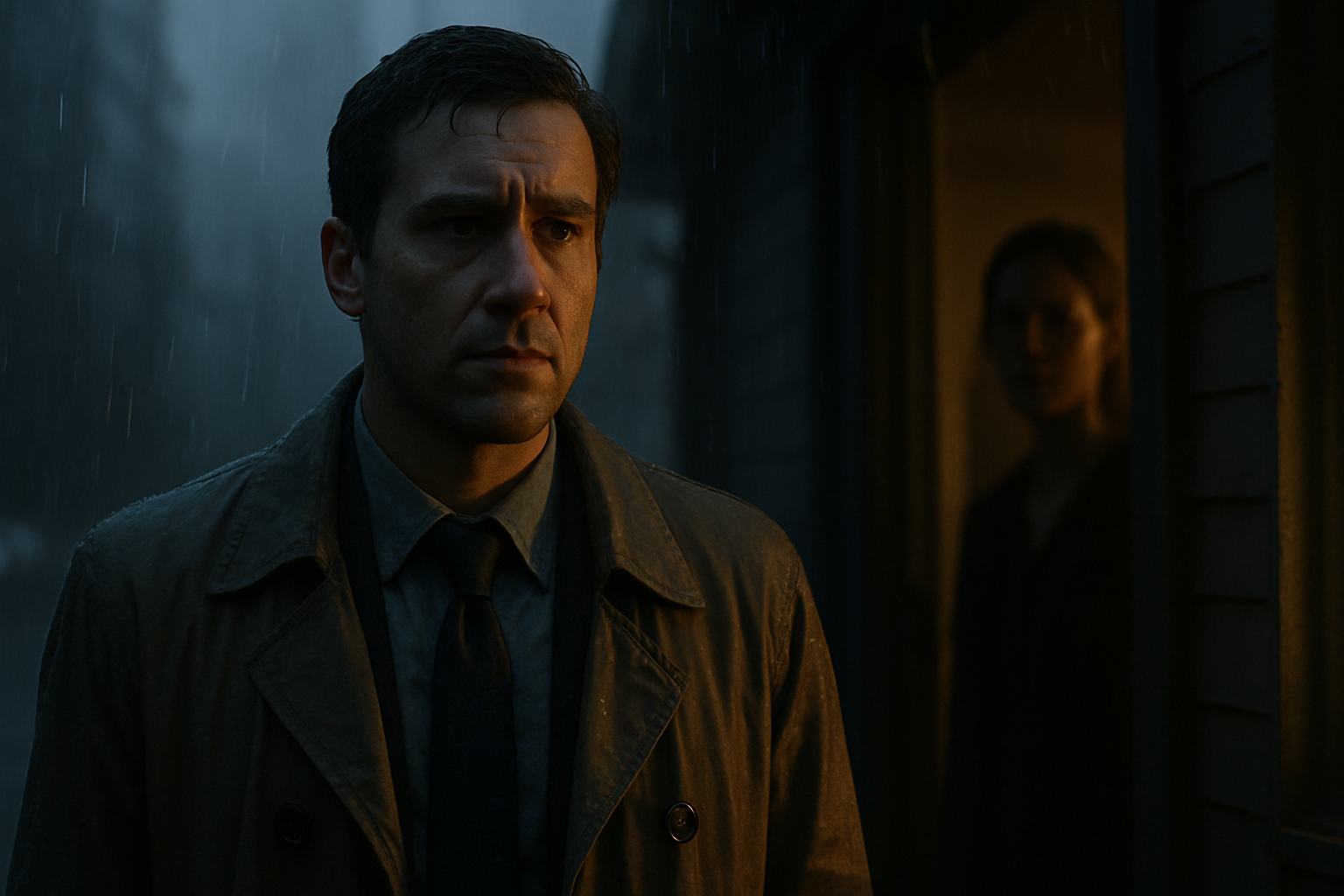
The room went so silent Jonah could hear his own pulse.
Walter stood. “Your Honor, that allegation is outrageous.”
Celeste did not look at him.
“We have surveillance showing Mr. Mercer stopped behind the Whitcomb vehicle, spoke with both young women, and followed them to a motel. He then serviced their vehicle at his shop Saturday morning. The plaintiff does not accuse Your Honor of bias, of course, but the defendant’s conduct raises serious questions.”
Jonah slowly turned toward Sterling Voss.
The billionaire’s face did not change, but satisfaction lived around his mouth.
The black SUV under the overpass.
The headlights off.
Someone had been watching.
Jonah had thought he was saving two strangers in a storm. Voss’s people had turned it into a trap.
Judge Whitcomb’s face stayed unreadable.
“Mr. Mercer,” he said, “did you know who my daughters were when you stopped?”
Jonah stood because sitting felt cowardly.
“No, Your Honor. I saw two women stranded in a storm. I stopped because nobody else did.”
“Did you discuss this case?”
“They asked why I looked half-dead. I told them I was working two jobs because I was being sued over my garage. I did not know they were your daughters.”
Celeste lifted one brow. “Convenient.”
Walter’s voice cracked across the room. “Counsel should be careful.”
Judge Whitcomb raised one hand, and both lawyers stopped.
For the first time, his eyes moved past Jonah and fixed on Sterling Voss.
“Ms. Arden, you said you have surveillance.”
“Yes, Your Honor.”
“Why was the defendant under surveillance Friday night?”
Celeste hesitated.
It was small. Half a second.
But it was the first crack.
“My client hired an investigator to document patterns relevant to the lease dispute.”
“At 11:42 p.m. during a storm?”
“Investigators work irregular hours.”
Judge Whitcomb leaned back.
“And this investigator observed two young women stranded on the side of a service road in dangerous weather?”
Celeste’s mouth tightened. “I cannot speak to everything the investigator observed.”
“I can,” said a voice from the back.
Every head turned.
Nora Whitcomb stood in the gallery beside Elise. Both sisters were pale, but steady.
Jonah’s stomach dropped again.
He had not known they were there.
Judge Whitcomb’s jaw tightened. Not with anger at Jonah. With a father’s alarm trying to survive inside a judge’s restraint.
“Ms. Whitcomb,” he said, “you will sit down unless called.”
Nora sat.
Elise stayed standing just long enough to say, “He was there before Jonah stopped, Dad.”
Dad.
The word landed in the courtroom like something too human for such a cold place.
Judge Whitcomb closed his eyes briefly.
When he opened them, he looked older.
“This court will take a recess. Counsel will remain available. When we return, I will address recusal and the handling of the record.”
The bailiff called the room to order. The judge left through the side door.
Jonah sat slowly.
He had imagined losing his garage in many ways. Bad evidence. Expensive lawyers. A judge believing the wrong man.
He had not imagined being accused of staging kindness like a con.
Walter leaned close.
“Do not speak to those girls. Do not speak to their father. Do not speak to anyone except me.”
“I didn’t do anything wrong.”
“I know,” Walter said. “That has never stopped rich men from making wrong look expensive.”
The recess lasted forty minutes.
When court resumed, Judge Whitcomb returned with a court reporter, an ethics attorney, and Judge Ruth Bellamy, the judge originally assigned to Jonah’s case.
Whitcomb did not sit in the center.
He sat to the side.
Judge Bellamy took the main seat.
Walter understood before Jonah did.
Judge Whitcomb was stepping out of power before anyone could claim he had used it.
Whitcomb spoke first.
“The court will place the following on the record. I became aware this morning that the defendant, Mr. Mercer, assisted my daughters during a roadside emergency Friday night. I was not present. I did not request, encourage, or know of that contact beforehand. Because my daughters may be witnesses to facts raised by the plaintiff, and because even the appearance of partiality must be avoided, I am recusing myself from any ruling on the merits of this case. Judge Bellamy will preside.”
Celeste stood. “Your Honor, the plaintiff appreciates—”
“I am not finished,” Whitcomb said.
She sat.
Whitcomb lifted a folder.
“Before recusal became necessary, the reassignment placed this matter before me for initial review. In reviewing the filings, I observed several discrepancies any court would be obligated to examine. Those observations have been provided to Judge Bellamy and to both parties. No ruling has been made. No finding has been entered. However, because the plaintiff has now introduced surveillance and allegations of improper influence, Judge Bellamy has agreed to conduct an evidentiary hearing today rather than proceed on unsupported representations.”
Judge Bellamy looked over her glasses at Celeste.
She was a compact woman with sharp eyes and no patience in her posture.