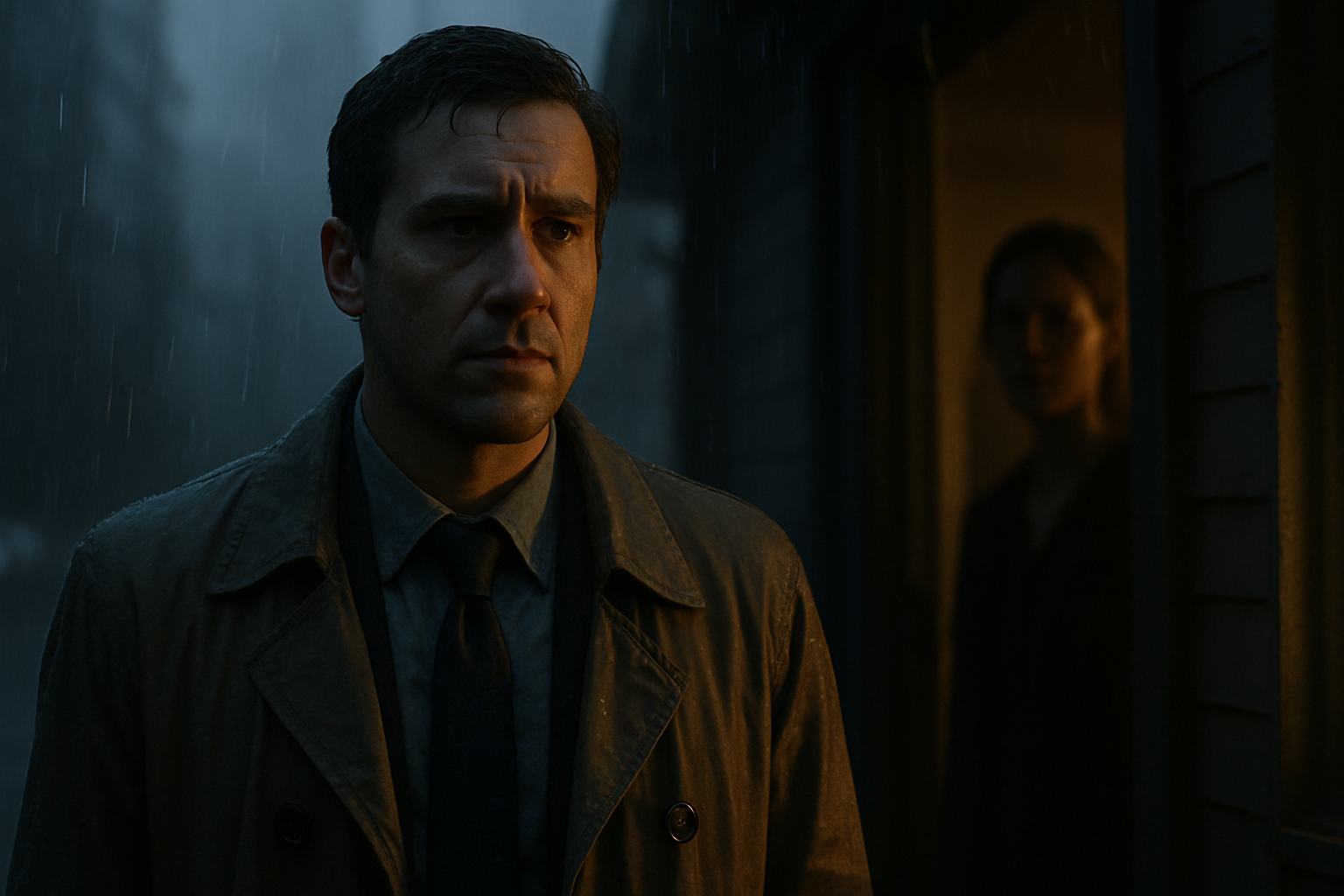
“Ms. Arden,” she said, “you opened this door. We are going to walk through it carefully.”
For the first time that morning, Sterling Voss shifted in his seat.
What followed did not feel like a hearing.
It felt like someone turning on the lights in a house where everyone had pretended not to smell smoke.
Celeste tried to begin with lease violations.
Judge Bellamy stopped her at the photographs.
Voss Urban had submitted eight images, allegedly showing oil spills, trash, blocked fire exits, and unauthorized equipment behind Mercer Auto & Body.
Jonah had told Walter for weeks that three of those photos were not his shop.
Nobody important had seemed to care.
Now Judge Bellamy projected them onto a screen and asked Celeste to identify the date, photographer, metadata, and exact location of each image.
Celeste answered smoothly at first.
“The photographs were provided by Voss Urban’s property management division.”
“That is not authentication,” Judge Bellamy said. “Who took them?”
“I would need to confirm.”
“You filed them as evidence. Confirm now.”
Celeste whispered to an associate.
The associate whispered back.
His face went red.
Walter rose with a folder in hand.
“Your Honor, if I may. The defense has photographs of Mr. Mercer’s property from the same week. Plaintiff’s Exhibit C shows a blue steel loading door with the number 14 painted beside it. Mercer Auto has a red rear door and no numbered loading bay. Exhibit E shows a chain-link enclosure. There is no chain-link enclosure on my client’s premises. Exhibit F appears to show a business called Harborline Glass reflected in a puddle. Harborline is four blocks away and is not owned, leased, or used by my client.”
Judge Bellamy looked at Celeste.
“Did your client submit photographs from another property?”
Celeste stood very still. “There may have been an internal file mix-up.”
Jonah looked at Sterling Voss.
The man no longer looked bored.
The rent records came next.
Voss Urban claimed Jonah was three months behind.
Jonah had bank statements showing all three payments withdrawn on time.
Celeste argued the management ledger did not reflect them.
Judge Bellamy asked if the money had been returned.
It had not.
She asked where it had gone.
Celeste had no answer.
Walter produced Jonah’s emails to the management office, each one asking why his account showed delinquent despite cleared payments.
The responses said the same empty thing.
“We are reviewing.”
Two days later, Voss Urban filed suit.
“So,” Judge Bellamy said, “the plaintiff received his money, failed to credit his account, ignored his inquiries, and sued to terminate the lease for nonpayment.”
“That is an unfair characterization,” Celeste said.
“It is a chronological characterization. Fairness will depend on your explanation.”
Then came the noise complaints.
Voss Urban had submitted statements from neighboring tenants claiming Jonah ran heavy machinery after midnight.
Walter called the former bakery owner, Mrs. Rosa Delgado, who testified by phone that she had never complained and that the signature on the statement was not hers.
Another complaint came from a bike shop that had moved out six months before the date on the document.
A third was signed by a warehouse manager who, according to state records, had died the previous winter.
The courtroom made a sound no judge could fully silence.
Judge Bellamy removed her glasses.
“Ms. Arden.”
Celeste’s voice had lost its polish.
“Your Honor, my client relied on information from third-party management and investigative services.”
Walter stood.
“Then perhaps we should hear from the investigator.”
Sterling Voss’s head snapped toward him.
Celeste objected at once, but Judge Bellamy had already seen enough.
The investigator, Miles Trent, was waiting in the hallway under subpoena. Walter, suspicious of the surveillance claim, had demanded his presence during the recess.
Miles Trent entered like a man realizing too late that expensive clients did not always protect hired help.
Under oath, he admitted he had been assigned to follow Jonah for three nights to “document after-hours activity.”
On Friday, he followed Jonah from the diner to the service road.
He saw the disabled Range Rover before Jonah arrived.
He recognized it because Voss Urban’s team had circulated photos of Judge Whitcomb’s family after learning Whitcomb might be reassigned to several redevelopment cases.
Judge Bellamy’s face hardened.
“Why would Voss Urban Holdings possess photographs of Judge Whitcomb’s family?”
Miles looked at Celeste.
Celeste did not look back.
“I was told to document any contact that could support a recusal motion if needed,” he said.
The words took the air out of the room.
Jonah stared at Sterling Voss and finally understood the shape of the trap.
They had not merely used his kindness after the fact.
They had been hunting for leverage.
Against judges.
Against tenants.
Against anyone standing between a billionaire and a blueprint.