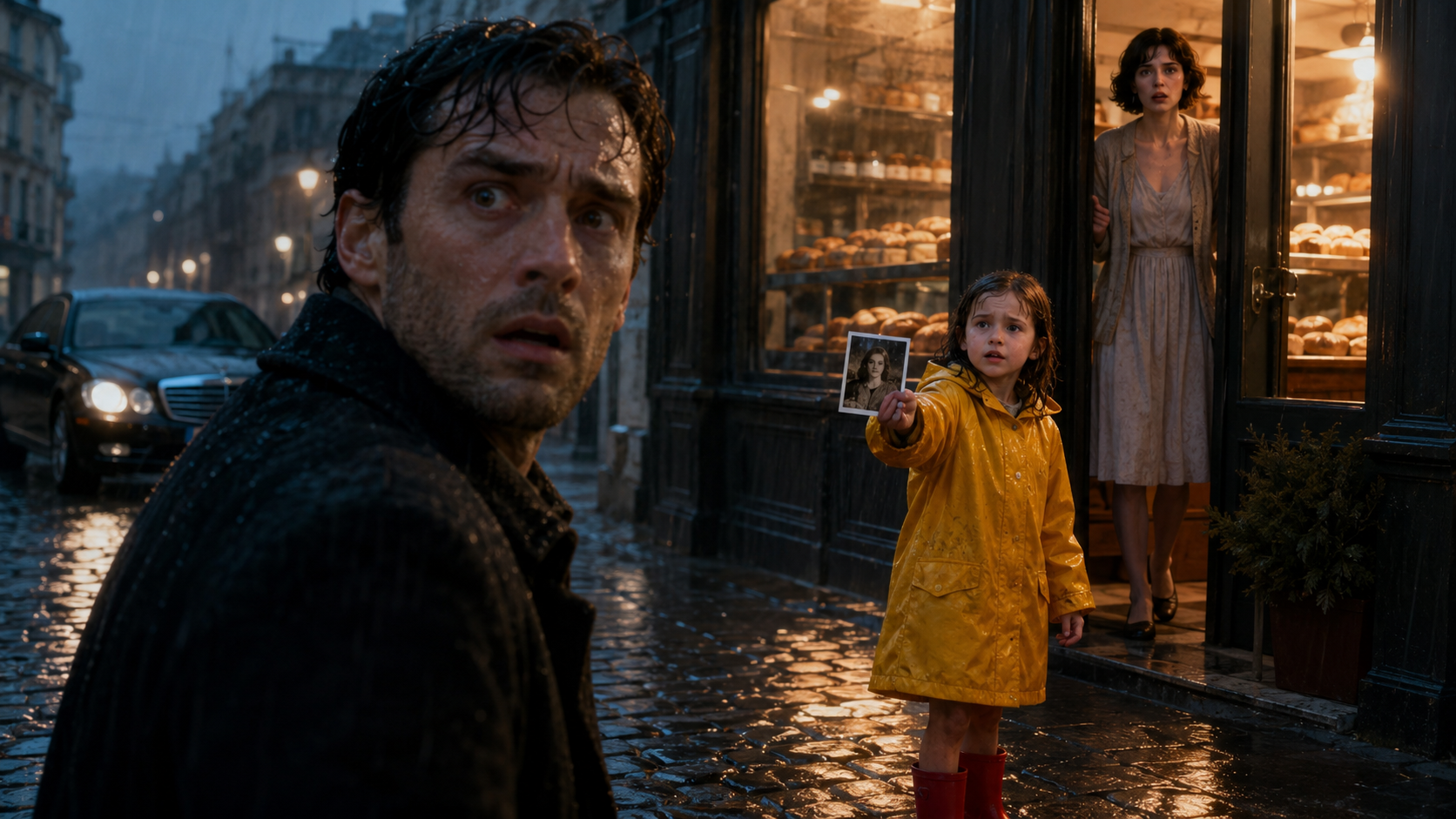
“You do not have to sit there,” she said.
“I know.”
“But you will anyway?”
“Yes.”
She looked down the hallway.
“I remembered the nursery.”
His heart stopped.
“Green walls,” she said. “A little wooden moon over the crib.”
Elias closed his eyes.
“I took it down after the funeral.”
Her face softened with pain.
“You didn’t know.”
“No.”
“Victor knew I was pregnant?”
“I think he must have.”
She leaned against the doorframe.
“I missed her first life with a lie in my head.”
Elias stood slowly.
“Mara, you gave her love. That was real.”
Tears shone in her eyes.
“I gave her fear too.”
“No. They gave you fear. You gave her safety inside it.”
That sentence broke something open in her.
She covered her face and cried.
This time, when Elias stepped closer, she did not move away. He did not pull her into his arms. He only stood near enough that she could choose.
After a moment, she rested her forehead against his chest.
His hands hovered, then settled gently on her shoulders.
It was not reunion.
Not yet.
It was survival finding a place to stand.
The DNA results arrived the next afternoon.
Sophie was his daughter.
Elias read the report once.
Then again.
Then he folded it because his hands were shaking too badly to hold it open.
Sophie watched him from the sofa.
“Are you my dad?” she asked.
The room went silent.
Mara sat beside her, one arm around her shoulders. Beatrice stood near the window, pretending not to cry.
Elias knelt in front of Sophie, just as he had on the street.
“Yes,” he said. “I am.”
She studied him seriously.
“Did you know?”
“No.”
“Did Mommy know?”
Mara answered through tears.
“No, sweetheart.”
Sophie thought about that.
“Are you going to live with us now?”
The question was so simple it nearly destroyed every adult in the room.
Elias looked at Mara before answering.
“That depends on what your mother wants. But no matter what, I am not leaving you again.”
Sophie nodded as though this was acceptable.
Then she climbed into his arms.
Elias held his daughter for the first time.
She smelled like strawberry shampoo and crayons.
He buried his face in her curls and felt five years of grief become something else.
Not joy.
Joy was too clean a word for something born from so much pain.
Hope.
Terrifying, fragile hope.
Victor was arrested three weeks later.
Not for everything at first. Men like him wrapped crimes in paperwork, signatures, favors, and people too afraid to speak. But Agnes spoke. The doctor who falsified Mara’s records spoke after Beatrice gave him a choice between truth and ruin.
The financial records spoke loudest of all.
The charitable housing fund had been Victor’s private river of stolen money for years. Mara discovered it, confronted him, and planned to meet Beatrice. Victor arranged the crash, bribed the wrong people, and turned one woman’s survival into a secret he believed he could control.
He did not expect a photograph to fall.
He did not expect a six-year-old girl to recognize her mother.
And he did not expect the woman he erased to remember enough to stand in court.
The day Mara testified, she wore a navy dress and no jewelry except the thin gold wedding band Agnes had kept hidden inside a tin of flour for five years.
She did not wear it on her finger.
She wore it on a chain around her neck because she said she was not ready to pretend time had not happened.
Elias understood.
He wore his on his hand because he had never taken it off.
In the courtroom, Victor refused to look afraid.
But when Mara took the stand and stated her name clearly, his face changed.
“My name is Mara Reed,” she said. “For five years, I was told I was Nora Hale. I was told my husband tried to kill me. I was told my past was dangerous because a man who needed me erased decided my fear was useful.”
Her voice shook once.
Only once.
Then she looked straight at Victor.
“But I am not erased.”
That sentence became the headline.
The trial did not heal everything.
Nothing did.
Agnes accepted a plea agreement and testified fully. Mara could not forgive her, but she visited once before sentencing and told her Sophie would know the woman who baked her birthday cakes was both wrong and loving, because children deserved truth that was complicated but not poisoned.
Elias and Mara began again slowly.
Not as husband and wife pretending five years had vanished.
As two people standing in ruins with a child between them and a life that had to be chosen again.
Some mornings, Mara remembered his favorite coffee.
Other days, she could not bear the sound of his voice because trauma woke before memory did.
He learned not to take either personally.
They attended therapy together.
Separately too.
They answered Sophie’s questions honestly, even when the answers hurt.