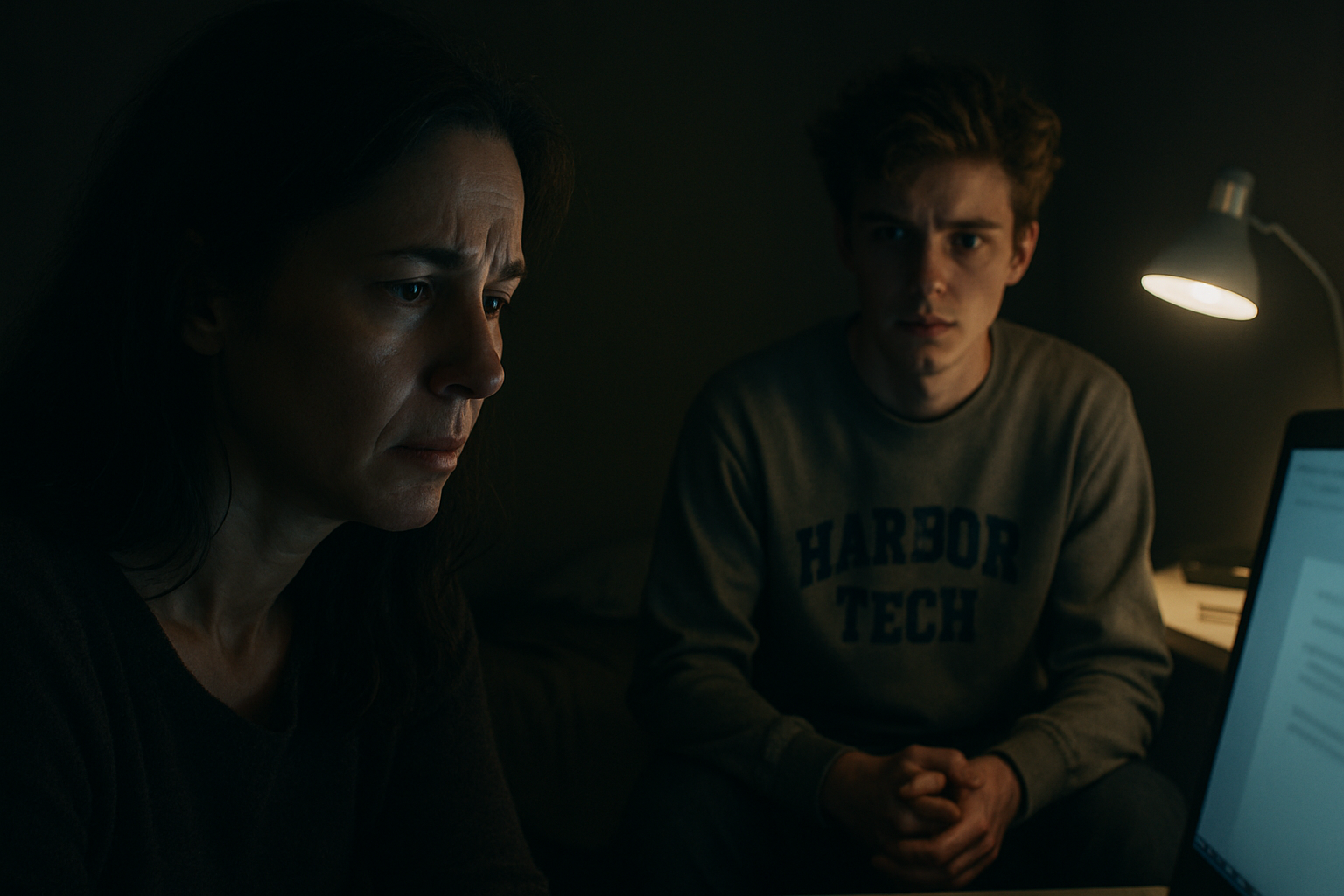
And Mara held him the way she had held him after fevers, missed games, and college letters he pretended didn’t matter.
Only now she understood.
Every time she had comforted Noah through one of Grant’s absences, she had been teaching him something Grant never could.
Love stays.
The investigations moved more slowly than headlines.
Serena brought in forensic accountants. The forged signature became part of a civil complaint. Hidden transfers triggered internal audits. Julian resigned before he could be removed, then discovered resignation did not protect him from subpoenas.
Selene hired her own attorney.
The press turned on her with a cruelty Mara did not enjoy.
Mara cooperated with investigators but refused every interview that wanted tears on camera.
She had not exposed Grant to become entertainment.
She had done it because secrecy had been his weapon.
Two weeks after the launch, a sealed envelope arrived through Serena.
Inside were results from a private DNA test Grant had ordered months earlier, along with emails between him and Julian.
Milo was not Grant’s biological son.
Mara read the page twice, waiting for satisfaction.
None came.
Grant had known.
He had known before the mall.
Before the toy train.
Before presenting Selene as his future.
Before trying to erase Mara.
The emails revealed something colder than paternity.
Grant had planned to acknowledge Milo anyway, not out of love, but usefulness.
A young partner and a little boy would soften his image during the Meridian Fund launch. A second family, introduced after Mara had been discredited, would let him tell a beautiful new story.
Unstable aging wife.
Noble businessman rebuilding his life.
Devoted younger woman.
Child he had “chosen.”
Grant had not been fooled by Selene.
He had used her, too.
When Mara told Noah, he sat in silence.
“So Milo was just another asset.”
“To Grant, maybe.”
“What about Selene?”
“I don’t know.”
“You feel sorry for her?”
“I feel sorry for the child,” Mara said. “And for anyone who believed being chosen by your father meant being safe.”
Mara sent one message to Selene through attorneys.
Milo’s name would not be used in any filing unless legally unavoidable, and Mara would not speak publicly about his paternity.
Selene did not answer for three days.
Then a handwritten note arrived.
You owe me nothing. I know that. He told me you were cold, unstable, and cruel. Then you gave my son hot chocolate while I tried to buy your life for two million dollars. I don’t expect forgiveness. I only wanted you to know I am leaving the city with Milo. He deserves to be nobody’s strategy.
Mara folded the note and placed it in a drawer.
Not as absolution.
As proof that shame, sometimes, can still point a person toward decency.
The divorce became final nine months later.
By then, Grant had stepped down permanently from Whitmore Capital. Several assets remained frozen. The company survived under new leadership, though its name carried scars.
Mara kept the house.
She recovered a significant portion of her investment.
And she secured funds for something Lenora had quietly asked for in her letter: a foundation for caregivers whose unpaid labor preserved wealthy families while leaving them vulnerable and unseen.
Noah chose Harbor Tech after all.
Not to please Grant.
Not to defy him.
Because he wanted to build systems that made hidden patterns visible.
On move-in day, Mara carried boxes into his dorm while Lydia complained about parking and Noah pretended not to be emotional.
As Mara adjusted a lamp on his desk, Noah leaned against the doorway.
“Mom?”
“Hm?”
“Do you ever miss him?”
She did not answer quickly.
“I miss who I thought he could become,” she said. “I miss the marriage I kept trying to have. But I do not miss making myself small so someone else could feel powerful.”
Noah looked down the hall, where students laughed and parents fussed over sheets.
“I’m glad you didn’t sign that day.”
Mara smiled.
“So am I.”
Grant asked to see Noah twice that fall.
The first time, Noah declined.
The second time, he agreed to meet in a quiet coffee shop, with Mara waiting outside in the car. Not because Noah needed protection, but because family wounds sometimes require witnesses even after the danger has passed.
When Noah returned, his face was unreadable.
“How was it?” Mara asked.
Noah buckled his seat belt.
“He said he was proud of me.”
Mara tightened her hands on the wheel.
“What did you say?”
“I told him he should work on being sorry before being proud.”
Mara let out a breath that was almost a laugh and almost a sob.
“Then I left,” Noah said. “I don’t know if I’ll see him again.”
“You don’t have to decide forever today.”
“I know.”
They drove home in companionable silence.
The river flashed between buildings, gray and restless under the autumn sky.
Mara thought of all the years she had mistaken endurance for virtue.
Endurance has its place.
It keeps children fed. Elders cared for. Bills paid. Innocent people protected when collapse would hurt them most.