The air of 1984 had the taste of sea salt, fine bourbon, and impending betrayal. When you stepped into the darkened theater in March, you weren’t just going to see a movie—you were descending into a sun-drenched nightmare of Mexican corruption. Imagine Jeff Bridges: a tough, charismatic hero at the top of his game, trapped in the sharp contrasts of a world where athletes are broken and gamblers buy even the sunrise. It was a neon-soaked modern return to classic noir—the story of a man who is supposed to find a woman but instead loses himself in the stifling, dangerous tension of her world.

But the true spirit hidden within the film did not lie in the dialogue. It was born in the first quiet piano note that seemed to spill out of the speakers and slowly permeate the entire atmosphere of the film. When Phil Collins sat down at the piano to record “Take a Look at Me Now,” he didn’t just create an accompanying single for the film – he composed a musical anchor full of longing and melancholy.
The melody had an almost magnetic power that hovered over the screen like a shadow. The shimmering power ballad carried the same hopelessness as a love story doomed to perish before it ever saw the light of day. It wasn’t just a song—it was the bruised heartbeat of an entire decade that wore its emotions proudly on a rolled-up leather sleeve.
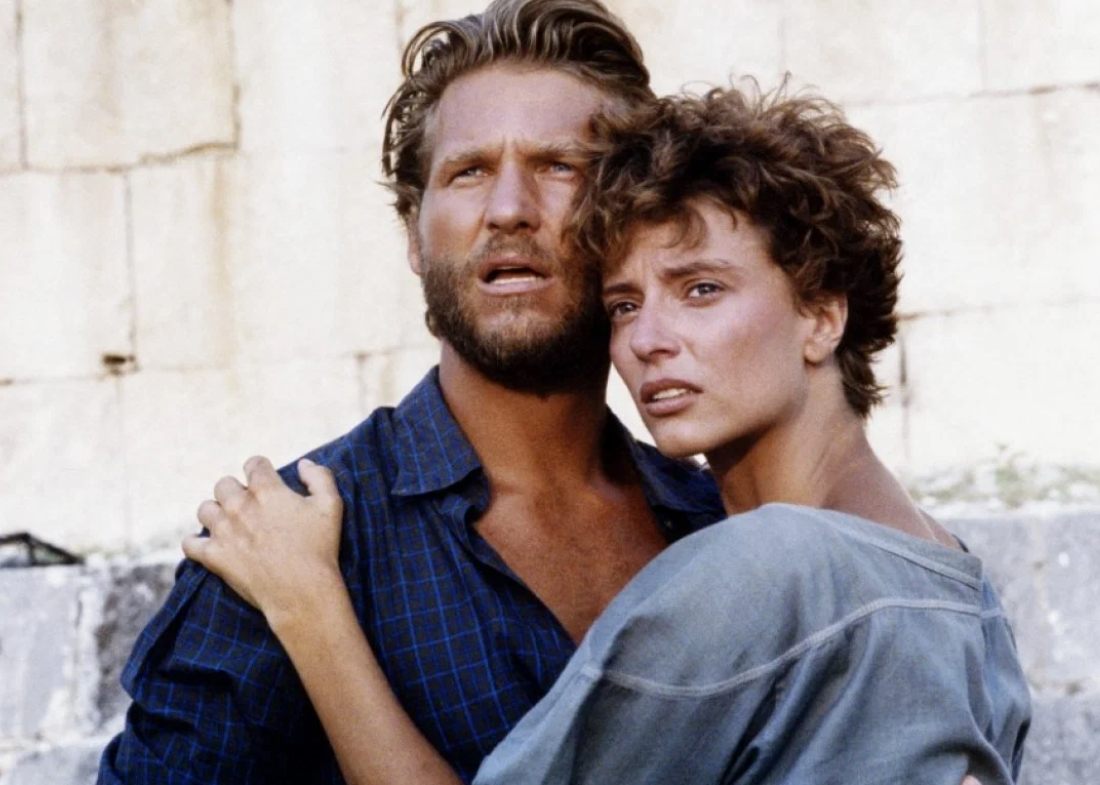
The tension between Jeff Bridges and Rachel Ward was like a bare high-voltage wire. This wasn’t just another version of Out of the Past—it was more like a dangerous encounter between two people who knew full well they should walk away, but couldn’t bring themselves to do so.

Bridges portrayed a disgraced former professional football player with a raw, almost painfully human vulnerability. His character teetered between the predatory manipulator played by James Woods and a woman who was less a partner than a beautiful and inescapable phantom.
Their chemistry felt like a risky bet in a casino where the house always wins in the end—all against the backdrop of the shimmering, stifling heat of Yucatán.
There was a time when a single melody could capture an entire summer—and this one represented its peak. The song itself ultimately outlived the film’s plot in the audience’s memory and became a global phenomenon that continued to be played on nighttime radio broadcasts for many years to come.
It belonged to the era of so-called “power themes,” when music not only served as an accompaniment to the scene, but directly amplified emotions and fully engaged the listener. We may recall the sweat on the hero’s brow or the chase through the jungle, but every time the radio tunes into its familiar, melancholic frequency, we feel that soaring and desperate rush of the chorus all over again.

Four decades later, Against All Odds serves as a vivid time capsule of the style and atmosphere of the 1980s. We return to it not only for its gritty crime story or the visually perfect cinematography of its time, but mainly for the unique moment when film and music came together to create something almost immortal. Music and audio equipment
Whether you’re watching frantic car chases or just sitting in a darkened room while the record spins on the turntable, it still reminds us of the price of obsession. It’s an echo of an era that believed in the impossible and in bold dreams — and one that compels us to look back again and again at that one last perfect note. 🎬🎶