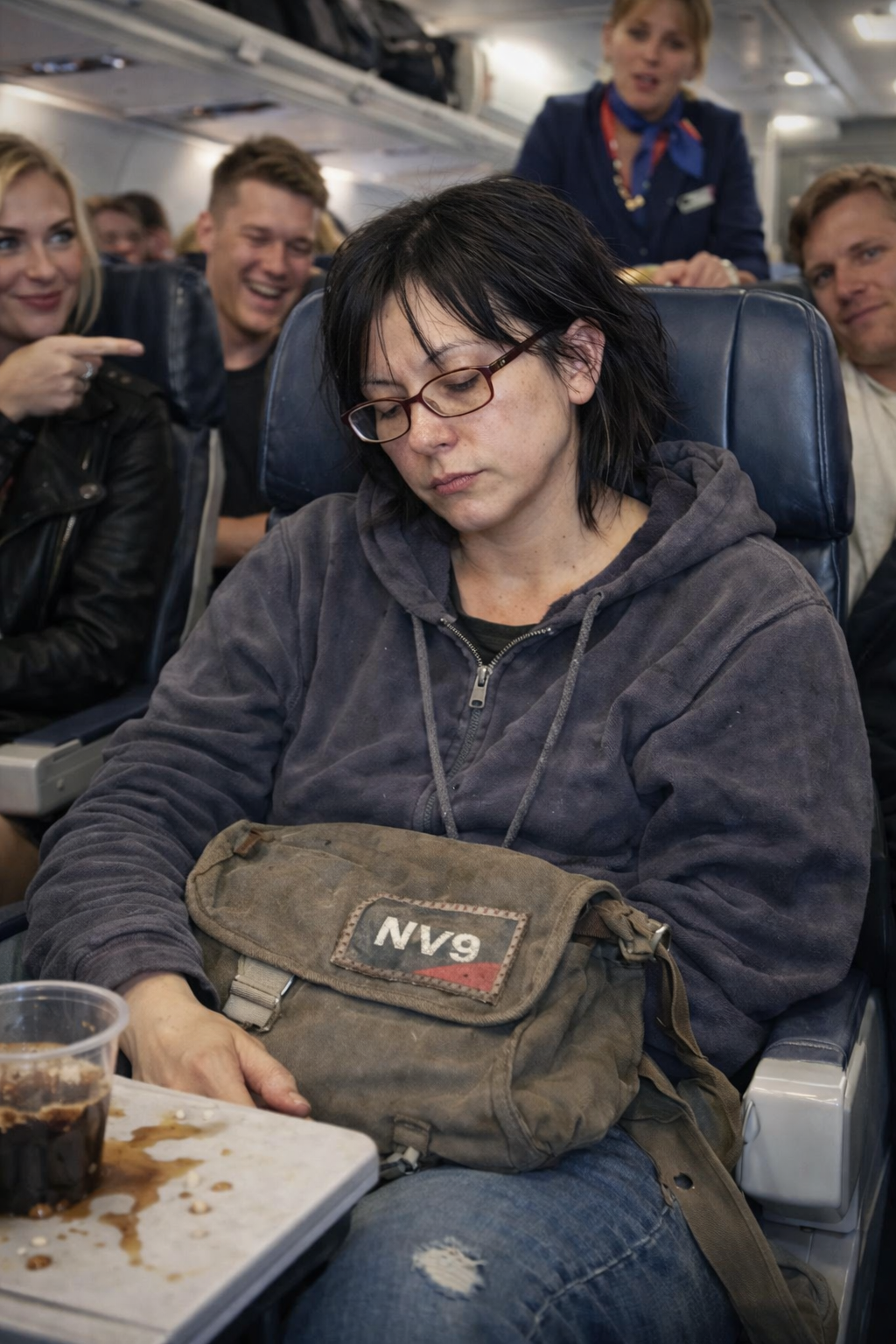
“I’ll drive.”
They met at a diner just outside the airport.
Cheap coffee.
Honest pie.
Walter placed Rachel’s notebook between them.
Nina opened her laptop.
Between the notes and the article, a picture slowly formed.
Rachel had never been part of some glamorous secret program, the way the internet imagined.
The truth was simpler.
And heavier.
She grew up around planes in eastern Oregon.
Her father taught her everything—weather patterns, paper maps, rough landings, stubborn engines, and the habit of checking everything twice.
Later, she worked contract flight support for a federal emergency program—handling mountain routes, weather reroutes, rescue coordination, and manual instrument methods most modern crews barely trained in anymore.

Not classified.
Not glamorous.
Just difficult—and essential.
And she had been very good at it.
Then came Oregon.
A systems supplier error.
A near-failure on a mountain approach.
Rachel challenged the official report.
After that—
Silence.
No scandal.
No headline fall.
Just absence.
The kind of absence that feels intentional.
Walter leaned back and exhaled slowly.
“They didn’t destroy her,” he said. “They just stopped saying her name.”
Nina looked down at the notebook.
“That might be worse.”
On a return flight, Cindy sat quietly after service, replaying Rachel’s words in her mind.
You were scared.
That’s not an excuse.
No.
But it’s a reason. Learn the difference.
She thought about how quickly she had sided with the confident passengers.
How easily she had mistaken calm for arrogance—because it didn’t look the way she expected.
At the airline debrief, Cindy spoke up.
“She identified the problem before we did,” she said. “And passengers mocked her openly… while I helped shut her down.”
The room went still.
A supervisor asked carefully,
“Are you saying crew behavior contributed to passenger tension?”
Cindy swallowed.
“I’m saying mine did.”
Some executives shifted uncomfortably.
Cindy continued anyway.
Because once you see yourself clearly, it becomes difficult to return to the version that flatters you.
The businessman from row six—Martin Keene—fared no better.
A senior executive.
Corner office.
Polished authority.
Until the video surfaced.
He watched it alone in his office.
His own face.
His own voice.
“You can’t let someone like her in there.”
He looked like a man who had confused arrogance with leadership.
The online reaction was brutal.
But the worst response came from his own daughter.
That evening, she sent him a screenshot of the clip.
Then one sentence:
I hope you’re at least as ashamed as I am.
Martin sat in silence for a long time after that.
The woman in the cream blazer—Vanessa Cole—posted a carefully worded statement online, claiming her remarks had been “taken out of context during a stressful situation.”
No one accepted her explanation.
Because the context itself was the problem.
The woman in the pink cardigan quietly deleted half her social media posts and later told friends that the internet had simply become too harsh.
The security liaison who had questioned Rachel over the radio was reassigned to administrative review.
Not for disagreeing—
But for choosing procedure over people in the middle of a live emergency.
Captain Ellis gave his statement on the fifth day.
He did not say Rachel’s name.
That was intentional.
But he refused to let the truth be diluted.

“There was no luck involved,” he said during a recorded interview. “What I saw was skill, judgment, experience, and composure under pressure. We accepted help from someone who understood failing instruments better than anyone available to us at that moment. And I would make that same decision again—without hesitation.”
The clip spread quickly.
Almost as quickly as the passenger footage.
It mattered that a professional said it.
It mattered even more that his voice wavered slightly when he did.
At a small elementary school outside Denver, the little girl from the flight sat in art class, carefully drawing.
A plane above mountains.
A woman in a gray hoodie at the front.
Big glasses.
Dark hair.
A small bear in the corner—because, in her mind, important moments always needed witnesses.
At the bottom, she wrote in uneven but determined letters:
THE LADY WHO BROUGHT US HOME
Her mother, Elise, cried when she saw it.
Not because of the drawing itself—
But because of what her daughter had whispered that night:
“Mom… the grown-ups looked at her clothes and forgot to look at her face.”
Children rarely lie.
And they judge with uncomfortable accuracy.
Elise framed the picture.
A week after the flight, a civic aviation board announced a public commendation for
“an unidentified civilian whose actions contributed to the safe landing of Flight 472.”