
I didn’t reply straight away because it was an important question. Revenge is an impulse, a performance, a craving. It’s when a person, driven by pain, wants to stage a spectacular act of punishment. What I did felt different. My aim wasn’t to ruin Kevin’s life simply because he’d hurt me. If I’d wanted only emotional retribution, there would have been far simpler ways. Scandals in restaurants. Humiliation on social media. Smashed crockery. The theatre of betrayal is always available, and people love it because it looks passionate. But the theatre burns out quickly and almost never leaves the books balanced.
I needed precision.
For years, Kevin had been telling our story wrongly. He is the provider. I am the backdrop. He is the strategist. I am the support mechanism. He constructed a worldview in which my labour was only acknowledged when it suited him, and my intellect went unnoticed until it became a threat. And then he added romance, gambling, forgery and theft to this construct — and expected the old version of reality to hold up.
I didn’t destroy him with my fury.
I corrected the record.
A few months later, once the flat had officially been transferred entirely into my name, I stood by the window watching the sunset bathe the skyscrapers in orange. And I let that thought sink in. This house — which Kevin had regarded as a trophy, and then turned into collateral — had been built by my grandmother’s own hands long before it became glass and concrete. It was her labour that laid its first stone. My income sustained its existence. My attentiveness saved it. Kevin, on the other hand, simply took up space inside noisily.
I didn’t start redecorating straight away. At first, I wanted to get to know the rooms without him. I sat in silence more often. I moved his armchair because it took up too much space. I bought new sheets. I painted the small storeroom by the kitchen a deep, calm blue and turned it into a proper study: shelves for client files, a desk by the window. On the first morning, as I worked there with a cup of coffee beside my laptop, I felt that special joy which comes only when you finally live in a space no longer built around other people’s distortions.
A few months later, Whitman rang about a procedural matter relating to the recovery. Just before saying goodbye, he remarked in that same quiet voice:
‘You know, Mrs Bennett, most people think that power always makes itself heard loudly. In my experience, more often than not, it simply keeps records.’
After the conversation, I wrote down that phrase straight away. It was far too accurate to risk forgetting.
Over time, Kevin became, for me, a story pieced together from snippets of information provided by others. He left the company. His tax troubles got worse. In the end, his Audi was repossessed for unpaid debts. He moved into a rented flat much further from the city centre than he would ever have considered acceptable. A mutual acquaintance said he’d seen him in a bar — and that he looked ‘not great’. I didn’t ask any further. Real consequences rarely remain dramatic for long. Very quickly, they turn into bills, restrictions, smaller rooms and revised plans.
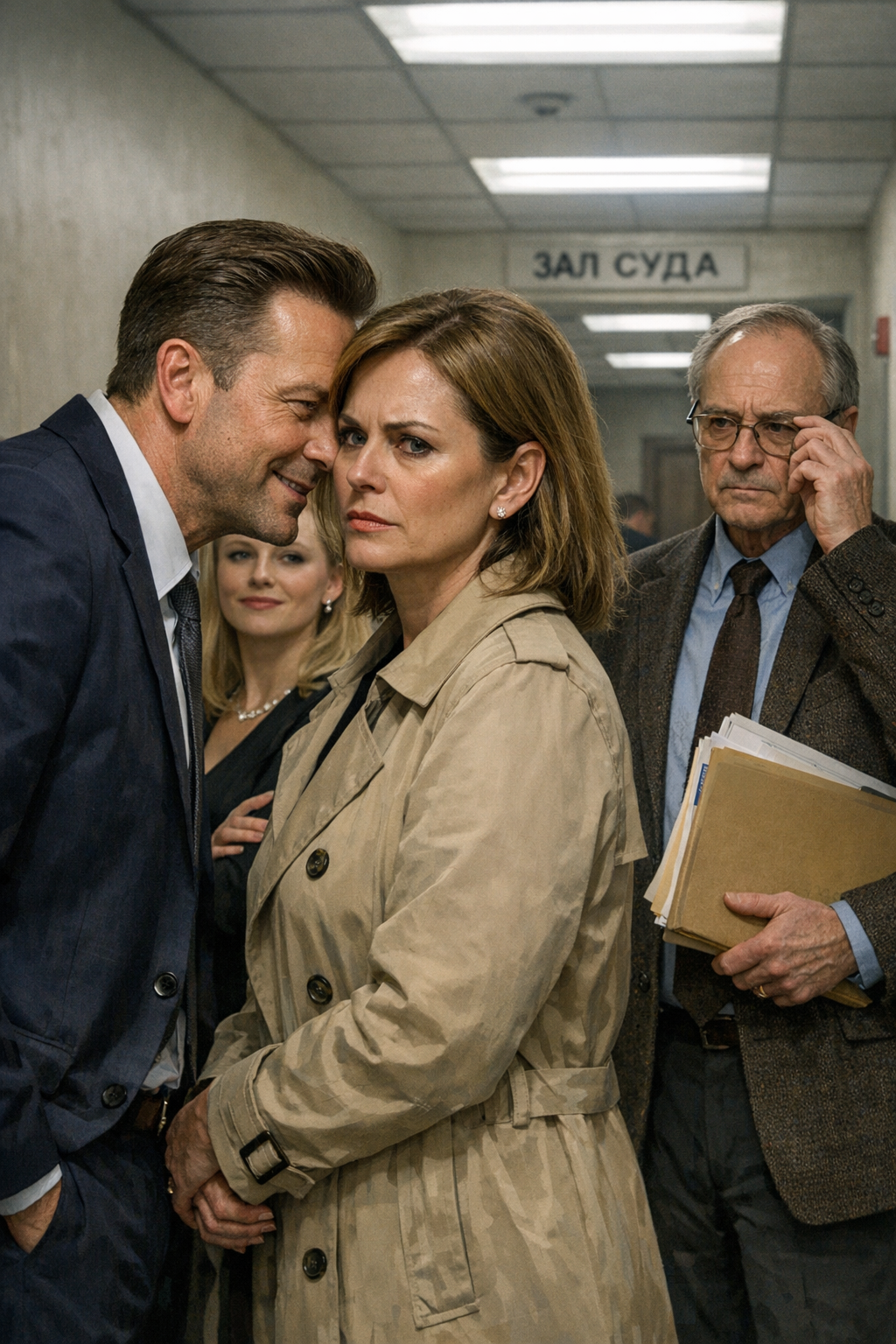
Sometimes I recall that morning in the court corridor when he leaned towards me and said that after the hearing I would become a nobody. Now I understand: that had always been his greatest fear, not mine. He measured worth through visible things — a position, a car, a watch, the quality of admiration in other people’s eyes. To lose his possessions, status and audience meant, for him, almost ceasing to exist. He was convinced that everyone else was the same. And he never understood that my identity had never resided in those things. It lay in competence. In the ability to see clearly and act with integrity. In the calm certainty that if something didn’t add up, I would find exactly where the numbers didn’t add up
He mistook silence for emptiness. That was his fatal mistake.
In the spring, after my divorce, I went away on my own for the weekend to a small town by a lake, a two-hour drive from Chicago. I rented a cottage with a veranda right by the water, which was still cold from the melted snow. I took three books, my laptop only in case of emergency, and no expectations whatsoever. On the second evening, I sat under a blanket on the porch, listening to the cries of loons over the dark water, and suddenly realised how long it had been since I’d simply been, without keeping track of other people’s moods, lies or desires. Peace didn’t come to me in a dramatic way. It returned gently — like warmth returning to a hand you hadn’t even noticed had gone numb.
When I returned, I changed my surname on the intercom and in the residents’ list: from Bennett to Laura Mercer — my maiden name, the one that belonged to me even before marriage, until marriage turned it into a footnote. The caretaker asked if she should make the change straight away.
‘Yes,’ I replied.