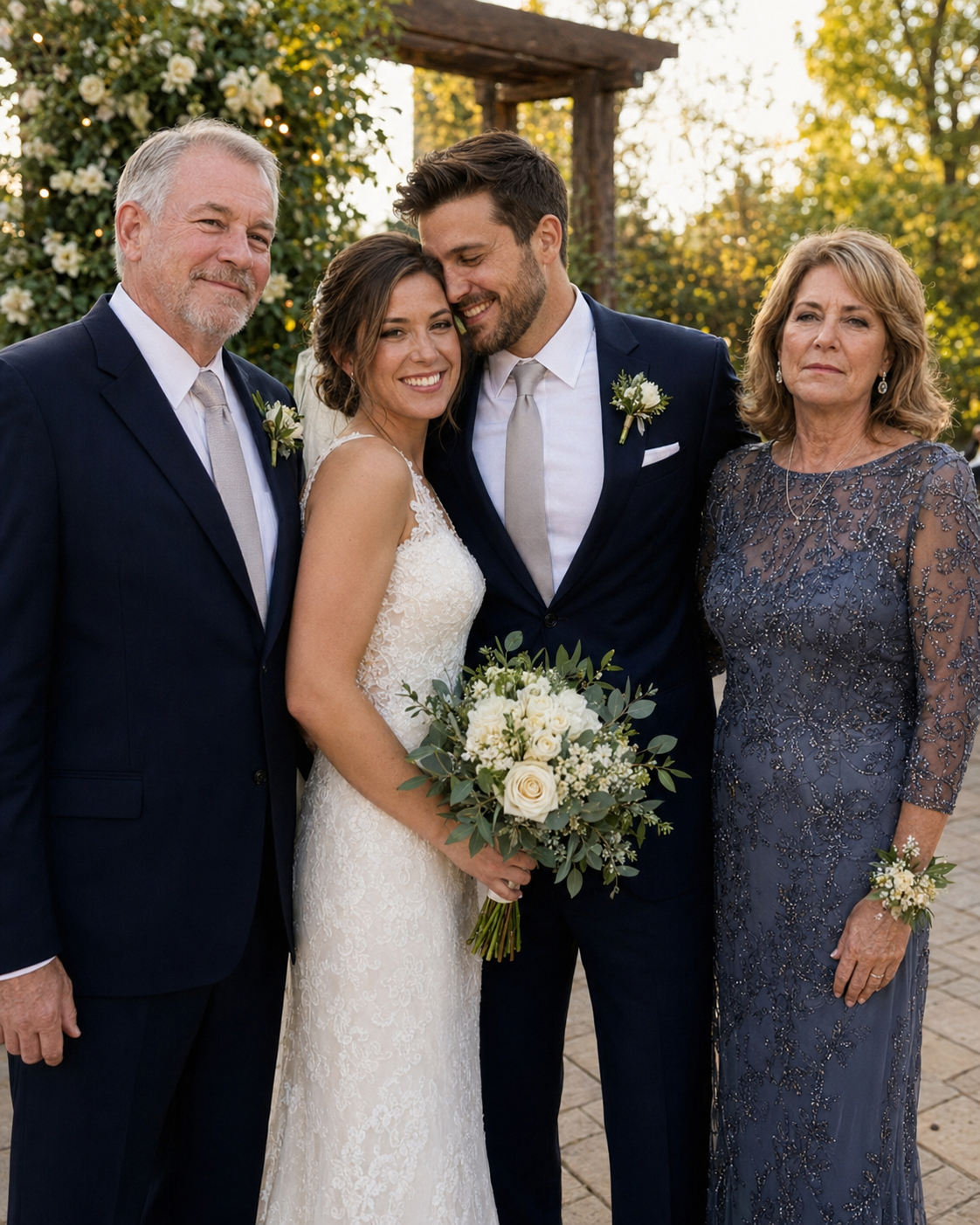
He reached into his jacket and put his hand on the leather folder, the one he’d had in his pocket every day for as long as I could remember, but he didn’t open it yet.
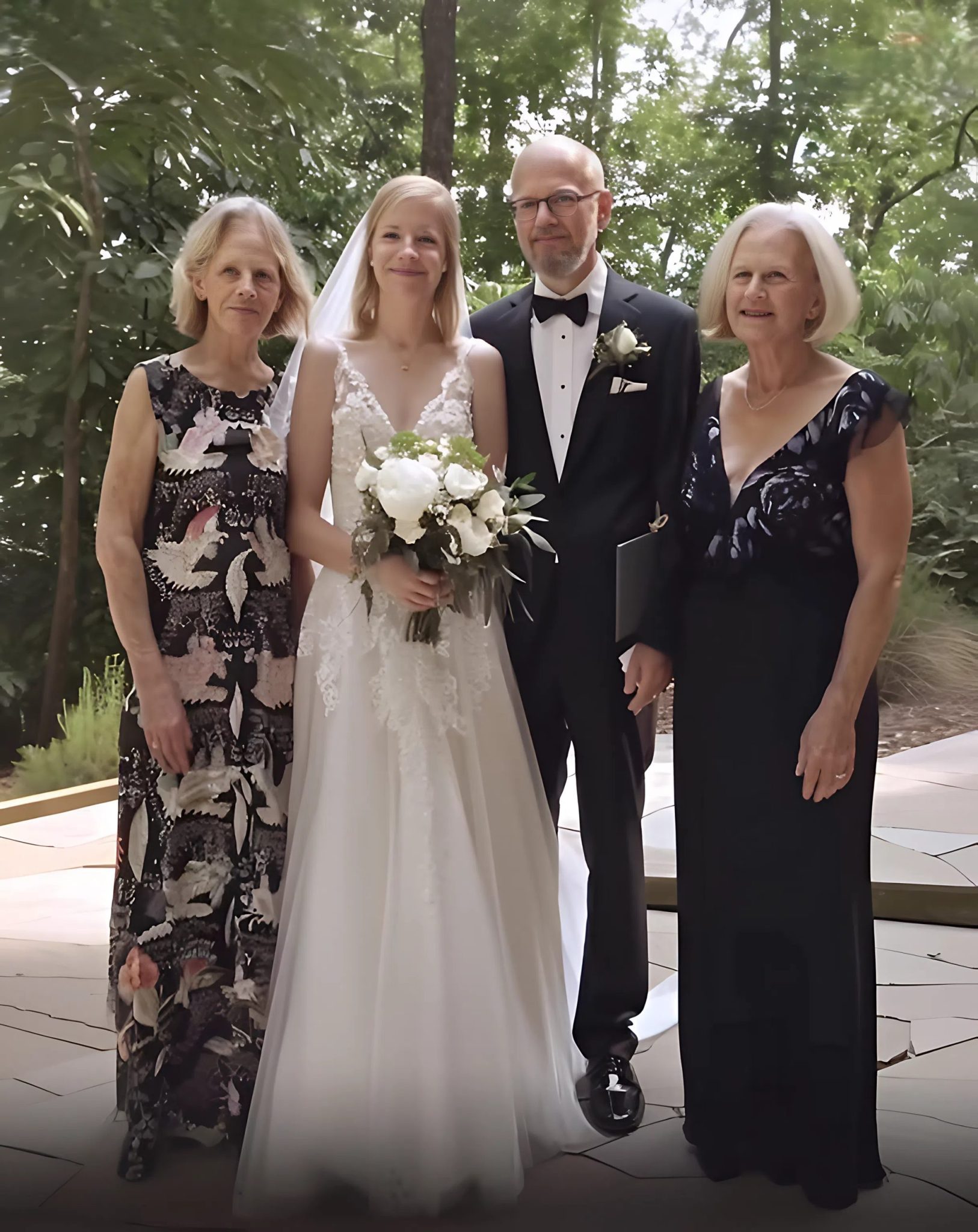
“Let me tell you about when Orra was sixteen,” he said. “When our neighbor, Mrs. Evelyn, got her diagnosis. Mrs. Evelyn lived with her young grandchildren who’d lost both their parents in a car crash. Her husband had been gone for years. And when the insurance company came back with what they’d cover, it wasn’t nearly enough.”
Mrs. Evelyn had been sitting at Dad’s table all evening without drawing much attention. Small, white-haired, with the careful posture of someone who had once been taller.
I hugged her and moved on because there were a hundred things to manage.
He didn’t open it yet.
Dad paused.
“I remember finding Orra sitting on the kitchen floor that night. I thought something had happened to her. She was just crying. She said she couldn’t figure out how it was fair that someone could do everything right and still end up losing.”
The ballroom was the quietest place with two hundred people I had ever heard.
“Deborah mentioned the repair shop,” Dad said. “She’s right that Orra worked there. She worked there after school. She babysat on weekends. She cleaned offices on the nights we didn’t have a job. And I want you to know what for.”
The ballroom was the quietest place with two hundred people.
He finally opened the leather folder.
Inside were papers I hadn’t seen in years. Receipts. Payment confirmations. Handwritten notes in my own sixteen-year-old handwriting. Donation records with my name printed across the top of each one.
“Not for a car,” he said. “Not for clothes. Not for college.” He looked around the room. “Every paycheck she earned for two years went into an envelope. Every single one. I found out six months after she had started. She hadn’t told me. She hadn’t told anyone.”
“That’s ridiculous,” Deborah said from across the room. Her voice had lost a little of its earlier confidence, but not all of it. “You’re expecting two hundred people to believe that?”
He finally opened the leather folder.
Dad looked at her. Then he reached into the folder and held up another receipt.
“No, the receipts can do that.”
He held up the folder.
“I’ve carried this with me since the day I found it. Not because I was waiting to use it. I carry it because it’s the best thing I’ve ever had in my pocket.”
He began passing the receipts to the nearest table.
“It’s the best thing I’ve ever had in my pocket.”
They moved through the room the way things move when people suddenly need to see for themselves.
Dad looked at Deborah one last time.
“If Orra wanted money,” he said, “she chose the slowest possible way to get it.” He paused. “Character doesn’t come with a bank account. I’d have thought a family like yours would know that by now.”
Then he set the microphone down and walked back to his seat.
“Character doesn’t come with a bank account.”
Nobody moved.
I was standing at the edge of the dance floor, trying to remember how to breathe, when I heard Russell’s voice.
He had stood up without my noticing.
He was looking at me from across the ballroom with an expression I didn’t have a name for immediately, and then I recognized it as the same one he’d worn the morning he told me he loved me for the first time. Slightly wrecked. Completely certain.
“I knew,” he said.
Nobody moved.
The room turned to him.
“A couple of years ago, a storm hit the shop. I was helping Jimmy clean out the back room, and I found the envelope.” He glanced at Dad, who nodded once. “Jimmy told me the whole story.”
He looked back at me.
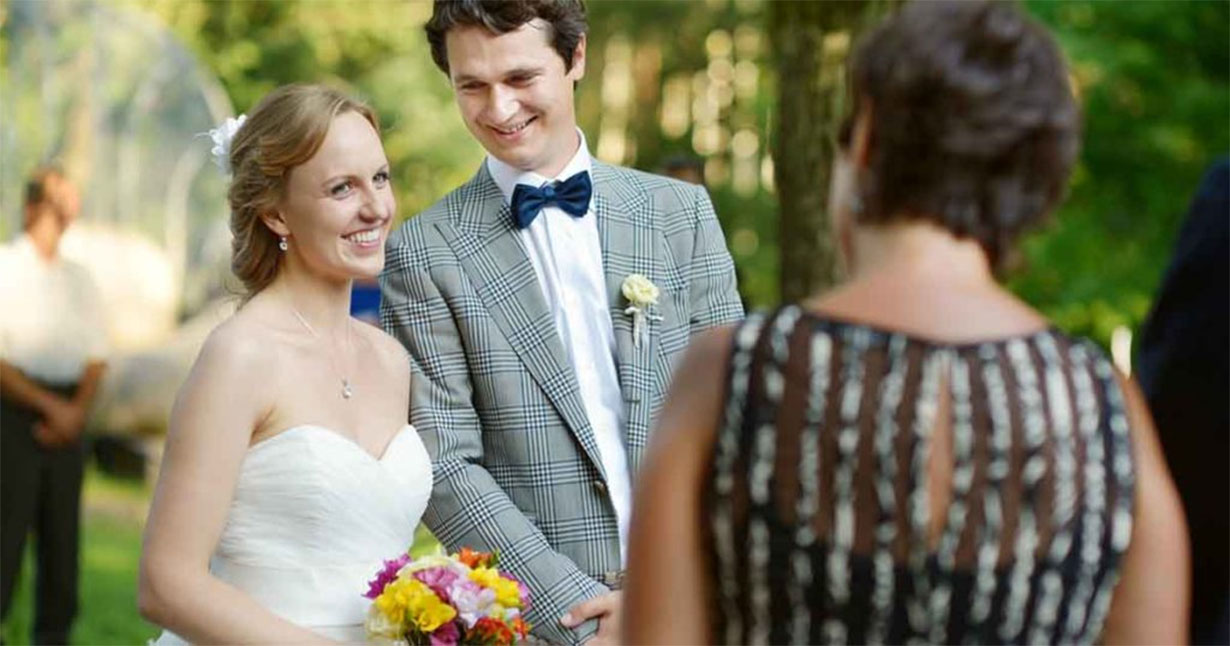
“That was the day I decided to ask you to marry me,” he added. “Not because you helped someone. Because you never needed anyone to know that you had. Not once. Not me, not anyone.” He paused. “We’d been together two years, and you’d never said a word. I had to find out from an envelope in the back room of a repair shop in the middle of a flood cleanup.”
Tears welled up in my eyes.
“That was the day I decided to ask you to marry me.”
Russell looked over at his mother.
“That’s who she is, Mom. That’s exactly who she is.”
Someone near the back of the room started crying quietly.
Deborah had not sat back down. She was still standing near the microphone, and her face had changed in a way I’d never seen from her before; something had gone out of it that usually held everything up.
But Dad wasn’t finished.
Dad wasn’t finished.
“Mrs. Evelyn,” he said gently, turning toward his table.
The small, white-haired woman set down her glass.
She stood slowly, straightening herself to her full height, which was not very tall but was entirely enough.
And the entire room watched her, this woman nobody had been paying attention to all evening.
The entire room watched her.