The power of kindness and steadfastness: one evening that changed everything
Words can hurt deeper than a knife, but sometimes the right person knows how to stop that inner pain. The moment three wealthy women allowed themselves to mock a waitress, accusing her of ‘smelling of poverty,’ the entire room froze. No one moved or said a word until my boyfriend stood up and changed the course of events.
My name is Anna. I never would have thought that a broken printer in the library would bring me together with the person who would later transform my life. Jack didn’t attract attention and behaved reservedly, but it was precisely this calmness that immediately attracted me. I thought I already understood his depth, but one evening in a fancy restaurant, he revealed an unexpected side of himself.
It had been an unfortunate day: coffee had spilled into my bag, the bus had broken down on the way to campus, and, as if fate itself had decided to complicate my life, I was stubbornly struggling with the printer in the library.

The printer flashed as if challenging me, spitting out half-printed pages and then making plaintive noises as it stopped. I couldn’t take it anymore and muttered, ‘You’re doing this on purpose, aren’t you?’ A queue of students formed behind me, annoyed by the delay.
At that moment, a tall young man with casually styled brown hair and a quiet smile that hinted at a slight amusement approached. Unlike the others, he didn’t laugh or roll his eyes. He leaned over the printer as if facing a difficult task.
‘May I try?’ he whispered in a confident but calm voice that inspired trust.
I stepped back and sighed, ‘Please do. Good luck — this printer is clearly plotting against me.’
He smiled playfully, not at me, but at the situation, and pressed a couple of buttons with ease. A few moments later, the machine was working again, spitting out pages as if it hadn’t been bothering him at all.
‘Magic,’ I whispered, surprised.
‘No, just IT work,’ he replied with a slight shrug.
That was enough to calm me down. Not only his skill, but also his composure gave me hope that the day could still turn out for the better.
We met again a week later. This time, I decided not to miss my chance. After calmly printing out my notes, I spotted him in the corner with his laptop and confidently approached him, holding the printouts as a symbol of friendship.
‘Hi,’ I said a little too cheerfully. ‘Thanks for helping me out with the printer the other day. I feel like I owe you.’

He looked at me and replied with his calm smile, ‘You don’t owe me anything. But if you want to thank me, maybe we could have coffee together?’
We exchanged phone numbers, and soon coffee became our regular ritual. Then came dinners, which turned into real dates, the kind where time seems to stand still because being together feels easy and natural.
Jack didn’t make grand gestures or use fancy words. His kindness showed in the little things: he brought me my favourite dessert without being asked, walked me home in the rain, and fixed my laptop without making me feel awkward about my clumsiness.
The more time we spent together, the deeper our connection grew.
His quiet attention to detail amazed me.
He was slow to make confessions, but he showed the importance of the moment.
Three months later, we found ourselves in one of the most chic restaurants in town, and I realised that it wasn’t about the glamour and champagne, but that it was an important step for him.
The dinner was excellent: the conversation flowed easily, laughter punctuated every bite, and there was that relaxed atmosphere that only he could create. Half of the dessert was spent joking about a recent incident when Jack accidentally locked himself in the server room while trying to figure out the access cards. Suddenly, the atmosphere of the restaurant changed dramatically.
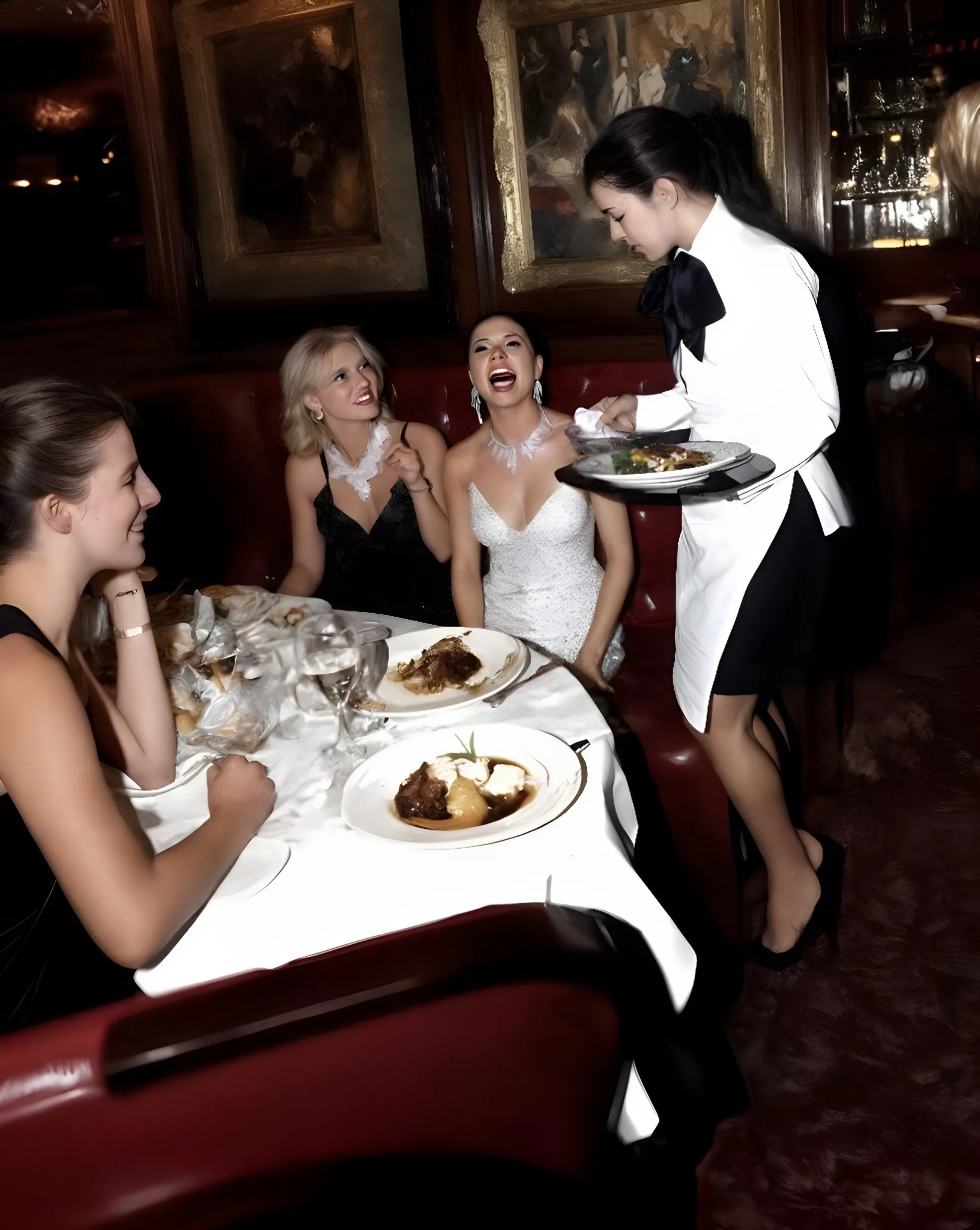
At the next table, three women in expensive dresses were loudly discussing something, their sharp laughter piercing the calm music.

One of them, decked out in diamonds, grimaced when the waitress approached with the dishes: ‘Can you smell that?’ she hissed, waving the menu. ‘It’s literally… the smell of poverty. It’s like she takes public transport. What, are they hiring anyone these days?’
The second one laughed contemptuously over her glass of wine: ‘And it’s not just the smell. Look at her shoes — they’re all worn out. Can you imagine working here if you can’t afford decent shoes?’
The third added maliciously: ‘She probably lives on tips, poor thing, most likely eating leftovers from breadsticks.’
Their laughter echoed through the room, each word falling like a heavy burden.
The waitress froze, trembling with tension, her face flushed; her eyes filled with tears and her lips trembled as if she were trying to protest, but no words came out.