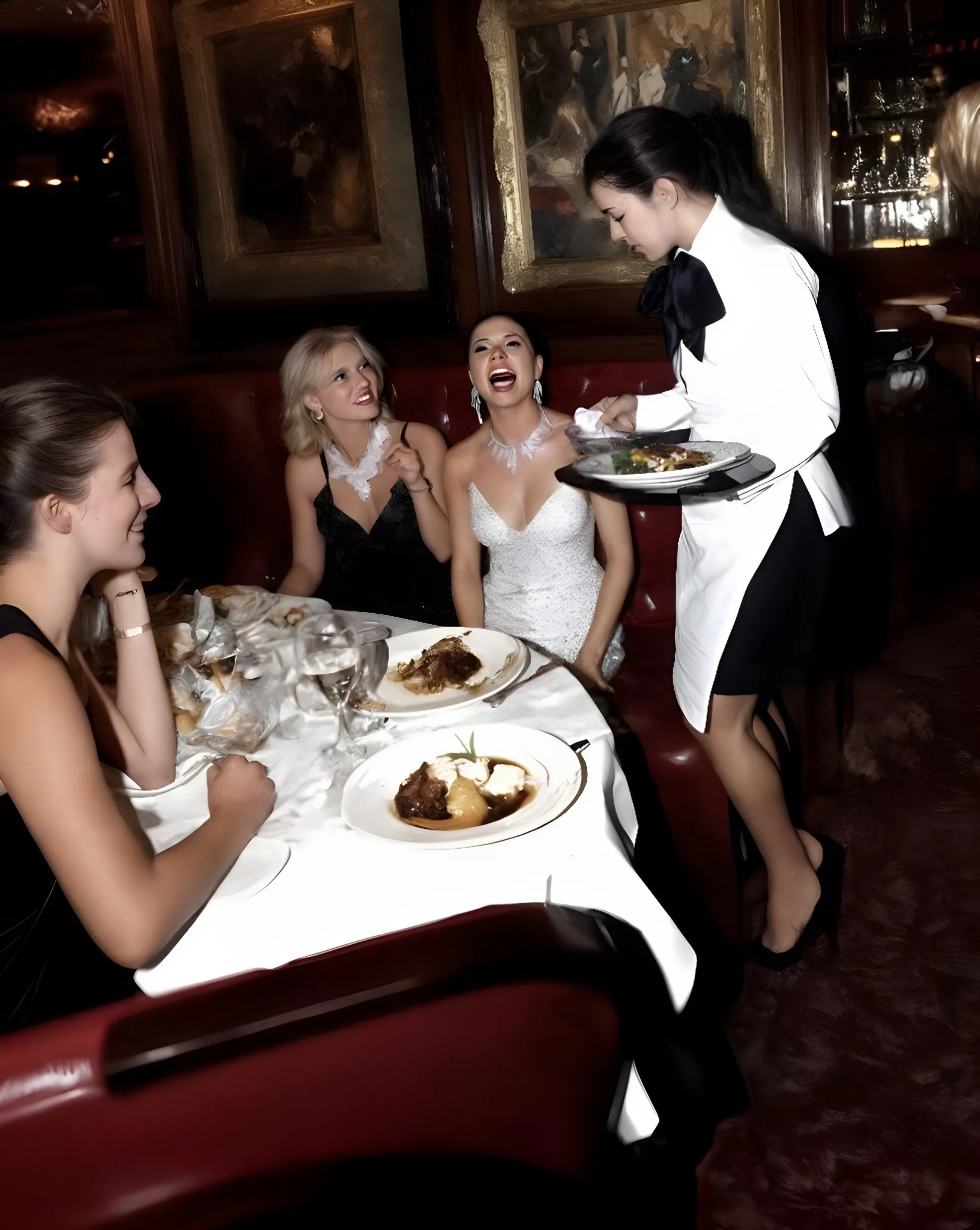
The whole restaurant was filled with an oppressive silence. Everyone heard, but no one dared to speak up. I felt anger rising inside me; the fork slipped from my hands with a dull thud.
At that moment, Jack abruptly pushed his chair back. The creak of wood on marble sounded like a challenge. Calmly and decisively, he got up and walked over to their table. All eyes were on him.
‘Excuse me,’ he said in a clear, confident voice. ‘Do you realise how cruel your words are? She works here, serving you, and you think that bullying her will make you more important? No, it makes you look pathetic.’
The woman turned pale, as if she had been slapped. The satisfied smiles of her companions disappeared instantly.

The waitress pressed the tray to her chest like a protective shield, opened her eyes wide, fixed her gaze on Jack, and then quietly murmured, ‘Thank you.’ My heart ached with compassion.
‘At that moment, I realised how important support is and how decisive one person can be.’
But then something incredible happened.
One of the men at the next table stood up. ‘He’s right,’ he said firmly, his voice echoing throughout the room. ‘That was disgusting.’
Several other patrons stood up behind him. In a matter of seconds, half the room was on its feet, applauding. Their support filled the space up to the chandeliers.
The woman in diamonds turned pale with fear, darting around in search of protection, but no one came to her aid. It was a turning point.
The restaurant manager approached quickly, looking concerned. ‘What’s going on here?’ he asked.
Jack didn’t hesitate, pointing to the three women: ‘They allowed themselves to insult your waitress in front of everyone.’
The women were indignant: ‘We are regular customers! We spend a lot here! We have every right…’
‘No,’ Jack interrupted them sharply. ‘You have no right to treat a person like trash. Never. Never in this place.’

A murmur of approval rippled through the room.
The manager tensed and said firmly to the women, ‘Please leave the establishment immediately. We will pay your bill — I don’t want your money. And let me be clear: you are no longer welcome here.’
The women froze, silently grabbed their bags and left, their footsteps on the marble sounding like gunshots.
No one stopped or defended them. When the doors closed, the room breathed a deep sigh of relief.
Jack returned to our table and sat down as if he had just taken a short walk. My hands were shaking, and my heart was pounding so hard that I could hear it inside me.
Then, trying to pull himself together, he leaned over to me and said quietly, ‘I’ll be back soon. I want to talk to the manager so that the waitress doesn’t lose her job: she’s not to blame for anything.’
Before I could answer, he was already gone. He spoke to the manager again, then quietly talked to the waitress, his hands nervously intertwined.
Five minutes later, he returned, calm and confident. ‘Everything’s fine,’ he said. ‘The manager confirmed that she didn’t make a mistake and won’t lose her job.’
I was filled with relief, as if the air had been released from my chest. I looked at him with pride and deep respect.
That evening, I realised that I had a unique person by my side, someone who not only opposed cruelty but also ensured that goodness came full circle.

Under the soft golden light of the restaurant, where the noise was gradually returning, a conviction arose in my heart: this evening had changed everything. Jack was not only a man of words, but also of deeds.
The main conclusion: One decisive action can turn silence into a thunderous show of support, and cruelty into a manifestation of true human dignity.
This story reminds us of the importance of resilience and kindness in everyday life, and that each of us has the potential to become a defender of justice.