Margaret had finished preparing the room for her granddaughter in the middle of May. She had whitewashed the ceiling, washed the curtains twice, and made the bed with the daisy-patterned quilt Sophie had adored when she was four. Now the girl was seven. A photograph hung beneath a refrigerator magnet: a little girl in a yellow jacket, standing beside some distant sea and squinting into the fierce wind.
Her son called on Sunday evening. The moment she heard, “Mom, please don’t get upset,” Margaret understood everything.
“We won’t be able to come this year. Sophie has camp. We paid for it months ago, and they won’t refund the money. And my shifts have been arranged so badly that…”
“I understand, Daniel,” she replied calmly. “Then we’ll see you next summer.”
That same evening, Margaret gave the ice cream she had bought especially for Sophie to the boys next door. Arthur asked no questions. He simply spent the rest of the day in the shed, pretending to repair a pump that had been working perfectly well.
On Thursday, just before ten in the morning, an engine roared outside the gate. A moment later, someone began pounding on it with an open palm as though determined to tear it from its hinges.
“Margaret! Margaret, open up! We’ve come to see you!”
Margaret had been tying up the tomato plants. She straightened, and a familiar pain shot through her lower back. The only thing that usually helped was the ointment from the village pharmacy, where she worked behind the counter every other day.
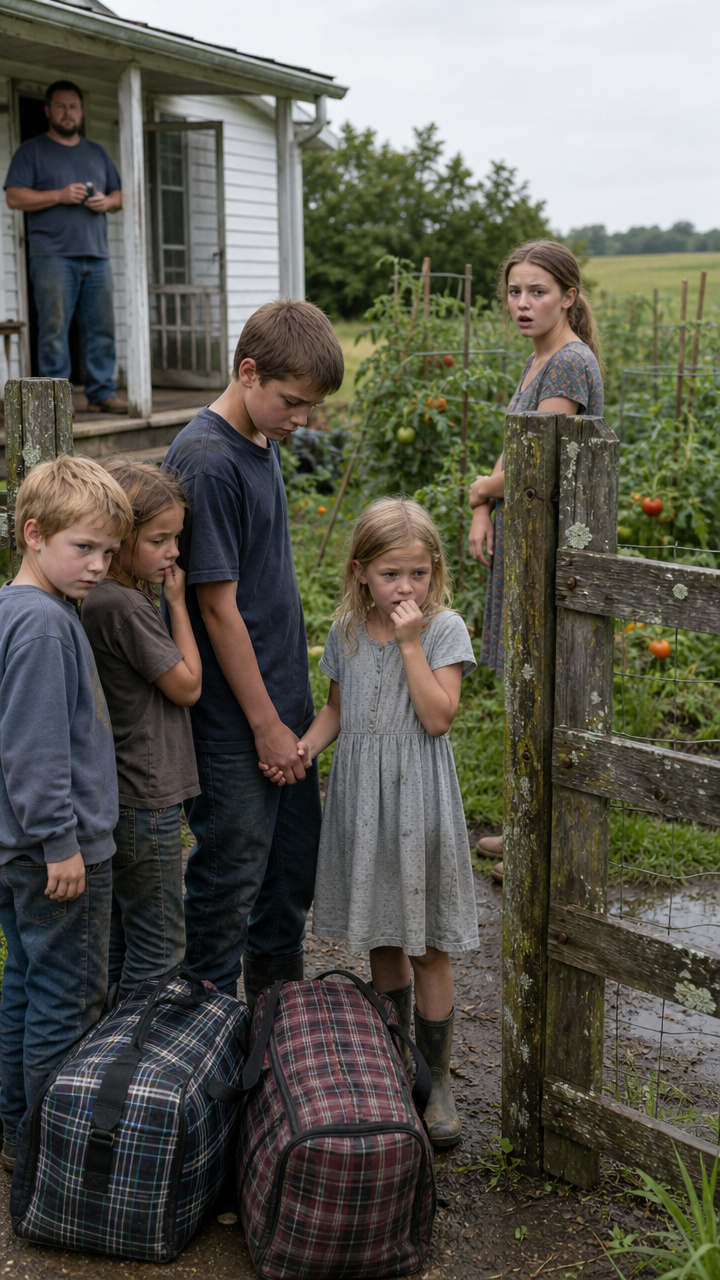
Her cousin Diane stood outside the fence. She was broad-shouldered, dressed in a bright floral sundress, with a fresh perm and two enormous plaid bags. Behind her, huddled together like chicks beneath a storm cloud, stood five silent children.
“Diane? What are you doing here without calling?”
“Why would I call? You don’t live in the city,” Diane laughed, already walking into the yard. She dropped the bags onto the grass. “I’ve brought the grandchildren! All of them—from both my daughters. Let the city kids eat some real fruit for once. They sit in their apartments looking pale as sour cream.”
Arthur came out onto the porch in a work vest, a screwdriver still in his hand. He had spent forty years as a mechanic at the sugar mill. After retiring, he began repairing boilers and pumps for people around the village. Some paid him in cash, others with a jar of honey. He stopped on the steps and silently counted the children.
“How many?”
“Five, Arthur. Five! That’s Connor, the oldest—he’s twelve. The twins, Ethan and Lucas, are nine. Lily is six. And little Zoe turned four in February.”
“Diane,” Margaret finally managed, “do you hear yourself? You mean the whole summer? We have the garden. I work at the pharmacy every other day. Arthur still goes out on repair calls. And you know perfectly well what our pensions are like.”
“Oh, don’t start,” Diane waved her off. “What do they need? It’s summer. There are potatoes from last year in the cellar, aren’t there? Cucumbers have already come in. The berries grow by themselves. The earth feeds them. Surely you aren’t going to begrudge your own family a bowl of soup?”
“Are you staying with them?”
“I can’t.” Diane sounded almost offended. “I have a spa reservation I’ll lose. I paid for it, and my back needs treatment. Then I’m working shifts at the community center coat check. Rachel is working two shifts at the bakery now, and the other girl who helps her has gone abroad for the season. What else could I do with the children?”
The eldest, Connor, had remained beside the bags, staring at the ground. Thin and long-limbed, he wore a gray T-shirt faded almost white. Unlike the others, he had not run off to explore the yard. He held his little sister’s hand and said nothing.
That evening, Diane left on the regional bus. Before departing, she ate a bowl of soup, drank two mugs of milk Margaret had borrowed from a neighbor, filled one of her bags with cucumbers and dill, and then called cheerfully from the bus window:
“I’ll pick them up in September! Make sure they’re all nice and plump!”
That night, only one bulb burned above the kitchen table. Someone shifted on a folding bed in the next room, and the old springs complained softly.
“What are we supposed to do?” Margaret asked, her hands resting on the oilcloth. “Should I call the police?”
“Call them for what? To report children?” Arthur poured tea into a glass. “They’re not guilty of anything. They were brought here like sacks and left behind.”
“Arthur, they’re starving. I cooked a whole pot of pasta with canned meat today. Four liters. They emptied it in five minutes and nearly scraped the bottom with their spoons.”
He sat in silence, looking through the dark window. Between the branches of the old apple tree, the first green apples could already be seen. Arthur’s grandfather had built the house many years ago.
“The room is ready anyway,” Margaret said quietly. “The ceiling is freshly painted.”