I have been working in fast food for three years now, and during that time I have seen all kinds of people. Some are polite and kind, but there are also rude and unpleasant customers.
Over time, I have come to realise one thing: sometimes a person comes into the restaurant who reminds us why small acts of kindness exist — because they can mean much more than we think.
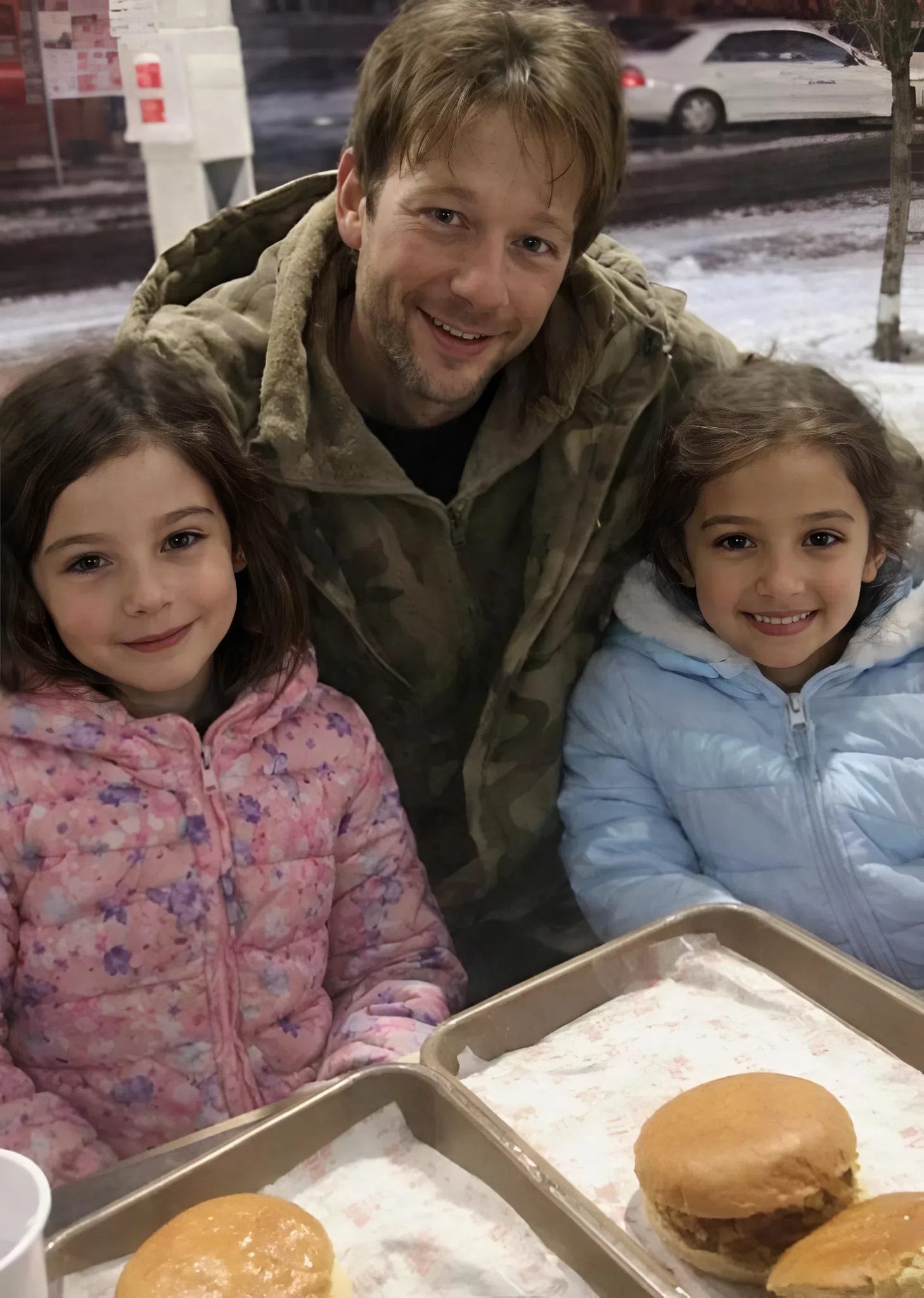
It was snowing that evening. The Christmas lights of the shopping centre reflected in the wet asphalt with red and green lights, like tiny beating hearts. I was wiping the tables by the window when the door flew open and a cold gust of wind rushed into the hall along with three people — a man and two girls.
The girls were about five and eight years old. They were wearing thin jackets, and their cheeks were red from the cold.
Their father looked exhausted. His hair was wet from the snow, his hands rough and cracked from the cold. Yet he smiled as he approached the cash register.
‘Good evening… one hamburger and a Coke, please.’
‘One?’ I asked quietly.
He nodded and looked at the girls.
‘It’s my daughter’s birthday today. We’ll share.’
The older girl clapped her hands.
‘Birthday hamburger!’ she sang, and the younger one giggled.
My heart ached. The man took a few crumpled notes out of his wallet — just enough for one order. His fingers trembled slightly as he handed over the money.
I watched as they sat down by the window and he carefully cut the hamburger into three pieces. He did it as if it were a game, smiling and trying to cheer up the girls.
The older sister, Sophie, whispered to her sister:
‘Santa Claus never forgets good children.’

At that moment, something inside me snapped.
I turned to the cook.
‘Hey, Tony,’ I said. ‘Make three hamburgers, three portions of chips, three ice creams and three colas.’
Tony frowned.
‘They only paid for one.’
‘I know. The rest is on me.’
I hesitated for a second. My boss, Mr Peterson, didn’t like it when employees got too close to customers. He said it blurred the line between order and chaos. I could already picture his displeased face if he found out. But looking at the girls shivering from the cold, I realised it was worth the risk.
Tony blinked and shrugged.
‘Your money is your Christmas spirit.’
When I brought the tray, the girls squealed with delight, as if they had seen real magic. Their eyes widened at the sight of ice cream, golden French fries and extra hamburgers.
‘Daddy!’ the younger one cried. ‘How did you do that?’
‘I… um…’ He looked at me helplessly.
I smiled as I set the tray down.
‘Every birthday deserves a celebration.’
He was speechless for a moment, then cleared his throat.
‘You have no idea what this means to us,’ he whispered.
‘It’s just dinner,’ I replied quietly.
He shook his head.
‘No. It’s much more than that.’
They ate, talked and laughed as if the rest of the world didn’t exist. I cleaned up next to their table just so I could hear their laughter.
When they left, the girls waved at me through the glass, leaving small fingerprints on it. Their father silently thanked me with a gesture before the snow swallowed their figures.
I stood there for a long time, staring at the empty table. The smell of French fries and hot cocoa lingered in the air, but for the first time, I didn’t feel like it was just a job.
At the time, I didn’t know their names or their stories. I knew only one thing: that evening, I felt relieved and was sure I would never see them again.
A month passed. Life flowed at its usual calm pace. Christmas came and went.
The decorations were taken down, and the world was plunged back into grey January. I was still standing behind the cash register, pouring coffee for sleepy customers and wiping ketchup off tables that never stayed clean for long. Sometimes in the evenings, I remembered that man and the two smiling girls — and the ‘birthday hamburger’ that turned out to be much more than just food.
One quiet Tuesday afternoon, I heard my name over the loudspeaker:
‘Miss Carter, please come to the cash register.’
My stomach clenched with anxiety. That steady, serious voice belonged to Mr. Peterson — that’s how he spoke when someone was in trouble.
I immediately remembered that evening.
‘Someone complained… or the cameras recorded everything,’ I thought.
My heart was pounding. I put down the cloth, adjusted my apron, and walked over to the cash register. Mr Peterson was standing there, and next to him was a man I didn’t recognise at first. He was neatly dressed, stood up straight and was clutching a small gift bag in his hand.
For a moment, I thought he was some kind of inspector.
Then he smiled, and I realised who he was.
‘Hello,’ he said. ‘I don’t know if you remember me.’
I blushed.
‘I… remember the birthday hamburger.’
He laughed softly.