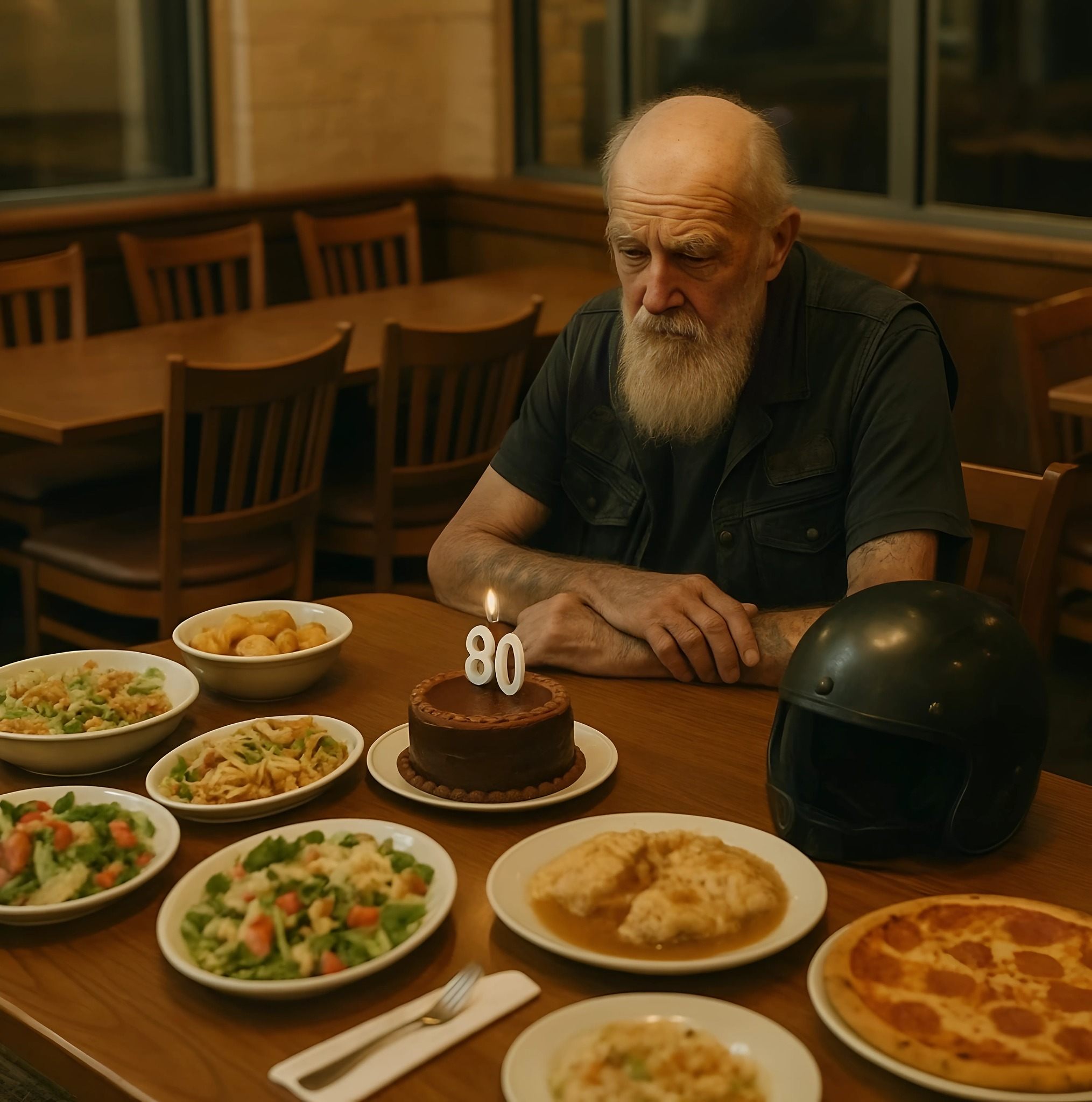
No member of the family came to my biker grandfather’s 80th birthday party. Not even my father, his own son. I watched from across the street as Grandpa Jack sat alone at a long table, his weathered hands folded over the helmet he still carried with him, waiting for two hours while the waiters gave him pitying looks.
Grandpa Jack didn’t deserve what they did to him. The man who taught me to ride, who saved my life more times than I could count, was treated like a nobody. All because my ‘respectable’ family couldn’t stand being associated with an old biker in public.
It all started three weeks earlier, when Grandpa Jack called everyone personally. ‘Reached 8-0,’ he said with a booming laugh that always reminded me of the idle revs of his Harley. Thought we could all get together at the Riverside Grill. I’ve booked the back room. Nothing fancy, just family.”
For any normal family, that would have been just fine. But my family isn’t normal. They’re ashamed of Grandpa Jack — his decades in the Iron Veterans motorcycle club, the tattoos covering his arms, fragments of his history, the fact that he still rides his Harley every day, despite his age.
My father (his son) became a corporate lawyer and has been trying for thirty years to bury the fact that he grew up in the backyards of bike shops.
I am the black sheep who embraced it all — the only one who rides with him, who wears his old club’s gear, who doesn’t try to sanitise our family history.
When I called my father on the morning of the dinner to confirm that he was coming, his response made me grip the phone so tightly that I’m surprised it didn’t shatter into pieces.
‘We’ve decided it’s inappropriate,’ my father said in the curt tone he uses for unpleasant topics. “Your grandfather insists on wearing his… club clothes… to these events. The restaurant is too public, too conspicuous. I have clients who dine there. Margaret’s son is hosting a rehearsal dinner in the main dining room tonight. We can’t have Jack showing up looking like he just walked out of a biker bar.”
‘It’s his 80th birthday,’ I said, my voice dangerously quiet. ‘He’s your father.’
‘We’ll do something private later,’ Dad dismissed. ‘Something more appropriate.’
Later, I found out that everyone had made the same decision. None of the family members were going to come. And no one had the decency to tell Grandpa Jack that they weren’t coming.
So there I stood, watching from across the street as my grandfather sat alone in a private room with a good view through the windows. I planned to make him
And so I stood and watched from across the street as my grandfather sat alone in a separate room with a good view through the windows. I planned to surprise him by showing up a little later with a special gift — a restored rear light for his first Harley, a 1969 Shovelhead, which he had been forced to sell decades ago to pay for my father’s braces. I spent months searching for the authentic part.
Instead, I watched his humiliation. I watched him constantly check his phone. I saw the pitying expression on the waitress’s face as she approached him again and again to ask if he wanted to order anything else. I watched his proud shoulders gradually slump as the minutes passed.
When he finally left, I couldn’t go to him. Not now. Not until I had a plan to fix things. Because the look on his face showed pain deeper than I had ever seen in his eyes.
That night, I made a decision. My family had crossed a line that could not be crossed. And I was going to make them understand what they had done — not only to Grandpa Jack, but to themselves.
At the time, I didn’t know how far I would go to teach them that lesson, or how much it would change all our lives.
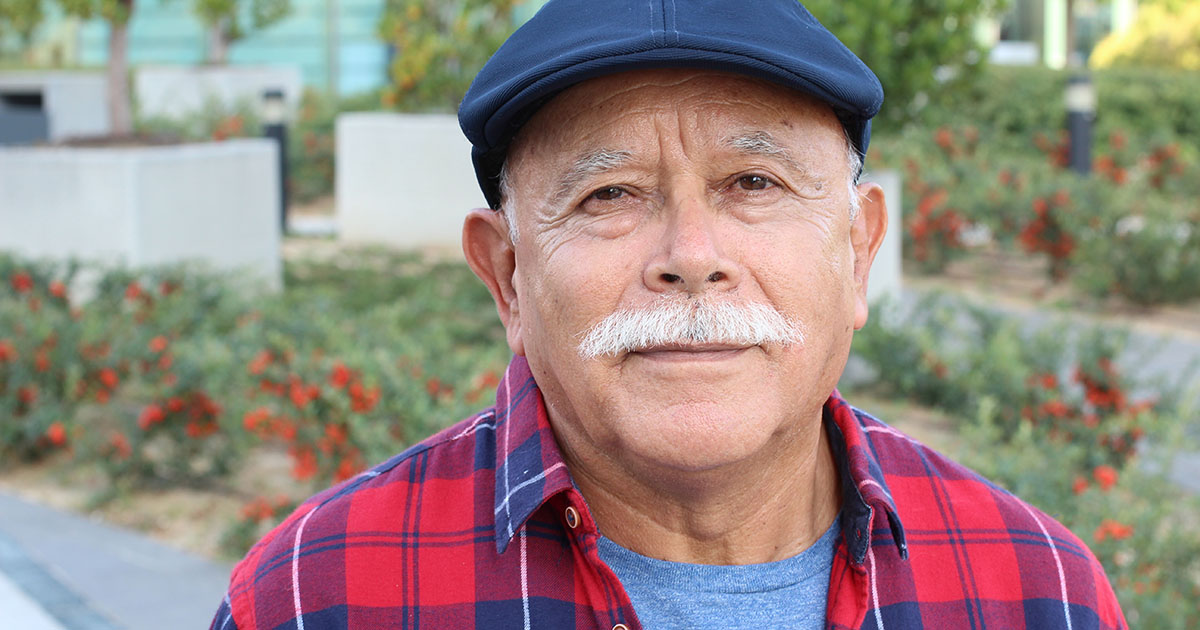
The day after the disaster at the birthday party, I went to Grandpa Jack’s house early. He lives in the same small ranch-style house he has owned for forty years, and his garage is bigger than the house itself to accommodate his lifetime collection of motorcycles and spare parts. The yard is immaculate — Grandpa may be a biker, but military precision still rules his personal space.
I found him in the garage, methodically changing the oil in his Harley Road King. His movements were slower than before, but still precise, the maintenance routine as natural to him as breathing. He didn’t look up when I entered, though the slight tension in his shoulders told me he was aware of my presence.
‘You’re the only one who showed up yesterday,’ he said finally, still focused on the oil filter. It wasn’t an accusation, just a statement of fact.
‘I was across the street,’ I admitted. ‘I saw you sitting there. I couldn’t… I didn’t know what to say.’
He nodded, finally looking up. His eyes were clear, though tired. ‘There’s nothing to say. People make their choices.’
‘They’re ashamed,’ I said, immediately regretting my candour when I saw a brief flash of pain on his weathered face. ‘Not of you — of themselves. They don’t understand what it means to live a real life.’