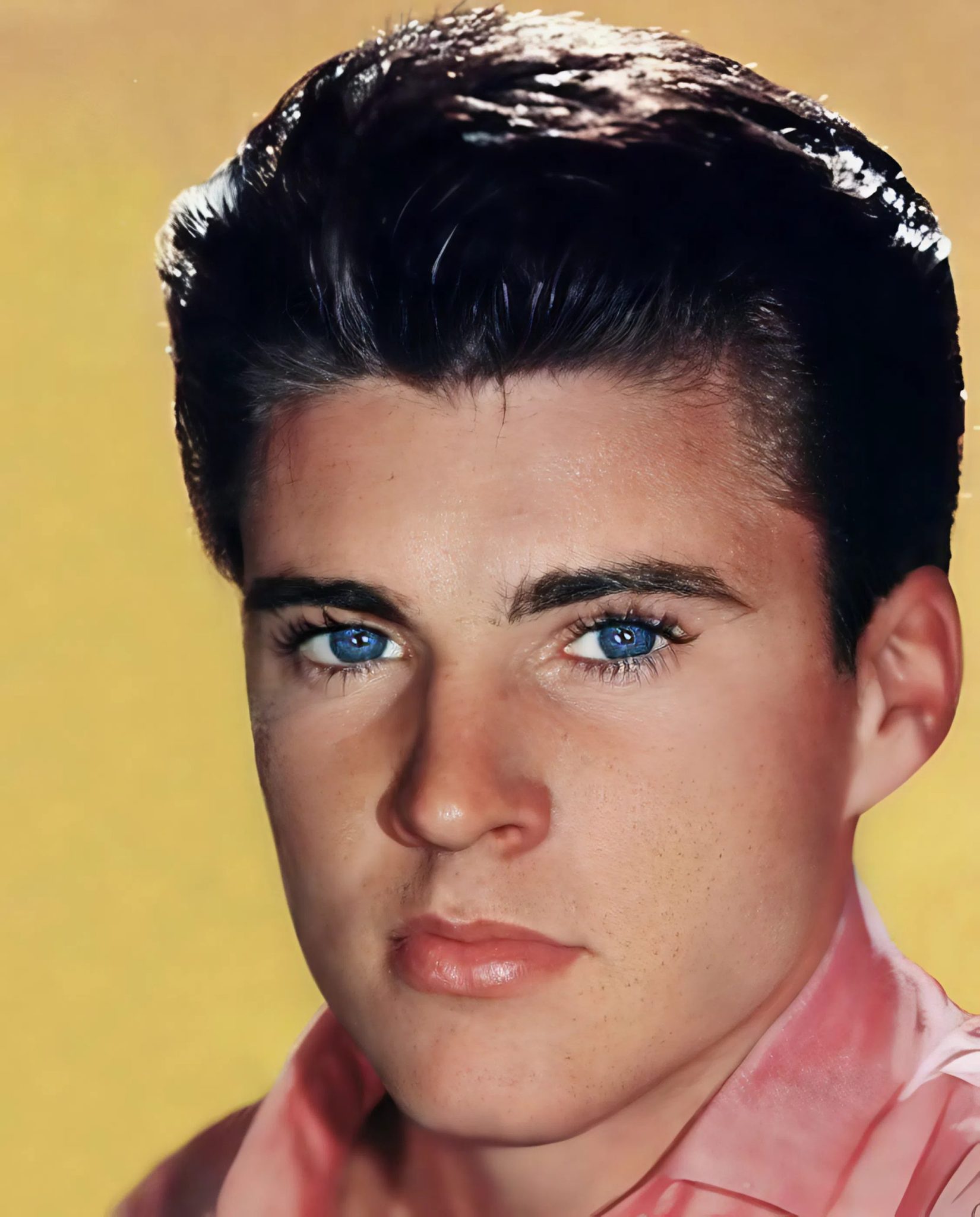
Ricky Nelson was one of the most beloved figures in early American pop culture—admired not only for his music, but also for his television presence and his rare ability to stay relevant to more than one generation of fans. While many people remember his run of hit songs and his role on The Adventures of Ozzie & Harriet, fewer know the full story of his final days—or how a last-minute decision he made may have saved the lives of his twin sons.
What follows is a full, verified account of Ricky Nelson’s life, his tragic death, and the choice that permanently changed the course of his family.

Ricky Nelson was born Eric Hilliard Nelson on May 8, 1940, in Teaneck, New Jersey. He was the son of Ozzie and Harriet Nelson, famous for their long-running family sitcom The Adventures of Ozzie & Harriet, which premiered in 1952 and became one of television’s most enduring series.
Naturally shy and often dealing with severe asthma as a child, Ricky still grew up in front of the camera. The show—created by his father, Ozzie—introduced both Ricky and his older brother, David, to television at an early age. From the beginning, the boys appeared on the sitcom, turning Ozzie & Harriet into a true family production.
As Ricky got older, his role on the series expanded with him. While many child performers struggle to transition into adulthood, Ricky’s constant visibility gave him a rare chance to mature on-screen in front of an audience that already felt like it knew him. He attended Hollywood High School, but like many young entertainers, he was drawn far more to what was happening beyond the classroom—especially as his music career began to accelerate.
By his late teens, Ricky was already earning serious money as a musician, sometimes bringing in more than $100,000 a year—a remarkable amount in the late 1950s, particularly for someone still technically a teenager.
A Rising Music Career
Nelson’s first hit arrived in 1957, when he was only 17. The song, “I’m Walkin’,” was featured on an episode of The Adventures of Ozzie & Harriet and was released soon afterward. It quickly climbed the charts, becoming a defining breakthrough in his early career.
Over the next decade, Nelson released a series of songs that became staples of American pop music, including:
- “Poor Little Fool” – his first No. 1 hit on the Billboard charts
- “Travelin’ Man” – another chart-topping favorite
- “Fools Rush In” – a pop standard later covered by many other performers
- “Garden Party” – a later hit reflecting his evolving relationship with fame and his audience
These tracks helped bridge the gap between the late-1950s teen idol era and the more mature rock and roll that defined the 1960s and into the ’70s. His sound blended rockabilly, pop, and country influences, giving him wide appeal across different kinds of listeners.
His television fame gave him a unique advantage, too: he could debut songs on his parents’ show before they were released as singles, instantly reaching millions of households.
Family Life and Parenthood
In April 1963, Ricky Nelson married Kristin Harmon, a fellow Hollywood native and artist whose family was close with the Nelsons. The marriage marked a new chapter in his life—one shaped as much by family as by fame.
Together, Ricky and Kristin had four children:
- Sam Hilliard Nelson
- Matthew Gray Nelson (twin)
- Gunnar Eric Nelson (twin)
- Tracy Kristine Nelson, who later became an actress
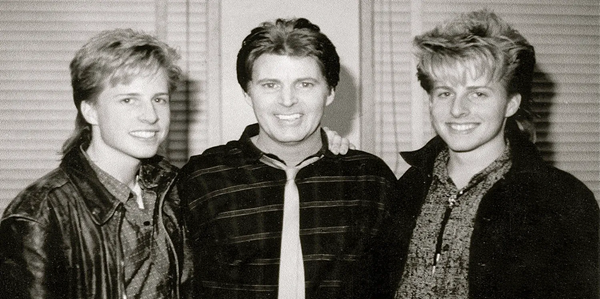
Matthew and Gunnar would eventually find their own success in music, forming the rock duo Nelson in the late 1980s and early 1990s—a career they built proudly in their father’s legacy.
The Tour That Never Ended Well
Even as his career evolved, Ricky Nelson continued touring heavily through the 1970s and early 1980s, playing live shows for loyal audiences across the United States. By the mid-1980s, however, one part of touring became increasingly difficult: flying.
Nelson was known to dislike air travel, and he reportedly attended psychotherapy sessions to manage his anxiety about it—determined to keep his commitments, meet his fans, and maintain his schedule.
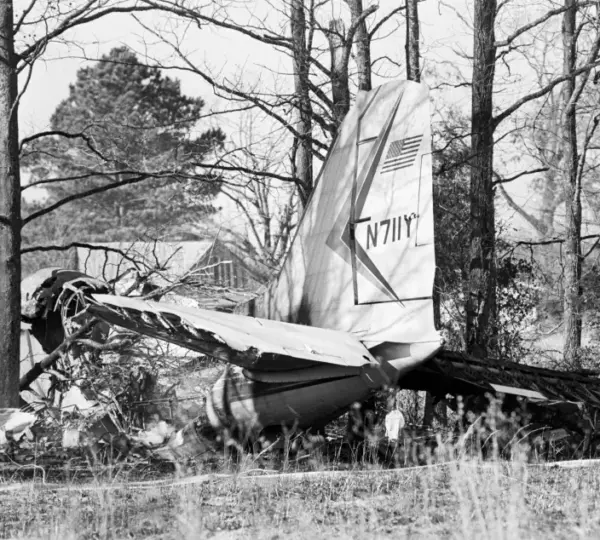
In late 1985, Ricky and his band set out on a multi-city tour across the southeastern United States. After performances in Orlando, Florida, and Guntersville, Alabama, he was scheduled to fly to Dallas, Texas for a New Year’s Eve show, one of the final dates on the tour.
A Decision That Changed Lives
Matthew and Gunnar Nelson were originally expected to travel with their father and the band on the flight to Dallas. In later interviews, the twins recalled that they had packed and were preparing to join the trip.
Then, only days before departure, Ricky called them and told them not to fly with him that day. Instead, he urged them to travel commercially and meet him later in Dallas. The brothers have said he sounded unusually firm—almost as if he felt strongly about the change—and they followed his instructions.