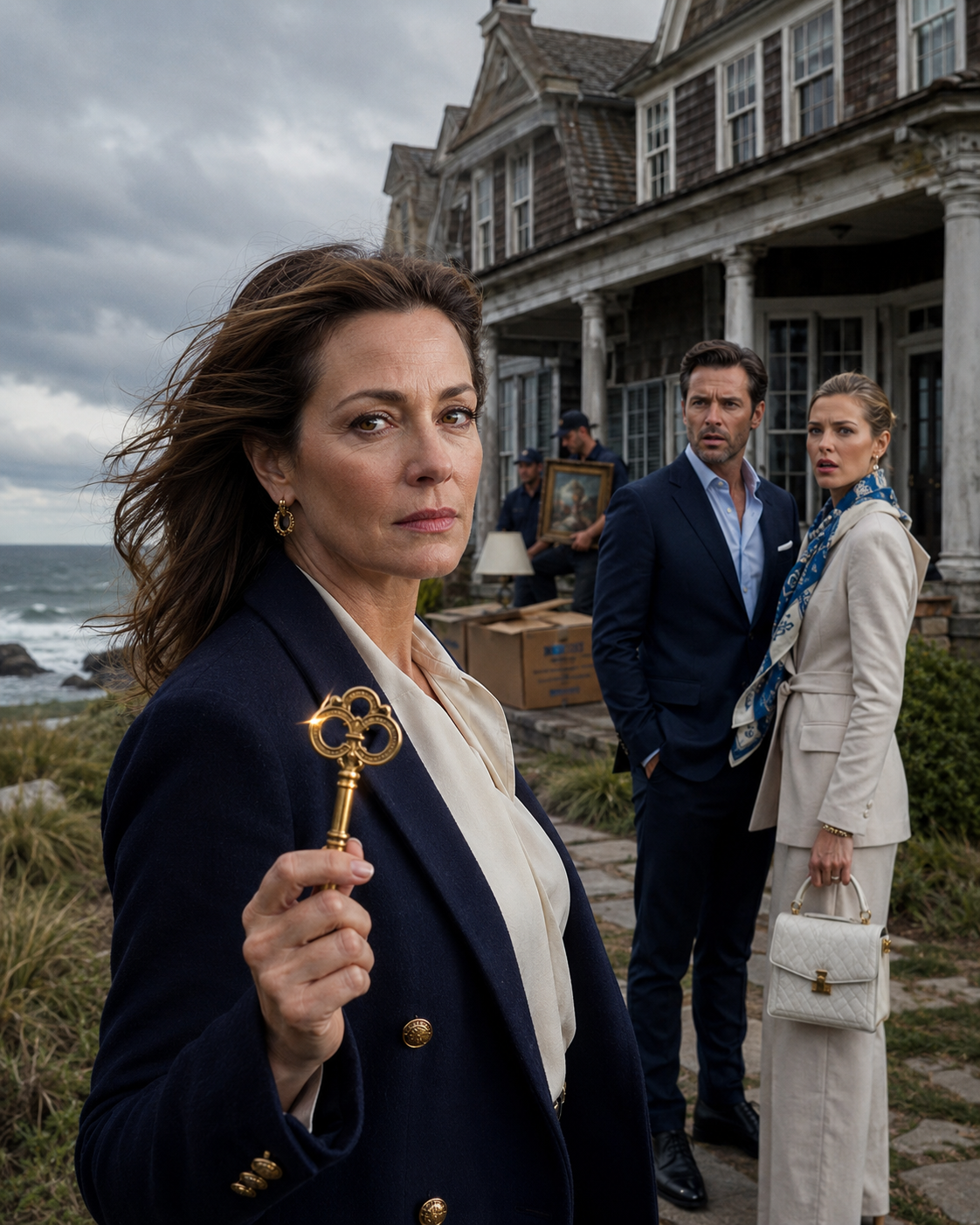
“People always think there will be a better day for difficult information.”
“Dad—”
“Promise me you won’t let anyone separate the house from the land.”
“I promise.”
“Not even someone you love.”
“I said I promise.”
He touched the brass key.
“The wrong person will see the lodge and imagine what can be taken from it. The right person will want to know what must be protected.”
He died eleven days later.
After the funeral, I could not bring myself to study the trust documents.
I signed the annual forms sent by the family attorney. I approved maintenance expenses and tax payments. I spoke regularly with Owen Pike, the caretaker whose family had lived near the bay almost as long as mine.
But I avoided the archive.
Grief can make a person careful about opening doors, even when she owns the key.
By then, I had already been married to Adrian Cole for nine years.
I met Adrian at a fundraising dinner in Portland.
I was the logistics director for a regional emergency-relief organization. My work involved warehouse contracts, storm preparation, temporary shelters and supply routes to isolated communities.
Adrian worked in commercial development.
He understood money the way some musicians understand rhythm. He could enter a room, identify the most influential person and adjust his entire personality before reaching the other side.
That night, he listened to me describe our hurricane-response program.
“You make complicated systems sound human,” he said.
No one had ever complimented my work that way.
Adrian was handsome without seeming vain, confident without appearing aggressive and ambitious without admitting how much he wanted other people to envy him.
At least, that was what I believed.
He proposed after eighteen months.
We married at Gull’s Rest beneath an arch covered in white roses.
My father stood beside me on the porch before the ceremony.
“Are you nervous?” he asked.
“No.”
“Not even a little?”
“I’m sure about him.”
Dad looked across the lawn.
Adrian was speaking with a property developer near the dock. He pointed toward the opposite shoreline, tracing an invisible line with his hand.
“What are they discussing?” my father asked.
“Probably business. Adrian never really stops working.”
Dad nodded slowly.
Then he took my face between his hands.
“You do not have to earn peace from anyone.”
I laughed because I thought he was being sentimental.
“I’m getting married, not going to war.”
His eyes saddened.
“Sometimes people don’t realize the difference until much later.”
For several years, Adrian was the husband everyone admired.
He sent flowers to my office.
He remembered birthdays.
He helped my father carry firewood.
He told friends that my strength made his success possible.
The changes arrived gradually.
At first, they seemed like the ordinary erosion of a busy marriage.
He interrupted me more often.
He corrected details in stories he had not witnessed.
He began describing my work as “charity administration” whenever important clients asked what I did.
When I disagreed with him privately, he accused me of lacking faith in his judgment.
When I disagreed publicly, he said I had embarrassed him.
After my father died, Adrian began talking about Gull’s Rest as an underperforming asset.
“We could renovate and rent it during summer,” he suggested.
“I don’t want strangers living there.”
“Strangers pay very well for ocean views.”
“It isn’t a rental property.”
“Everything is a property, Evelyn.”
“No. Some places are homes.”
He smiled in the patient way adults smile at children who refuse to understand arithmetic.
“Emotional value and financial value are not enemies.”
“They are when one destroys the other.”
He wanted to remove the original cedar walls, enlarge the windows and replace the workshop with a guesthouse.
I refused every proposal.
Lorraine considered my refusal a personal insult.
Adrian’s mother had inherited very little money and an enormous appetite for status.
She wore designer clothes on credit, exaggerated the importance of distant relatives and spoke about “our family standards” as though the Coles possessed a private dynasty.
At dinner one evening, she placed her wineglass beside her plate and said, “It would have been wiser to put Gull’s Rest into both names after the wedding.”
“My father created the trust before I met Adrian.”
“Marriage should eliminate those divisions.”
“Marriage did not eliminate my family.”
Lorraine smiled.
“You are very defensive about old wood and inconvenient memories.”
Adrian reached beneath the table and pressed his fingers into my knee.
It looked affectionate to everyone else.
It was a warning.
On the drive home, he told me I had been rude.
“Your mother questioned my father’s decisions.”
“She was trying to help.”