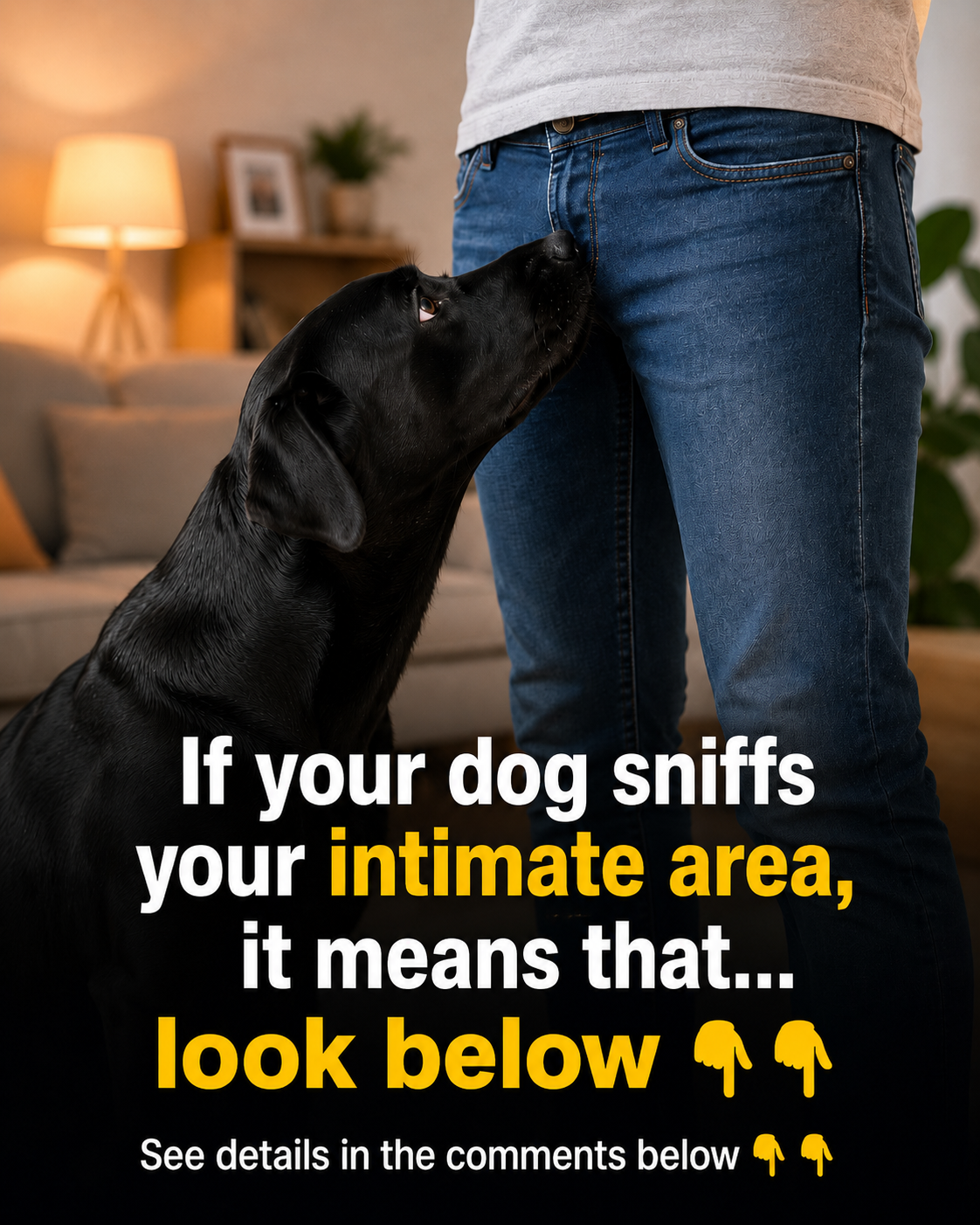
Dogs’ behaviour involving sniffing the genital area often puts owners in an awkward position and causes embarrassment, especially if it happens in front of other people. If your dog has ever approached you or a guest and immediately put its nose towards your groin area, you are far from the only one who has wondered why this happens. From a human perspective, such behaviour may seem indecent, but for dogs it is entirely natural and instinct-driven. Dogs perceive the world primarily through smell. Whilst humans rely mainly on sight, dogs gather information through their sense of smell. The genital area has a distinct and individual scent, which is why it particularly attracts their attention. When a dog sniffs this area, it is effectively gathering detailed information about the person.
This ‘investigation’ is linked to scent glands and chemical signals. Humans have apocrine sweat glands in areas such as the armpits and genital region. These glands release pheromones that dogs can easily detect. For a dog, such a scent can reveal a great deal about a person’s personality, their emotional state and even certain biological characteristics. When a dog focuses on a person’s private parts, it is not trying to be disrespectful.
In fact, she is simply following her natural way of communicating. Dogs greet one another by sniffing each other’s hindquarters, and they extend this behaviour to humans because they perceive us as part of their social group. Another important factor is the animal’s height. For many dogs, a person’s groin area is simply at nose level. This makes it one of the most accessible places to quickly gather scent information. From their perspective, it is convenient, straightforward and effective.
Interest in the genital area may increase if a person’s scent changes. For example, hormonal fluctuations can make a person’s scent seem different to a dog. This can happen during ovulation, pregnancy or illness. A dog may pay more attention to this area precisely because the scent signals have changed. Sometimes a dog reacts particularly strongly to certain people. This does not mean anything negative. More often than not, the scent simply seems stronger, more unusual or unfamiliar to the dog.
Dogs are naturally drawn to new and distinct smells, and the genital area may provide them with precisely this kind of information. A dog’s state of health can also influence this behaviour. It is well known that dogs are able to detect infections or changes in the body by smell. If your pet has suddenly started sniffing your intimate area too persistently, it may be reacting to subtle changes that you yourself are not yet aware of. This does not mean you should panic. It simply shows just how sensitive a dog’s sense of smell can be
It is precisely this ability to detect such changes that is one of the reasons why dogs are used in medical detection. Sniffing the genital area is also linked to social interaction. When dogs sniff each other, they exchange information and strengthen recognition. When they do this with people, they are also trying to understand and establish a connection. For them, it is a way of saying hello and finding out more about you.
From a behavioural perspective, this kind of sniffing isn’t considered a problem unless it becomes too frequent or intrusive. Most dogs give a quick sniff and then move on. If your pet lingers for too long, they may simply need some gentle training to learn boundaries. Training helps to manage this behaviour in social situations. You can redirect your dog’s attention using commands or rewards. Over time, your dog will realise that greeting people in a calmer manner is the preferred behaviour.
It is important not to punish your dog for this. As this kind of sniffing is driven by instinct, punishment may cause the animal to feel confused or anxious. It is better to use positive reinforcement and guide your pet towards more appropriate behaviour. Interest in smells can vary depending on the dog’s breed and temperament. Some dogs are more curious and inclined to explore everything, whilst others show less interest in olfactory behaviour. Such differences are perfectly normal and depend on the individual dog.
Behaviour is also influenced by the surrounding environment. New places, unfamiliar people and unusual smells can heighten a dog’s curiosity. When there are lots of new things around, dogs rely even more heavily on their sense of smell to understand what is happening. If your dog frequently sniffs the intimate areas of certain people, it may be reacting to their individual scent profile. This could be perfume, personal hygiene products or natural body odours. Dogs do not categorise smells as ‘appropriate’ or ‘inappropriate’ from a human perspective. They simply follow the strongest scent cues.