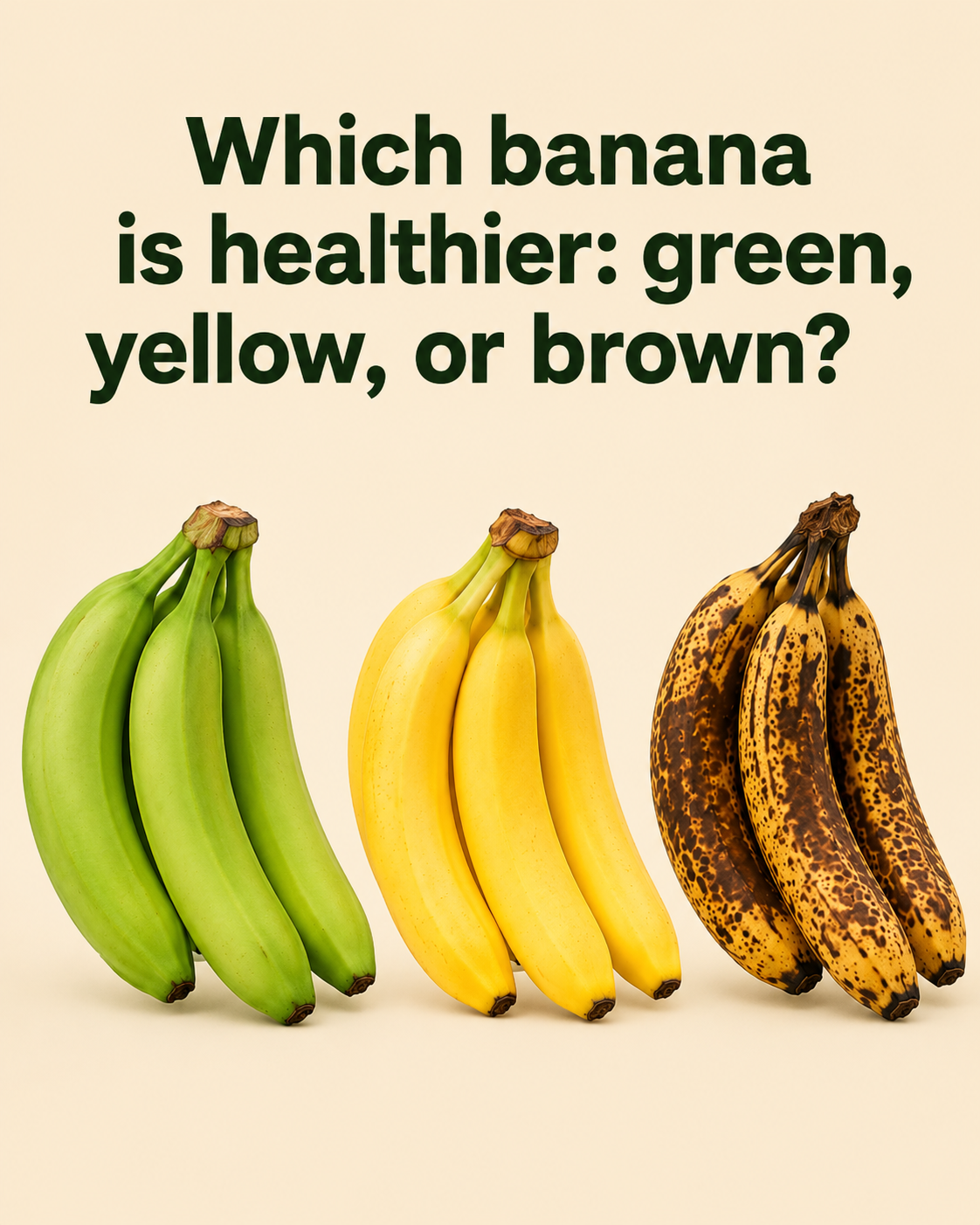
Green bananas
Due to their higher content of resistant starch and lower sugar content, green bananas generally have a milder effect on the glycaemic response.

Yellow and brown bananas
As the starch is converted into sugar, ripe bananas are digested more quickly and can raise blood sugar levels more rapidly.
This does not mean that ripe bananas are unhealthy. If you pair them with protein or healthy fats — such as peanut butter, Greek yoghurt or nuts — you can slow down the absorption of sugar and make your snack more balanced.
Antioxidants: why brown bananas stand out
One of the most interesting changes that occur during ripening is the increase in antioxidant levels.
Antioxidants help protect cells from oxidative stress and inflammation, which are linked to ageing and various chronic conditions.
Brown bananas contain more beneficial antioxidant compounds than less ripe ones, so they can be a valuable addition to a balanced diet.
Are there any downsides?
Generally speaking, bananas are well tolerated by most people, but some may experience individual reactions. Sugar substitutes
Possible issues:
- Mild allergic reactions
- Itching or swelling in the mouth
- Digestive discomfort
- Cross-reactions in people with latex-fruit syndrome
- If you notice any unusual symptoms after eating bananas, you should consult a healthcare professional.

A quick comparison: which banana is best?
Level of ripeness Main benefits Best for Green High in resistant starch, lower in sugar Blood sugar control, gut health, satiety Yellow Balanced fibre and sugar content Everyday nutrition and energy Brown Highest in antioxidants, easiest to digest Supports immunity, digestion and antioxidant protection
Conclusion
There is no single ‘most beneficial’ banana.
Green bananas are particularly good for managing blood sugar levels and aiding digestion. Yellow ones offer a good balance of nutrients and energy. Brown ones contain the most antioxidants and are often the easiest to digest.
Rather than considering one stage better than another, choose a banana with a level of ripeness that best suits your personal goals and taste preferences.
So next time you see a brown, spotty banana on the table, don’t be quick to throw it away. It may well be at the peak of its nutritional value right now.