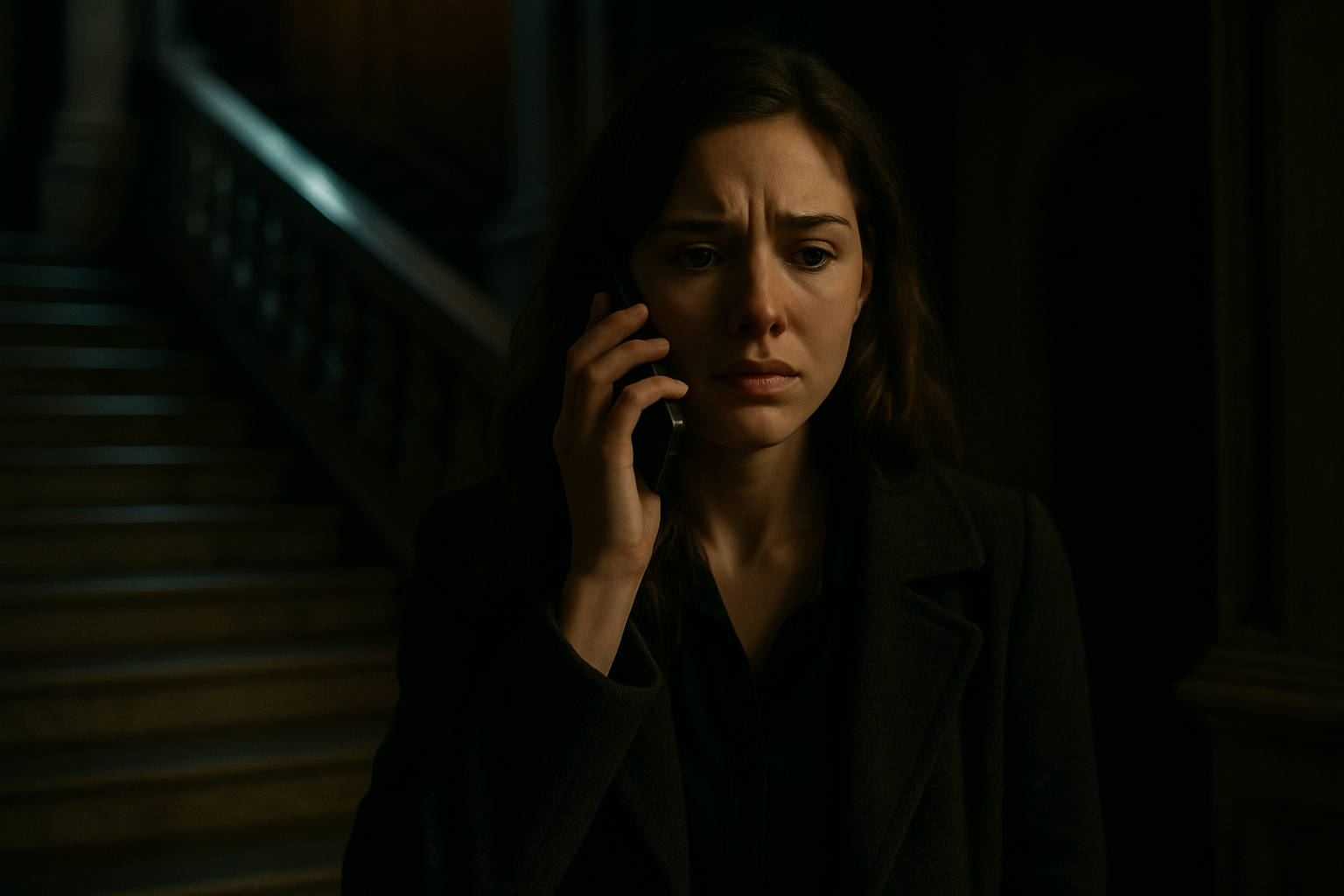
The horse was small and sturdy, with a mane carved in careful grooves and a slightly crooked smile. Her father had made it when Evelyn was nineteen, after he had begun speaking wistfully about grandchildren he might never meet. He had sanded the wood by hand until it felt soft as cloth. Under one runner, in tiny uneven letters, he had carved:
For the child who will be loved before they arrive.
Nathan carried it out himself.
He came down the front steps with the rocking horse held carefully against his chest, his expensive suit jacket dusted with attic grit, his face unreadable.
Evelyn stood beside the moving truck and reached for it.
Nathan hesitated. “I can put it in the back.”
“No,” she said. “I’ll hold it.”
He handed it to her.
For a moment, the weight of it broke something open in her. Not painfully. Not like before. This was a different breaking, a seam loosening after being stitched too tight.
She pressed her palm against the carved mane and thought of her father’s hands. Broad, warm, patient. Hands that had fixed loose cabinet hinges, held hers across hospital beds, brushed tears from her cheeks after her first real heartbreak and told her that anyone who made love feel like fear did not deserve to be called home.
He had never met Grant.
Evelyn was grateful for that now.
She placed the rocking horse in the passenger seat of her car and buckled it in without explanation.
Nathan watched her do it and said nothing.
That was one of his gifts. For a man who could dismantle an opposing witness with one eyebrow, Nathan knew when silence was the only kindness large enough for the moment.
The house closed before the leaves changed.
Evelyn signed the papers in a plain conference room with fluorescent lights and a bowl of peppermints no one touched. When it was done, the realtor slid a folder toward her and said, “Congratulations.”
The word startled her.
Congratulations belonged to weddings, babies, promotions, ribbon cuttings. Not escape. Not survival. Not selling the place where you had once mistaken luxury for safety.
But Evelyn accepted the folder.
“Thank you,” she said.
Then she walked out without looking back.
She bought a low, sunlit house near Cape Charles on Virginia’s Eastern Shore, where the Chesapeake Bay changed color with the weather and the horizon seemed to breathe.
It was nothing like McLean.
That was the first thing Evelyn loved about it.
The house sat at the end of a quiet road lined with wax myrtle and loblolly pine. It had weathered cedar shingles, a blue front door, wide doorways, and a porch that caught the afternoon light in long golden bars. There was no gate. No intercom. No sweeping staircase designed to impress visitors before they had even removed their coats.
Inside, the rooms were simple and bright. The kitchen opened into the living room. The floors creaked honestly. The windows did not require motorized shades or security codes. In the back, a small garden had gone wild under the previous owner’s neglect—lavender tangled with crabgrass, tomatoes reseeding themselves stubbornly along the fence, rosemary grown woody and defiant.
Evelyn loved that too.
The nursery faced east.
That decided it.
In the mornings, the first light spilled over the crib in pale ribbons, touching the walls before it touched anything else. Evelyn painted the room herself, slowly, over the course of a week, taking breaks when her ribs ached or her shoulder stiffened. She chose a soft cream color, warm but not sweet, and hung sheer curtains that moved whenever the bay wind came through the open window.
Nathan arrived one Saturday with a drill, a toolbox, and a level he seemed to distrust personally.
“I can hire someone,” Evelyn said from the doorway, June asleep against her chest in a wrap.
Nathan looked offended. “I know how to hang shelves.”
“You once paid a man to assemble a floor lamp.”
“That floor lamp had emotional problems.”
“It had three parts.”
“And yet it leaned like a drunk senator.”
He hung the shelves anyway.
They leaned slightly to the left.
Evelyn did not fix them.
Neighbors came by with casseroles and muffins and jars of homemade pickles. They did not ask for headlines. They did not lean in with hungry sympathy. They knew, of course. Everyone knew something. Evelyn had been in enough papers for strangers to recognize the shape of her tragedy even when they pretended not to.
But Cape Charles had its own manners.
Mrs. Bell from two houses down brought chicken and dumplings in a blue ceramic dish and said, “You keep the dish as long as you need.”
A retired teacher named Alma dropped off a stack of children’s books and told Evelyn that babies liked rhythm more than plot, which Evelyn found strangely comforting.
Mr. Hendricks, who lived across the road and repaired boats in a shed that smelled of varnish and salt, left a basket of tomatoes on the porch with a note that read: Too many. Help.
No one mentioned Grant.
No one said, “I saw you on television.”
No one asked what it felt like to fall.