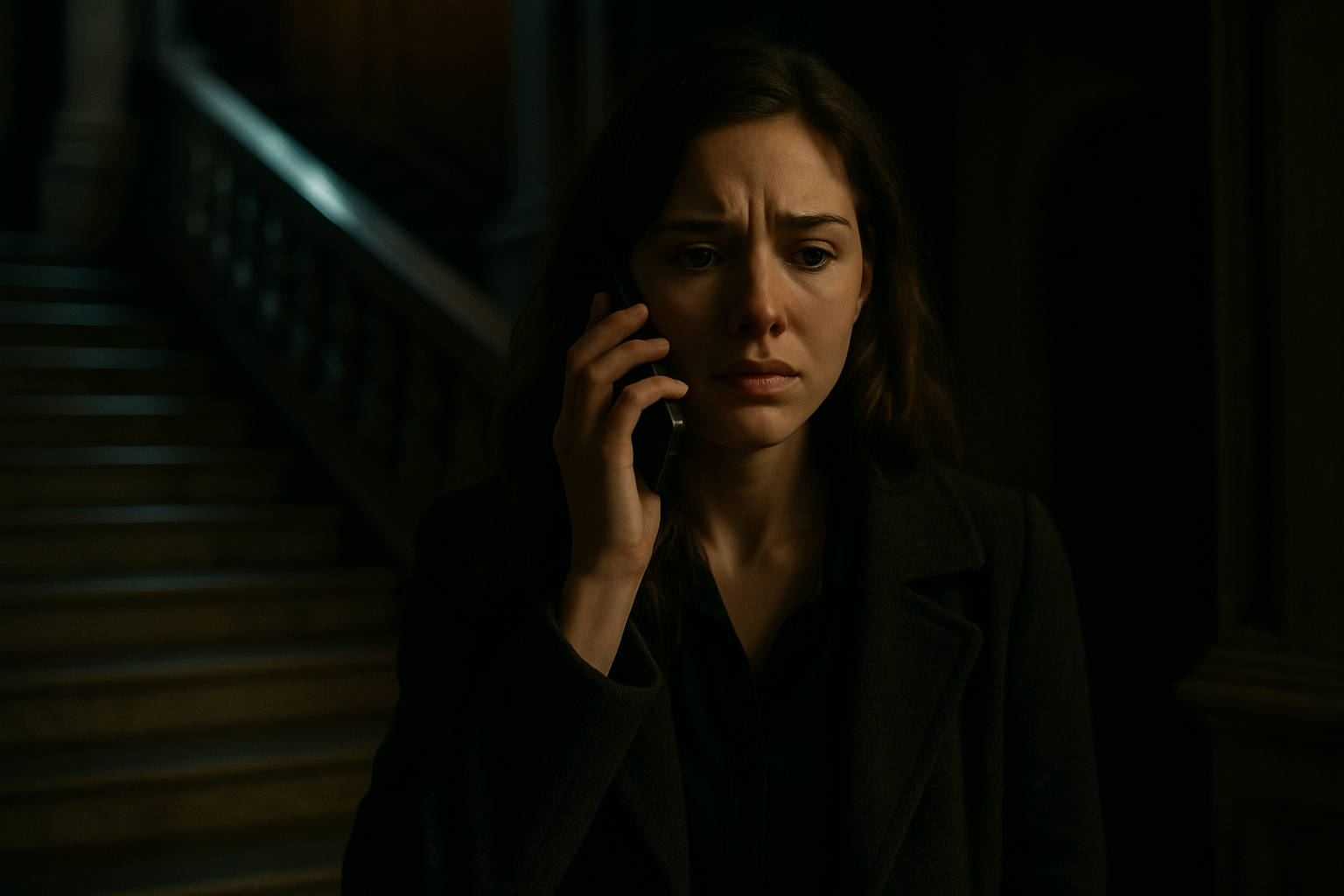
Nathan’s gaze slid back toward the NICU, toward Evelyn’s bowed head over the isolette.
“Private security for what?”
“We don’t know yet.”
“When was the payment?”
Caroline hesitated. “The day before the deposition.”
The hospital air seemed to grow colder.
Nathan said nothing for a long moment.
Then, softly, “Grant didn’t trust Marissa to do the job alone.”
“That’s one possibility.”
“What’s the other?”
Caroline’s face was grim. “That Marissa was only the loud part of a larger plan.”
Behind the glass, Evelyn lifted her face. For the first time since waking, she was smiling—not broadly, not happily, but with wonder fierce enough to survive terror. Grace’s foot had shifted beneath her hand.
Nathan forced his own expression to remain calm until Evelyn looked away again.
“Do not tell her that yet,” he said.
“I wasn’t planning to.”
“And Caroline?”
“Yes?”
“Find out who Blackridge paid.”
Her answer was immediate. “Already doing it.”
Grant Mercer’s bail hearing drew cameras.
By then the story had escaped the courthouse and hospital walls. It moved through the city in murmurs first, then headlines, then the voracious language of public appetite. Wealthy developer arrested. Pregnant wife attacked at courthouse. Premature infant fighting for life. Mistress cooperating. Frozen assets. Beaumont money missing.
Men like Grant spent their lives manufacturing image, and it was remarkable how quickly an image rotted once sealed evidence entered the air.
He appeared in court wearing a jail-issued jumpsuit because no one had brought him a suit in time. That, more than the charges, seemed to enrage him. His hair was no longer perfect. His jaw was rough. His eyes, always so skilled at softness, had gone flat and venomous.
Nathan watched from the second row.
He did not sit at counsel table. He was there as Evelyn’s proxy, as Grace’s temporary guardian, as witness, as brother. Caroline stood for the Commonwealth. Breck was gone. In his place stood a criminal defense attorney named Victor Hale, a man with silver hair, rimless glasses, and the careful expression of someone who had already demanded payment before entering an appearance.
“Your Honor,” Hale said, “Mr. Mercer is a respected businessman with deep community ties. These accusations are inflammatory and largely dependent on the testimony of a woman currently facing severe charges herself. He is not a flight risk.”
Caroline rose.
“Your Honor, Mr. Mercer had access to multiple hidden accounts, international transfer mechanisms, and falsified corporate entities. He attempted to use his critically injured wife’s medical incapacity to gain custody of a premature infant and access frozen funds within hours of the attack. The Commonwealth considers him an extreme flight risk and a danger to witnesses.”
Grant turned his head toward Nathan.
There it was again—that old hatred dressed in disbelief.
How dare you survive my plans.
How dare she.
How dare the baby.
The judge denied bail.
Grant’s composure cracked just slightly. A pulse jumped in his cheek. His hands closed into fists on the table. But he said nothing until the deputies moved to escort him out.
Then he leaned toward Nathan as he passed.
“You think she’ll thank you?” Grant murmured. “You think Evelyn wants you running her life?”
Nathan did not move.
Grant smiled. “You always wanted to be the man she needed.”
The words were ugly, chosen not for truth but for infection. Grant had always been gifted at finding a person’s hidden bruise and pressing it with a clean thumb.
Nathan met his eyes.
“She needed a brother,” he said. “That was enough.”
Something in Grant’s smile faltered.
Nathan stepped closer, lowering his voice so only Grant could hear.
“And if you ever say her name like you still own it, I will forget every civilized lesson I’ve ever learned in a courtroom.”
The deputy pulled Grant onward.
This time, Grant did not shout.
That evening, Evelyn insisted on hearing everything.
Nathan had tried to protect her with summaries. Caroline had recommended waiting. Aunt Lydia had declared that men had been deciding what women could bear since the invention of bad furniture and that Evelyn would decide for herself.
So Nathan sat beside Evelyn’s hospital bed with the folder across his knees and told her.
Not all at once. Not brutally. But truthfully.
He told her about the messages. About Marissa’s statement. About Grant’s custody petition. About the Beaumont ledgers. About the bail hearing.
Evelyn listened without interrupting, one hand resting against the incision beneath her blanket, the other curled around the yellow knitted blanket Lydia had left behind.
When Nathan finished, she looked toward the dark hospital window. Her reflection looked ghostly in the glass: bruised temple, hollow cheeks, eyes too large for her face.
“He was going to stand beside her isolette,” she said, “and pretend to love her.”
Nathan said nothing.
“He would have held her hand in front of doctors. Asked careful questions. Used the right words. Everyone would have said how tragic it was. Poor Grant. His wife unstable, his mistress violent, his daughter fragile.”