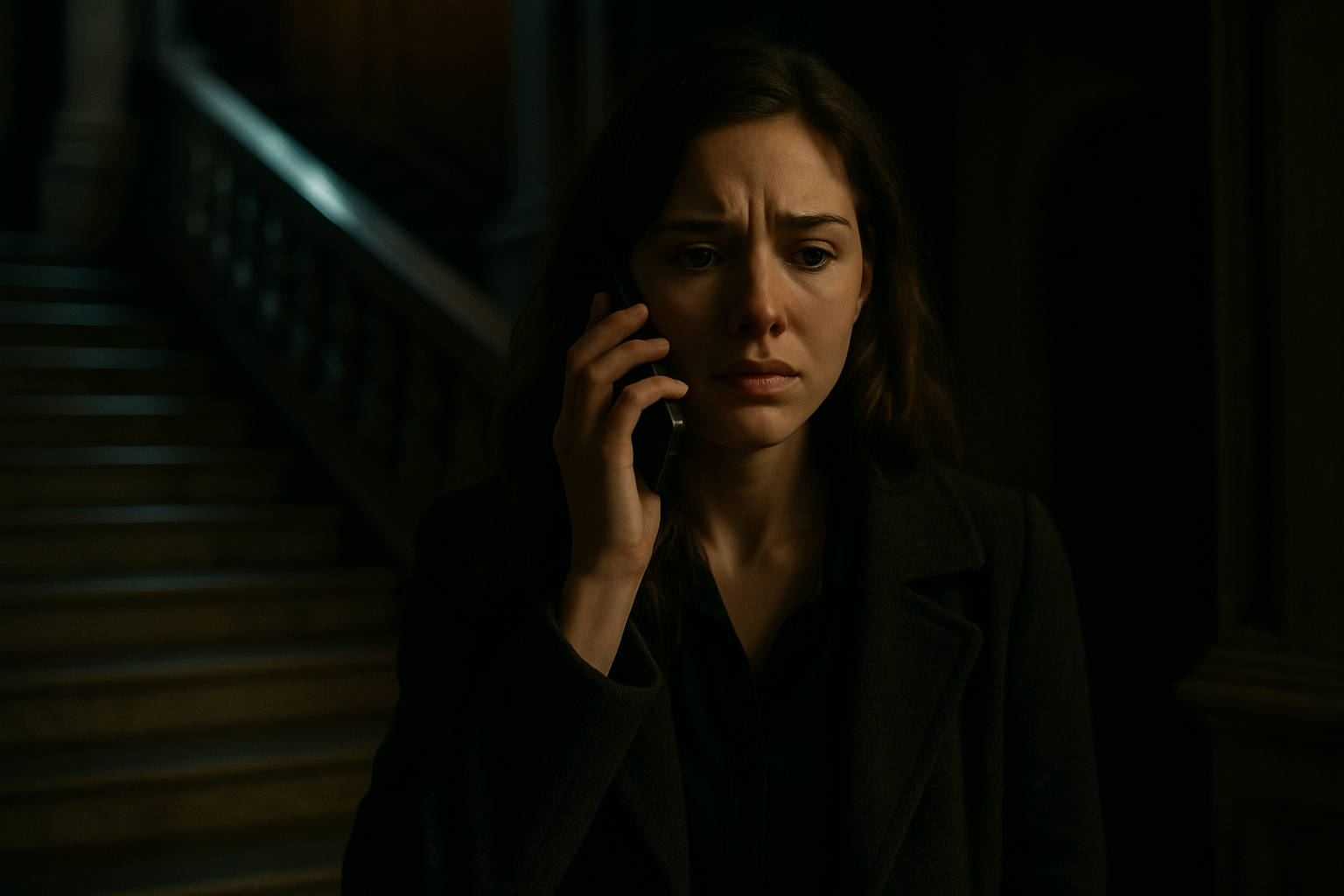
Evelyn tried to inhale deeply and couldn’t. Pain caught her halfway. “He did this.”
Nathan’s gaze sharpened, but he said nothing too quickly.
“He did,” Evelyn whispered. “He didn’t push me. Marissa did. But he sent her there. I know he did. She kept saying the same things he said. The same phrases. Like she had rehearsed them. ‘You don’t get to ruin him.’ ‘You don’t get to trap him with a baby.’”
Nathan’s eyes closed for half a second.
When he opened them, the grief was gone. What remained was colder.
“We have messages,” he said. “Between them.”
Evelyn’s grip tightened around his hand. “How bad?”
“Bad enough.”
“Nathan.”
He looked at her then, and she understood he had been deciding what truth she could bear.
“Grant told Marissa stress affects pregnancies,” he said quietly. “He told her to remind you that you were not safe just because you were pregnant. When she asked what if something happened, he wrote that everything would become simpler.”
Evelyn turned her face toward the ceiling.
The light above her blurred.
Everything would become simpler.
Her daughter was in a glass box breathing through a machine because Grant Mercer wanted arithmetic to improve.
For years, Evelyn had called him many things in the privacy of her mind. Cruel. Charming. Hungry. Faithless. Dangerous. But she had still imagined that somewhere inside him lived a human border, a last locked room into which even his ambition could not enter.
There was no room.
Only appetite.
“I want to see her,” Evelyn said.
Nathan’s expression softened in agony. “The doctors said—”
“I want to see my daughter.”
“You will. I promise. But you’re recovering from major surgery and a head injury. They’re watching for swelling. Your blood pressure is unstable.”
“I don’t care.”
“I do.”
That stopped her.
Not because she agreed. Because of the way he said it. Like a man bracing a door against a storm with his own body.
Evelyn turned her head toward him. “Is she alone?”
“No.” His voice gentled. “I’ve been with her. As much as they’ll allow. Aunt Lydia came. She sat outside the NICU knitting something too small for any baby on earth and threatened three residents until one brought her coffee. Caroline’s been here and at the courthouse. Rosalind Beaumont sent a pediatric specialist without being asked.”
Evelyn blinked. “Rosalind?”
“She’s furious,” Nathan said. “Which, in her case, is more useful than sympathy.”
A faint sound escaped Evelyn. It might have been a laugh if she’d had the strength for one.
Then she closed her eyes again.
“What did I name her?” she whispered.
Nathan went still.
“You didn’t,” he said.
Evelyn’s lashes trembled.
“I kept telling myself there would be time,” she said. “After the deposition. After the divorce. After I was somewhere he couldn’t poison everything I loved.”
“There is time,” Nathan said.
Evelyn turned her face toward him. “Grace.”
Nathan’s breath caught.
It had been their mother’s middle name.
“Grace,” he repeated.
“Grace Eleanor Reed.”
He looked at her carefully. “Not Mercer?”
“No.”
The answer came with no hesitation. No bitterness either. Something better than bitterness. Judgment.
Nathan bowed his head over her hand, and for a moment Evelyn felt the tremor he had been hiding from everyone else.
“Grace Eleanor Reed,” he said.
The baby did not know her name.
In the NICU, inside a clear isolette beneath blue-white lights, she existed in the fragile country between machines and miracles. She was impossibly small. Her skin was translucent, flushed dark in places from bruising. A ventilator tube was taped to her mouth. Wires bloomed from her chest like cruel little vines. One hand, no larger than a folded moth, rested near her cheek.
Nathan had seen battlefields in courtrooms. He had watched families devour estates, widows learn about hidden second lives, sons testify against fathers and fathers sell sons for reduced sentences. He had thought himself acquainted with the varieties of human damage.
Nothing prepared him for the sight of Grace.
Or for the rage that came when he looked at her and saw numbers.
That was what Grant had seen. Not fingers. Not breath. Not a mouth too small to cry around the tube. Numbers. Obligations. Leverage. Access.
Nathan stood outside the glass, hands clasped before him because if he unclasped them he was afraid of what they might do.
A nurse named Priya adjusted something inside the isolette with practiced gentleness. “She had a stable hour,” she said.
Nathan had learned quickly that in the NICU, hope came measured in minutes.
“A stable hour is good?” he asked.
Priya looked up. “A stable hour is good.”
So he accepted the hour as if it were a kingdom.
When the doctors finally allowed Evelyn to be wheeled down two days later, the entire corridor seemed to change around her. Nurses slowed. Conversations dropped. Even people who did not know the story sensed some gravity arriving in the chair—the pale woman with a bandage at her temple, one arm wrapped protectively over her abdomen, her face sharpened by pain and impossible determination.