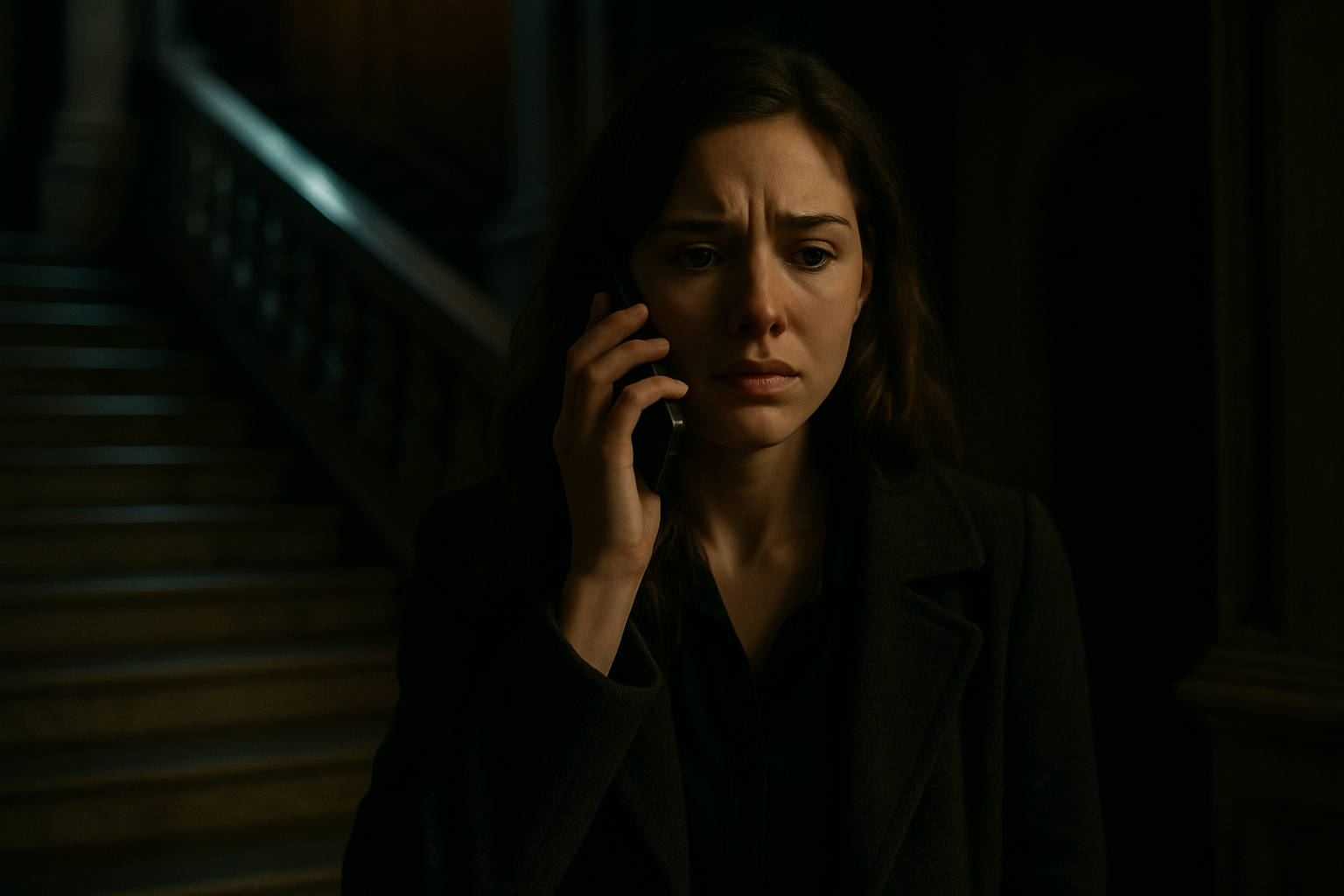
“We also had to perform an emergency hysterectomy to control your sister’s hemorrhage.”
The hallway seemed to tilt.
“She will not be able to carry another pregnancy.”
For a second, Nathan was not in the hospital. He was in his office months earlier, watching Evelyn sit across from him with one hand on her belly, her expression equal parts wonder and fear.
I don’t know if I’ll ever do this again, she had said. But I want this one. I want her to have a quiet life.
A quiet life.
Nathan swallowed hard. His voice, when it came, sounded scraped raw.
“Does she know?”
“No. She’s sedated. We’ll speak with her when she’s conscious and stable.”
Stable. Another word that sounded like a promise and wasn’t.
“Can I see her?” Nathan asked.
“Your sister is being transferred to the ICU. It will take some time before visitors can go in.”
“No,” Nathan said, then corrected himself because grief had muddled him. “The baby. My niece. Can I see my niece?”
Dr. Cole studied him for a moment, as though measuring what kind of man stood before him.
Then he nodded to a nurse nearby.
“Take him to the NICU.”
The nurse led Nathan through secured doors that required a badge, then a code, then a gentle warning about washing his hands. He scrubbed until the blood was gone from his skin but not from beneath memory. He followed her into a dimly lit room where machines hummed softly, where every sound seemed calibrated not to disturb the fragile citizens inside.
The babies were impossibly small.
Each rested in an incubator or bassinet surrounded by technology too large for them, wires and tubes and monitors forming mechanical halos around lives still negotiating their place in the world. The room smelled faintly of plastic, warmth, and something sterile enough to be holy.
“There,” the nurse whispered.
Evelyn’s daughter lay inside an incubator under gentle light. Her chest rose and fell in rhythm with the ventilator. A tiny cap covered her head. Transparent tape held tubes in place against skin so delicate Nathan felt afraid to look too hard at it.
Her hand rested near her cheek.
Her entire hand was no bigger than his thumb.
Nathan stopped walking.
He had cross-examined murderers without flinching. He had stood in rooms full of grieving families and maintained control because control was his profession, his armor, his offering. But this—this scrap of a child, this fierce little almost, this daughter of his battered sister—undid him in a way no verdict ever had.
The nurse checked the chart, then looked at the card taped to the incubator.
“What is her name?” she asked gently.
Nathan looked too.
Baby Girl Mercer.
The words struck him with unexpected violence.
Mercer.
Grant’s name attached to her like a stain before she had even opened her eyes.
He thought of Evelyn again, months earlier, sitting curled in his office chair after a deposition had gone badly. She had not cried then. Evelyn had been doing less crying by that point, as though tears were a resource she had learned to ration.
“I like June,” she had said, one hand moving in slow circles over her stomach. “It sounds like light returning.”
Nathan had teased her then. Gently.
“June Reed Mercer? That is a lot of names for someone who currently weighs less than a cantaloupe.”
Evelyn had smiled, and for one second she had looked like the girl who used to run barefoot down their mother’s porch steps in summer.
“She’ll grow into them,” she had said.
Now Nathan stood before the incubator and forced his voice to remain steady.
“June,” he said. “Her name is June Reed Mercer.”
The nurse wrote it carefully.
Not Baby Girl Mercer.
June.
A person. A light. A claim.
Nathan placed one finger against the plastic wall of the incubator. He wanted to touch her, but he was afraid of bringing the world too close.
“I’m your uncle Nathan,” he whispered. “Your mom is busy being stubborn, so I’m going to be stubborn for both of you until she wakes up.”
June’s eyelids fluttered, though the nurse told him it was reflex.
Nathan chose not to believe her.
Across town, the courthouse steps had been washed, but not clean.
Blood can leave stone before it leaves people. Already, a maintenance worker had rinsed the marble under orders from someone who wanted government property restored to its usual dignity. But the witnesses remained. So did the cameras. So did the memory of a scream echoing off columns built to suggest justice was immovable.
Marissa Vale was arrested before the afternoon rain had stopped.
At first, she performed innocence with the conviction of a woman who had survived for years by confusing drama with truth. She cried. She trembled. She pressed her manicured fingers to her mouth. She said Evelyn had stepped backward. She said Nathan had frightened her. She said she had only reached out.
Then she said pregnancy made women clumsy.
The detective standing nearest her went utterly still.
Marissa seemed to hear her own words then, to recognize how monstrous they sounded released into the air. Her crying sharpened into panic.