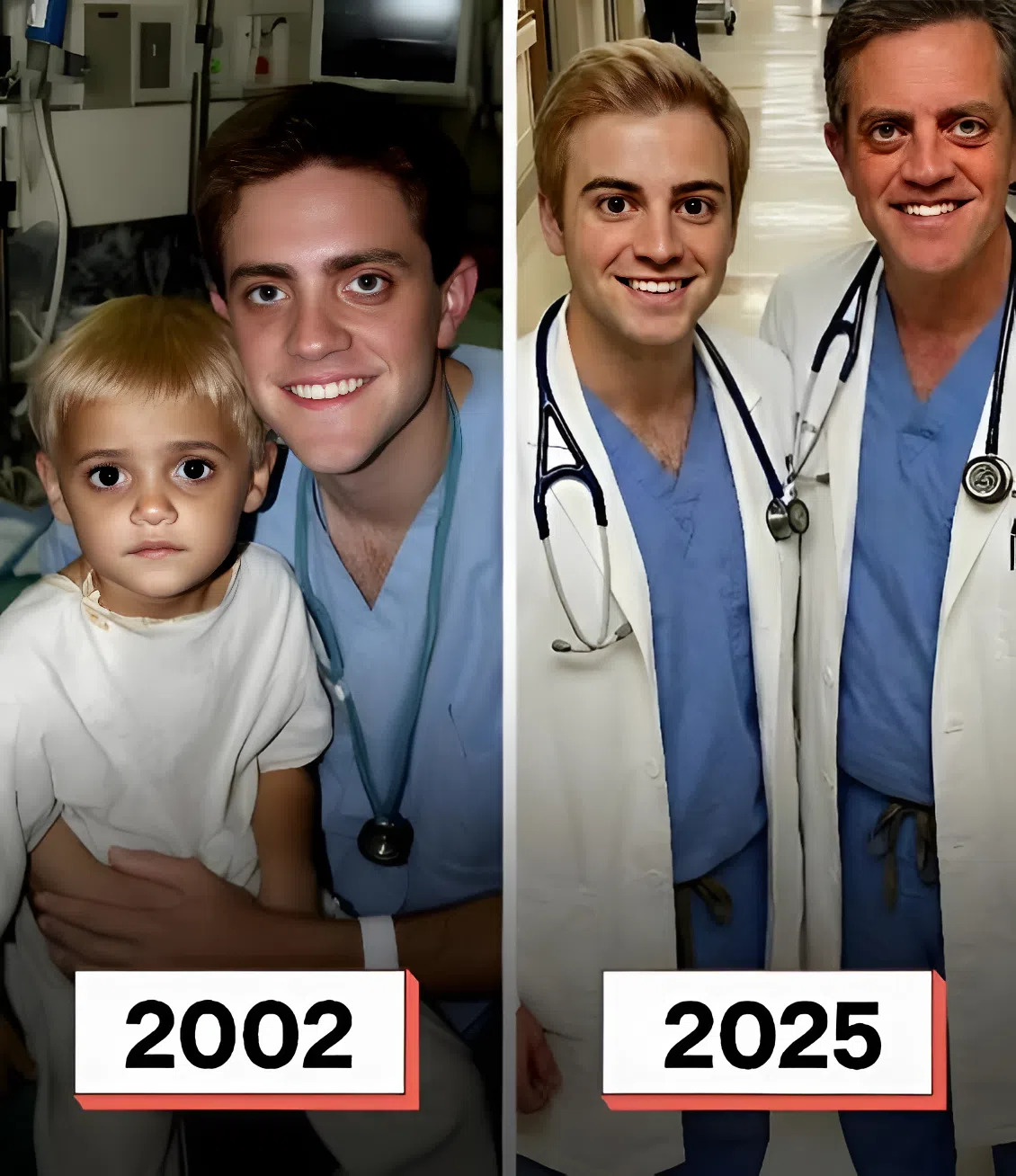
I was working as a paediatric surgeon when I met a six-year-old boy with a heart condition. After I saved his life, his parents abandoned him, and my wife and I decided to raise him as our own child. Twenty-five years later, he froze in the emergency room, staring at the stranger who had saved my wife, recognising the face he had tried to forget.
I had spent my entire career repairing broken hearts, but nothing could have prepared me for the day I met Owen.
He looked so small in that huge hospital bed, his eyes too big for his pale face, and his chart read like a death sentence. Congenital heart defect. Critical. A diagnosis like that takes away childhood and replaces it with fear.
After I saved his life, his parents abandoned him.
His parents sat nearby, looking devastated, as if they had been frightened for so long that their bodies had forgotten how to exist otherwise. Owen kept trying to smile at the nurses. He apologised for needing anything.
God, he was so terribly polite, it broke my heart.
When I went in to discuss the operation, he interrupted me in a quiet voice: ‘Can you tell me a story first? The machines are too loud, and stories help.’
I sat down and made up something on the spot about a brave knight with a ticking clock inside his chest who understood that bravery is not the absence of fear, but being afraid and doing difficult things anyway.
He apologised for needing something.
Owen listened with both hands pressed against his heart, and I wondered if he could feel the irregular rhythm beneath his ribs.
The operation went much better than I had hoped. His heart responded beautifully to the repair, his vital signs stabilised, and by morning he should have been surrounded by relieved, exhausted parents who couldn’t tear themselves away from him to make sure he was real.
Instead, when I walked into his room the next day, Owen was completely alone.
No mother tucking his blanket around him. No father dozing in a chair. No coats, no bags, no signs that anyone had been there at all. Just a stuffed dinosaur sitting limply on a pillow and a glass of melted ice that no one had bothered to throw away.
‘Where are your parents, mate?’ I asked, trying to keep my voice steady, even though something cold was spreading through my chest.
Owen just shrugged. ‘They said they had to go.’
The way he said it made me feel like I’d been punched in the stomach.
The way he said it made me feel as if I had been punched in the stomach.
I checked his stitches, listened to his heart, and asked if he needed anything. All the while, his eyes followed me with desperate hope that perhaps I wouldn’t leave either.
When I stepped out into the corridor, the nurse was waiting with a folder and an expression on her face that told me everything. Owen’s parents had signed all the discharge forms, gathered all the instructions, and then simply left the hospital and disappeared.
They had planned it.
Maybe they were drowning in medical debt. Maybe they thought leaving their son was an act of mercy. Maybe they were just broken people who had made an unforgivable decision.
I stood there staring at the nurses’ station, trying to comprehend what had happened. How could you kiss your child goodnight and then decide never to come back?
That night, I came home after midnight and found my wife, Nora, still awake, curled up on the sofa with a book she wasn’t reading.
She looked at my face and put the book down. ‘What happened?’
I sat down next to her and told her everything. About Owen and his dinosaur… about how he asked for stories because the medical equipment was too loud and scary. About the parents who saved him by bringing him to the hospital and then ruined his life by leaving.
When I finished, Nora was silent for a long time. Then she said something I didn’t expect: ‘Where is he now?’
‘Still in the hospital. Social services are trying to find emergency housing.’
Nora turned to me, and I recognised that look. It was the same expression she had when we discussed having children, starting a family, and dealing with all the dreams that didn’t work out as we had planned.
‘Can we see him tomorrow?’ she asked softly.
‘Nora, we don’t have…’
‘I know,’ she interrupted. ‘We don’t have a nursery or any experience. We tried for many years, and nothing worked out.’ She took my hand. ‘But maybe it wasn’t meant to be that way. Maybe it was meant to be this way.’
One meeting turned into two, then three, and I watched as Nora fell in love with a boy who needed us as much as we needed him.
The adoption process was brutal. The home study and background checks, the interviews that made you question whether you deserved to be a parent.
But none of that was as difficult as watching Owen during those first few weeks.
He didn’t sleep in his bed. He slept on the floor next to it, curled up in a ball, as if trying to disappear. I started sleeping in the doorway with a pillow and blanket, not because I thought he would run away, but because I needed him to understand that people could stay.
For months, he called me ‘doctor’ and Nora ‘madam,’ as if using our real names would make us too real and our loss too painful.
The first time he called Nora ‘mummy,’ he had a fever, and she was sitting next to him with a cold compress, humming something quietly. The word escaped his lips in his sleep, and as soon as his eyes opened, panic washed over his face.
He was sleeping on the floor next to her, curled up as if trying to disappear.
‘I’m so sorry,’ he said, choking. ‘I didn’t mean to…’
Nora’s eyes filled with tears as she stroked his hair. ‘Darling, you should never apologise for loving someone.’
After that, something changed. Not immediately. But gradually, like the sun, Owen began to believe that we weren’t going anywhere.
The day he fell off his bike and badly scraped his knee, he cried out, ‘Daddy!’ before his mind could stop his heart. Then he froze, scared, waiting for me to correct him.
After that, something changed.
I just sat down next to him and said, “Yes, I’m here, buddy. Let’s take a look.” His body relaxed with relief.
We raised him with consistency, patience, and so much love that it sometimes felt like my chest would burst. He grew up to be a thoughtful, determined child who volunteered at shelters and studied as if his life depended on it. Education became proof to him that he deserved a second chance.
When he grew older and began asking difficult questions about why he had been abandoned, Nora never sugarcoated the truth, but she didn’t poison it either.
‘Sometimes people make terrible choices when they’re scared,’ she told him gently. ‘It doesn’t mean you weren’t worth keeping. It means they couldn’t see past their fear.’
Owen chose medicine. Paediatrics. Surgery. He wanted to save children like himself… those who come in afraid and leave with scars that tell stories of survival.
On the day he was accepted into residency at our hospital, he didn’t celebrate the occasion. He came into the kitchen where I was making coffee and just stood there for a minute.
‘Sometimes people make terrible choices when they’re scared.’
‘Are you okay, son?’ I asked.
He slowly shook his head, tears streaming down his face. ‘You didn’t just save my life that day, Dad. You gave me a reason to live.’
Twenty-five years after first meeting Owen in that hospital bed, we became colleagues. We wrote surgical notes together, argued about techniques, and drank terrible coffee in the cafeteria between cases.
You gave me a reason to live.
And then, one Tuesday afternoon, it all came crashing down.
We were immersed in a difficult operation when my pager went off with a code — a personal emergency, redirected through the operating theatre.
Nora. Admissions ward. Car accident.
Owen saw my face go white and didn’t ask any questions. We ran.
Nora was lying on a gurney when we burst in, bruised and shaking but conscious. Her eyes met mine immediately, and I watched her try to smile through the pain.
Nora was lying on a gurney when we burst in.
Owen was instantly by her side, taking her hand. ‘Mummy, what happened? Are you all right?’
‘I’m fine, darling,’ she whispered. ‘A little shaken up, but I’m fine.’
That’s when I noticed the woman standing awkwardly at the foot of the bed.
She was perhaps in her fifties, wearing a worn coat despite the warm weather, with scratched hands and eyes that looked as if they had cried until they were dry. She looked as if she had been living in difficult conditions for some time. She looked painfully familiar.
She looked painfully familiar.
The nurse saw my confusion and quickly explained. ‘This woman pulled your wife out of the car and stayed with her until the ambulance arrived. She saved her life.’
The woman nodded, her voice hoarse. ‘I just happened to be there. I couldn’t just walk away.’
It was then that Owen looked at her for the first time.
I watched my son’s face change as if someone had flipped a switch. The colour drained from his cheeks, and his grip began to loosen.
I watched my son’s face change as if someone had flipped a switch.
The woman’s eyes dropped to where the collar of his surgical gown was slightly raised, revealing the thin white line of his surgical scar — the one I had given him 25 years ago.
Her breathing became audible, and her hand flew instantly to her lips.
‘Owen?!’ she whispered, his name spoken by her lips sounding like a prayer and a confession at the same time.
My son’s voice sounded strained. ‘How do you know my name?’
Then the woman’s tears began to flow, silently and continuously. ‘Because I’m the one who gave it to you. I’m the one who left you in that hospital bed 25 years ago.’
The world seemed to stand still. Nora’s hand found Owen again, and he just stared at this stranger who didn’t seem like a stranger at all.
Why? The word escaped him. ‘Why did you leave me? Where’s my father?’
The world seemed to stand still.
The woman flinched but held his gaze. ‘Your father ran away as soon as the nurse told us how much the operation would cost. He just packed a bag and disappeared.’ Her voice faltered. “And I was alone, scared, and drowning in bills we couldn’t pay. I thought that if I left you there, someone with resources would find you. Someone who could give you everything I couldn’t.”
She looked at Nora and me with something like gratitude mixed with agony. ‘And someone did. You’re a surgeon. You’re healthy… and loved.’ Her voice broke completely. ‘But, God, I’ve paid for that choice every single day since.’
Owen stood frozen, trembling as if he were falling apart. He looked at Nora — his mother, the woman who raised him, who showed him what unconditional love looked like.
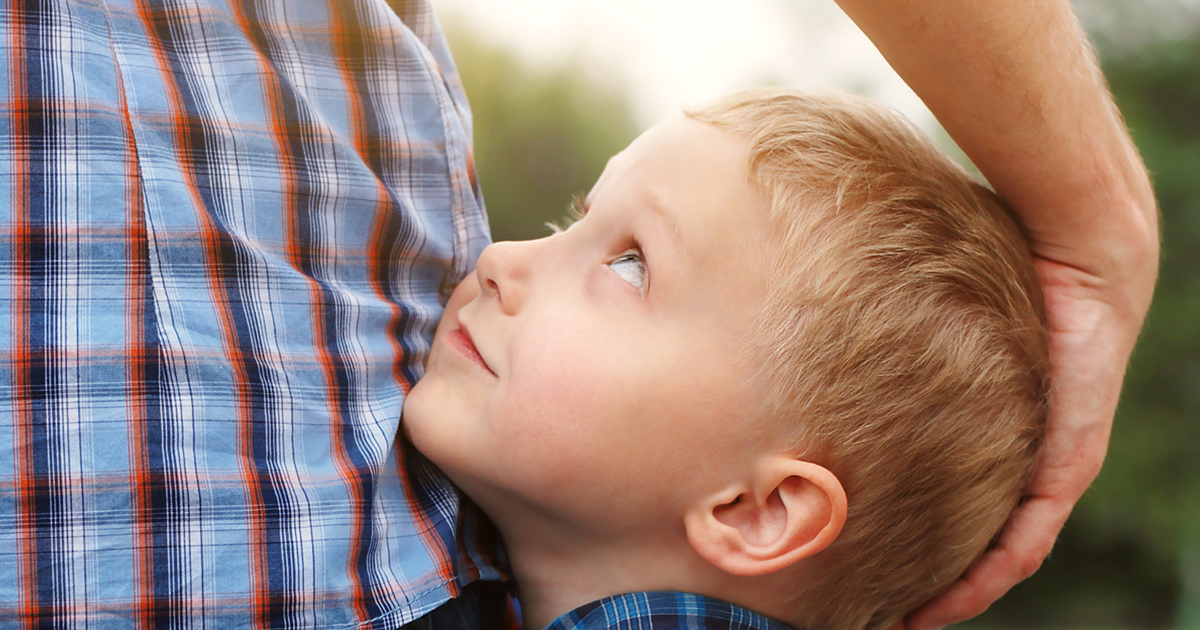
Owen stood frozen, shaking as if he were falling apart.
Then he looked again at the woman who had given birth to him and then made the worst decision of her life. ‘Did you ever think about me?’
Every day, she replied immediately. Every day, every birthday. Every Christmas. Every time I saw a little boy with brown eyes, I wondered if you were okay. If you were happy. If you hated me.
Every day, she replied immediately. Every day, every birthday. Every Christmas. Every time I saw a little boy with brown eyes, I thought you were okay. If you were happy. If you hated me.
Owen’s jaw clenched, and I could see him struggling with something huge.
Finally, he took a step forward and crouched down next to her so he was at eye level. ‘I’m not a six-year-old boy anymore. I don’t need a mother… I have one.’
‘Have you ever thought about me?’
Nora gasped sharply, pressing her hand to her lips.
‘But,’ Owen continued, his voice breaking, ‘but you saved her life today. And that means something.’
He paused, and I could see the battle in his eyes. Then, slowly, carefully, he opened his arms.
The woman fell into him, sobbing.
It wasn’t a happy reunion. It was messy, complicated, and full of 25 years of grief. But it was real.

It wasn’t a happy reunion.
When they finally parted, Owen held her shoulder and looked at Nora. ‘What do you think, Mum?’
Nora, bruised and emaciated, yet still the strongest person in the room, smiled through her tears. ‘I believe we shouldn’t spend the rest of our lives pretending the past didn’t happen. But we also won’t let it define what comes next.’
The woman introduced herself as Susan. We learned that she had been living in her car for three years. She had been passing by the accident, and something inside her couldn’t just walk away. Maybe because she had walked away once and never forgave herself.
We learned that she had been living in her car for three years.
Nora insisted on helping her find stable housing. Owen connected her with social services and medical assistance. It wasn’t about erasing what she had done; it was about deciding who we wanted to be.
That Thanksgiving, we left an extra place at the table.
Susan sat there, looking frightened and grateful, as if she couldn’t believe she was allowed to be there. Owen placed his old stuffed dinosaur in front of her plate.
She picked it up with trembling hands and began to cry.
Nora raised her glass, the small scar on her hairline reflecting the light. ‘To second chances and the courage to take them.’
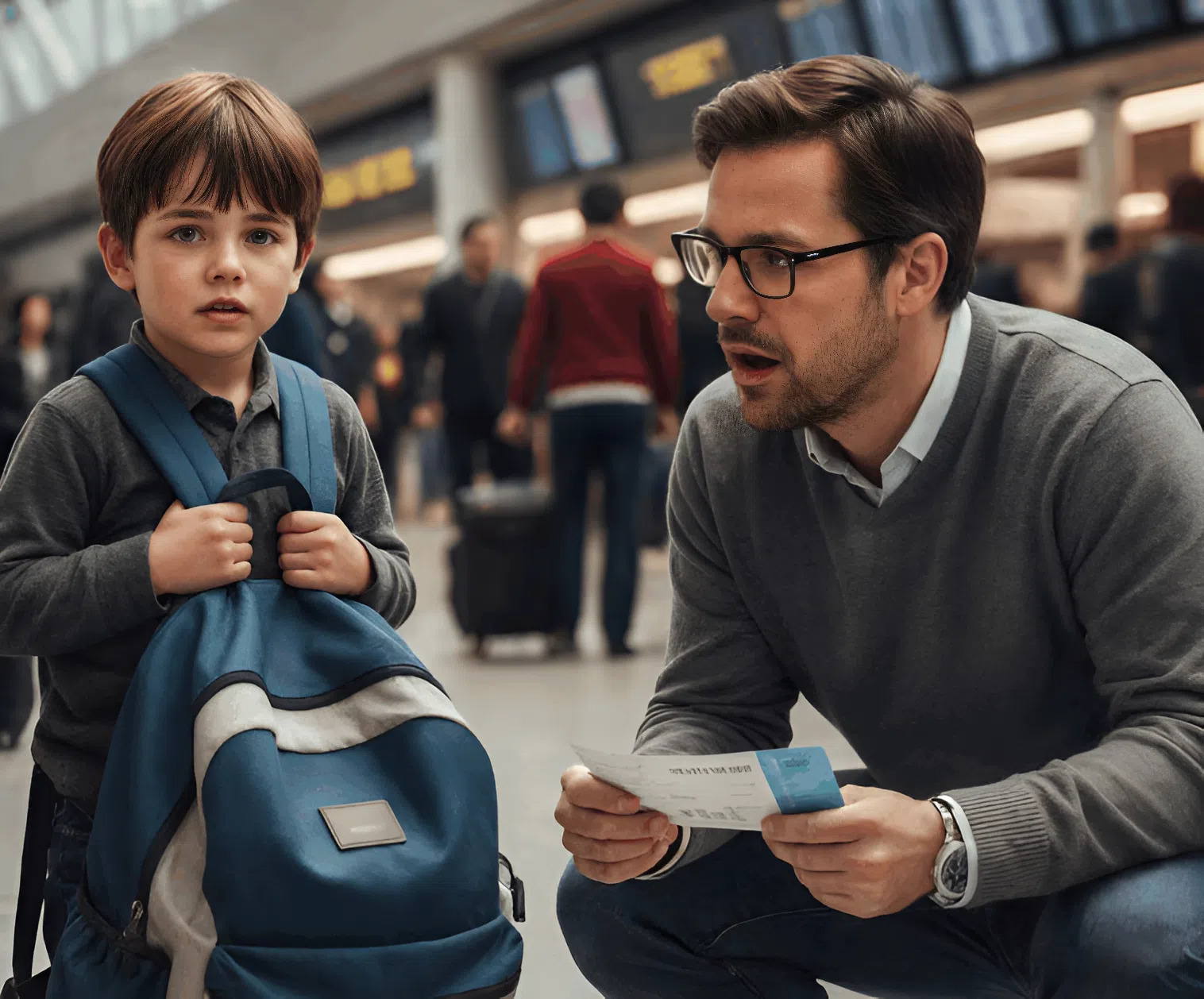
This Thanksgiving, we left an extra place at the table.
Owen added quietly, his eyes moving between his two mothers, ‘And to the people who choose to stay.’
I looked around the table, full of a complex, beautiful family, and understood what I had spent my entire career learning: The most important surgery is not the one you perform with a scalpel. It is the one you perform with forgiveness. With grace. And with the decision to let love be greater than pain.
We saved Owen’s heart twice… once in the operating theatre, and once in a home filled with consistency and care. And somehow, in a strange way, he saved us all in return.
We saved Owen’s heart twice… once in the operating theatre, once in a home filled with consistency and care.