Claire covered his hand with hers.
“Daniel, you’re thirty-two years old. And your daughter walks through this apartment on tiptoe.”
He looked at her.
For a long while, he did not speak.
Then he nodded.
They decided to tell Margaret on Saturday at the cottage.
The place stood beside the river, among vegetable beds and old apple trees, and Margaret was always a little calmer there.
She had her tomatoes, her asters, and her neighbor Nancy, with whom she could spend hours arguing about whose cucumbers grew better.
On Friday evening, Claire baked a plum pie.
Daniel’s father, Peter, loved that kind—tart in the middle and browned around the edges.
The next morning, Sophie hovered beside the car with Annie tucked under her arm.
Ruth had given the doll to her.
Annie wore a yellow knitted hat with a pom-pom, made by Ruth herself in a single evening.
“Mommy, are we going to bother Grandma?” Sophie asked unexpectedly.
“Bother her how?”
“Yesterday she told Aunt Emily on the phone that guests should know when to stop staying.”
Claire crouched beside her and fixed the elastic in her daughter’s ponytail.
“We aren’t guests. And we’re bringing good news.”
Sophie studied her face.
“Good news doesn’t bother people?”
“It shouldn’t.”
August was dry and warm.
A thin mist hovered above the river. The air smelled of cut grass and apples beginning to fall.
Margaret was tying up asters beside the gate.
When she saw the car, she straightened and, instead of saying hello, immediately asked, “Why is the child wearing only a T-shirt? The river wind is cold, and she’s dressed like it’s July.”
Daniel kissed his mother’s cheek.
“Mom, it’s eighty degrees outside.”
“Right now it is. What about tonight?”
Her eyes moved to the pie in Claire’s hands.
“You burned the edge.”
“Dad likes it browned,” Claire replied calmly.
At that moment, Peter stepped out from behind the greenhouse.
He wiped his hands on his work trousers and smiled broadly.
“Well, look who’s here! Sophie, come with me. The raspberries are producing a second crop. They’re so sweet you won’t believe it. I’ll give you a basket, and you can pick them yourself.”
Sophie glanced at her mother first.
She did not say anything.
She was asking permission without words.
Claire nodded.
The little girl ran off with her grandfather at once.
Not on tiptoe.
At the cottage, she ran like an ordinary child.
They ate lunch on the porch.
They talked about beetles in the potato patch, Nancy’s rosebush blooming for the third time that summer, and the rising water bill.
Daniel barely touched his food.
Claire saw him crush a napkin inside his fist.
At last, Margaret poured the tea.
Daniel pushed his cup away.
“Mom, Dad, we need to tell you something. Claire’s parents sold the farmhouse and gave us the money. We’re buying a one-bedroom apartment. We’ll move in about a month.”
The cup in Margaret’s hands stopped halfway to its saucer.
She lowered it slowly.
It made no sound.
“You’re buying one,” she repeated. “You’ve already decided. You didn’t ask us. You didn’t even consult us. You’re simply announcing it.”
“Mom, we’re adults.”
Margaret gave a short, bitter laugh.
“Adults? Daniel, you can’t choose a decent lightbulb without me. And now suddenly you’re buying an apartment.”
She turned sharply toward Claire.
“This was your idea, wasn’t it?”
“Margaret, it was a decision we made together,” Claire said evenly. “We’re grateful for everything you’ve done during these five years. We truly are. But every family needs a home of its own.”
“A home of your own! What do you call this place, a shack? I took you in when you had nothing! I had to teach you how to cook because you made soup like a college freshman. And now that your parents have handed you money, you suddenly think you’re the lady of the house!”
Daniel lifted his head.
“Mom, leave her parents out of this.”
“What did I say?”
“They gave us almost everything they had.”
“And I gave you nothing? What about this apartment? I always said it would be yours.”
“You said it,” Daniel agreed. “But I don’t want to wait another twenty years for it to become mine. I want Sophie to grow up in a home that belongs to us now.”
Peter had remained silent through the argument.
Then he rose quietly, walked into the house, and returned a minute later carrying a small basket.
“Sophie, come on,” he called. “We’re going to Nancy’s place. Her cat had kittens. I’ll show you the orange one—the smallest of the litter.”
He had been married to Margaret for forty years.
He knew that once she began to work herself into a fury, words could no longer repair anything.
The only sensible thing was to remove the child from the storm.
“I raised him to be this way,” Margaret continued, speaking almost to herself. “And now strangers matter more to him than his own mother.”
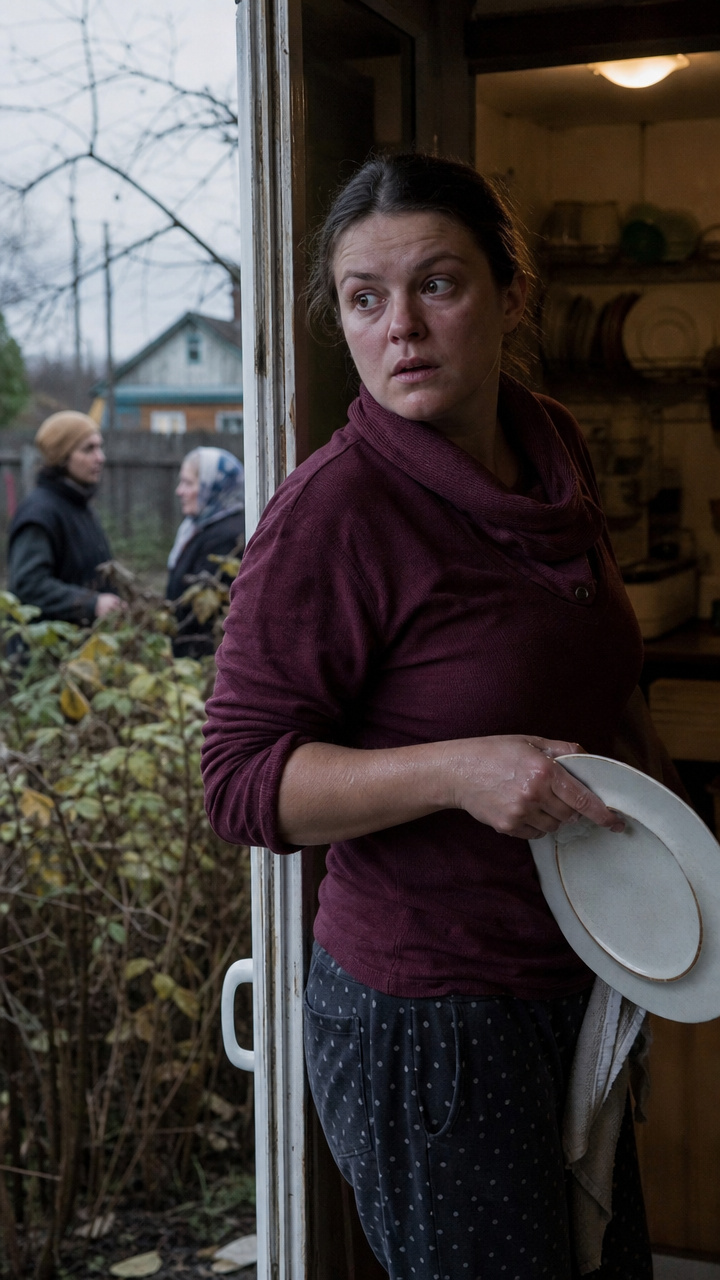
Claire silently gathered the dirty plates and carried them toward the outdoor kitchen.
She had no desire to argue.
During five years in that apartment, she had learned one simple truth.