When I cried because I would never dance or stand in a crowd like other girls, he sat beside me.
“Listen to me,” he said firmly. “You are not lesser. You never have been, and you never will be.”
By the time I reached adolescence, it was clear there would be no miraculous cure.
Most of my life took place inside my room.
My uncle, however, found ways to bring the rest of the universe to me.
He lowered the shelves so I could reach them.
In the garage, he welded together a makeshift stand for my tablet.
For my twenty-first birthday, he built a planter box beneath my bedroom window and filled it with herbs.
“Now you can grow the basil you keep shouting at cooking shows about,” he said.
I began to cry.
“Oh God, Emma,” he said, alarmed. “You hate basil?”
“It’s perfect,” I sobbed.
He looked away, clearly relieved.
“Good. Then try not to kill it.”
Not long after that, he began to change.
At first, he simply moved more slowly.
Then he started resting more often.
He forgot where he had put his keys.
He burned dinner.
He insisted it was nothing but age.
He was only fifty-three.
One afternoon, Mrs. Patel stopped him in the driveway.
“You’re seeing a doctor.”
“I’m fine.”
“You are not fine.”
Eventually, he went.
After the tests, he sat at the kitchen table with the results folded beneath his hands.
“What did they say?” I asked.
For a long time, he did not answer.
Then he said, “Stage four. It’s everywhere.”
“How much time do you have?”
He shrugged.
“They gave me some numbers. I stopped listening.”
He tried to keep everything normal.
He still made breakfast for me, even when his hands trembled.
He brushed my hair while leaning against the dresser because he needed the support, stopping every few minutes to catch his breath.
Eventually, hospice care came to the house.
A hospital bed was placed in the living room.
The machines hummed softly.
Medication schedules covered the refrigerator door.
On the night before he died, he asked everyone to leave.
Even Nurse Allison.
Then he came to me.
He lowered himself carefully into the chair beside my bed.
“Hey, sweetheart.”
I was already crying.
He took my hand.
“Do you know you’re the best thing that ever happened to me?”
“That sounds terribly sad,” I managed, trying to make him smile.
He laughed quietly.
“It’s still true.”
“I don’t know how I’m going to live without you.”
His eyes filled with tears.
“You will live. Do you hear me? You will live.”
“I’m scared.”
“So am I.”
He fell silent.
For a moment, he looked as though he wanted to say something else.
At last, he whispered, “I’m sorry.”
“For what?”
“For things I should have told you a long time ago.”
He kissed my forehead.
“Sleep, Emma.”
The next morning, he was gone.
The funeral was crowded with dark clothes, cold coffee, and people repeating the same sentence.
“He was a good man.”
Everything felt wrong when I came home.
His shoes were still beside the door.
His mug sat in the sink.
The basil beneath my window had begun to fade.
Mrs. Patel came by that afternoon.
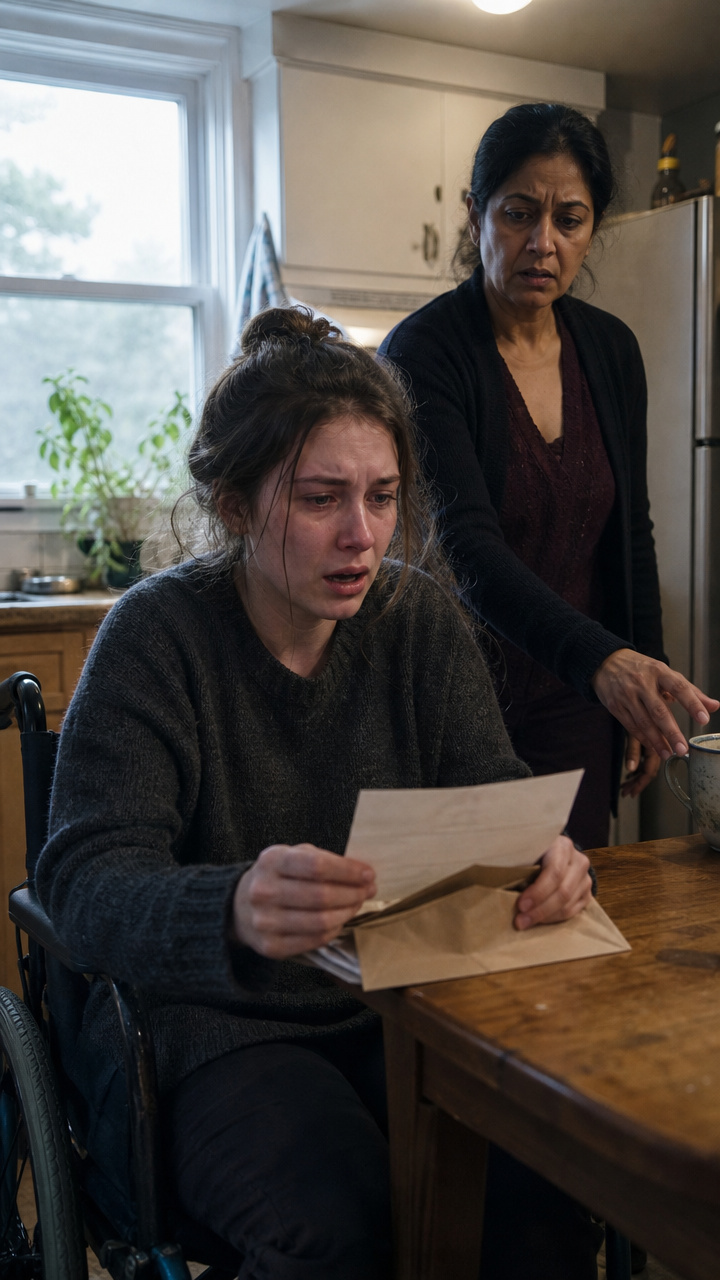
She sat on the edge of my bed and handed me an envelope.
“Your uncle wanted me to give you this.”
My name was written across the front.
My hands shook as I opened it.
There were several pages inside.
The letter began:
“Emma, I have lied to you all your life. I can’t take this lie with me.”
What followed was a story I had never heard.
My parents had planned to leave me with him.
They had been preparing to move to another city.
They did not want to take me with them.
“They told me they couldn’t care for you,” he wrote. “They said you would be better off with me. We argued.”
He described how he had shouted at them.
How he had called my father a coward.
How he had accused my mother of being selfish.
How he had told them they were abandoning their own child.
Then he confessed something even worse.
“I knew your father had been drinking. I saw the bottle. I could have taken his keys. I could have called a cab. I could have forced them to stay. I did none of those things. I let them leave because I wanted to win the argument.”
Twenty minutes later, the phone rang.
There had been a crash.
My parents were dead.
I had survived.
“You know the rest of the story,” he wrote.
Then he admitted something that broke me in a different way.
When he first saw me in the hospital, he had sometimes looked at me as if I were punishment for his own pride and anger.
He even confessed that, at first, he could not bear to be near me.
Not because of who I was.
Because I reminded him of the price of his decision.
Then he wrote:
“You were innocent. The only thing you did was survive. Bringing you home was the last right thing I could do. After that, everything I did was an attempt to pay a debt I could never truly repay.”
Tears blurred the pages in front of me.
Then came another truth.
Money.
All my life, I had believed we were barely managing.
In reality, my parents had carried life insurance.
My uncle had protected the money and kept it untouched.
For years, he had worked overtime.