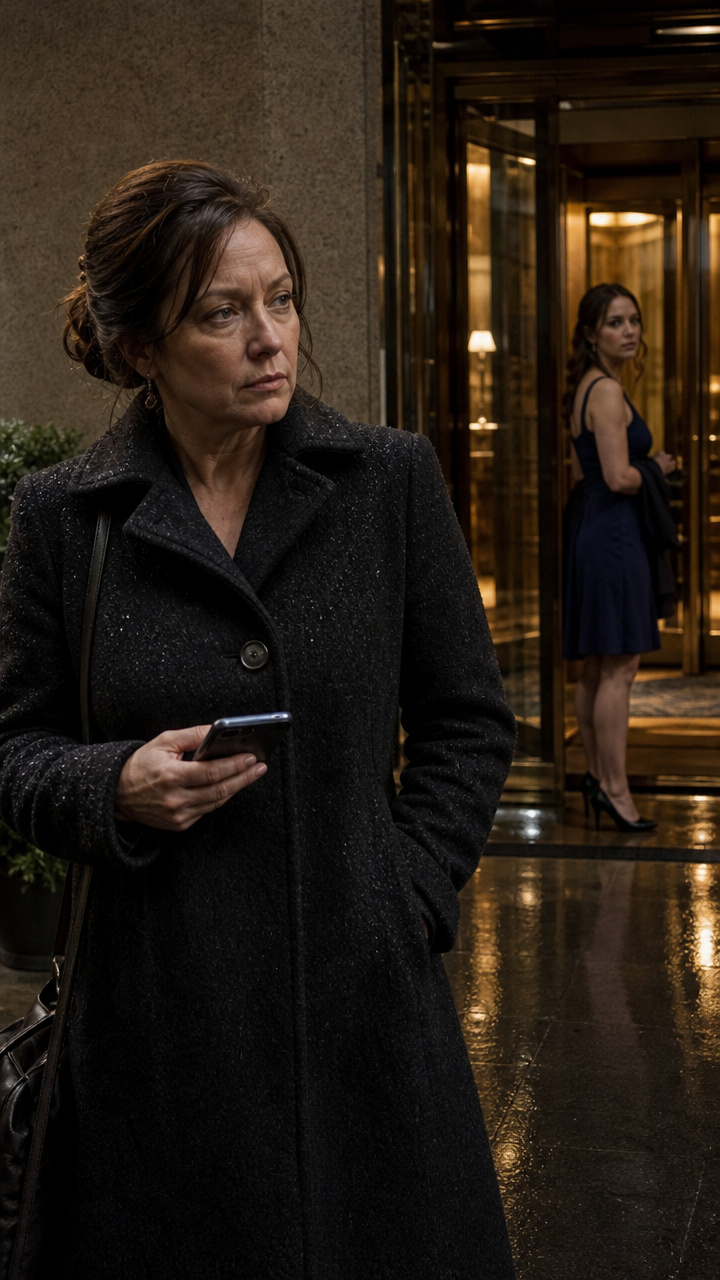
When they moved in, I gave her an additional card with a modest monthly limit for household emergencies.
I expected appliances, repairs, medical expenses.
I rarely reviewed individual purchases because I trusted her.
The statement in the drawer suggested I had been careless.
Restaurants.
Clothes.
Club dues.
Weekend travel.
Luxury purchases.
Nothing illegal.
Nothing technically hidden.
But the card had become a bridge to a lifestyle they could not comfortably maintain.
I thought of Diane telling me the dinner cost more than I earned in a month.
Part of that lifestyle had been indirectly funded by me.
The irony was almost elegant.
The next morning, I called my chief financial officer, Andrew Cole.
“Good morning, Margaret.”
“Good morning, Andrew.”
“Everything all right?”
“Yes. I need the supplementary family card attached to my personal account closed at the end of this billing cycle.”
“Claire’s?”
“Yes.”
A pause.
“Do you want us to dispute anything?”
“No.”
“Reduce the limit?”
“No. Close it.”
“Understood.”
“And pull the condominium file.”
“The Chicago unit?”
“Yes.”
The condominium was not mine. The down payment had been a gift.
But Alderstone owned the commercial floor of the building and had helped negotiate preferred financing through a banking partner.
I wanted to know precisely where my financial involvement ended.
Not so I could take their home away.
I could not, and I would not have done so even if I could.
I simply wanted every invisible support separated from every expectation.
Andrew understood.
“I’ll have the documents by noon.”
At ten, Thomas called.
“How did the event go?” I asked.
“Professionally.”
That was Thomas’s language.
“Any problems?”
“No. Mr. Whitaker became noticeably quieter.”
I smiled.
“And the guests?”
“They enjoyed dinner.”
“Good.”
There was a pause.
Then Thomas said, “Ms. Ellis?”
“Yes?”
“I’m sorry about what happened at the entrance.”
“You didn’t cause it.”
“I know.”
He hesitated.
“But some of the staff saw part of it.”
“I assumed they did.”
“They were uncomfortable.”
“So was I.”
Silence settled between us.
I added, “Please make sure no one turns it into gossip.”
“Already handled.”
“Thank you.”
After the call, I went to the office.
Alderstone headquarters occupied three floors of a renovated warehouse in the River North district.
My office was not the largest.
It had windows, a long table, two bookcases, and one photograph of Daniel and Claire as children.
In the picture, Claire was seven. Her two front teeth were missing. She sat on my lap in a purple sweater, holding a stuffed rabbit.
I looked at the photograph longer than I meant to.
No one raises a child expecting to one day be ashamed of them.
But children grow into adults within influences you cannot control.
The people they marry.
The rooms they want to enter.
The approval they decide they need.
Somewhere between the girl with missing teeth and the woman in the blue dress, Claire had begun to believe that status could protect her from judgment.
I wondered whether I had contributed.
I had raised my children around money while trying not to make money the center of their identity.
Perhaps I had gone too far in the other direction.
I spoke about effort.
Work.
Responsibility.
I rarely explained what we owned.
I wanted them to develop without wealth becoming their identity.
Daniel responded by becoming fiercely independent.
Claire responded by becoming fascinated with social signals I had deliberately ignored.
Perhaps secrecy creates mythology.
The thought irritated me.
At noon, Andrew brought me the condominium file and a summary of my support.
I read every page.
The down payment was unconditional.
Good.
The family card belonged to me and could be closed.
Good.
There was one additional recurring payment I had forgotten: the homeowners’ association dues.
I had paid them automatically as part of the original support arrangement.
Nearly eighteen months.
I stared at the line.
I had told Claire I would cover them for the first year.
She had never reminded me to stop.
I had never noticed.
That was also my responsibility.
I called Andrew.
“Stop the HOA payments after this month.”
“Okay.”
“Send Claire notice that the support arrangement is ending. Keep it simple.”
“Do you want me to explain why?”
“No.”
Financial boundaries do not need emotional footnotes.
That afternoon Diane called again.
This time, I answered.
“Margaret.”
Her voice had lost its usual polish.
“Diane.”
“I owe you an apology.”
“Yes.”
A small silence followed.
“I behaved terribly.”
“Yes.”
Another silence.
“You’re not going to make this easy.”
“I’m listening.”
She exhaled.
“We judged you incorrectly.”
“There’s something you still don’t understand.”
“What?”
“The problem isn’t that you miscalculated my net worth.”
Silence.
“The problem is that you believed a woman with less money deserved worse treatment.”
Diane did not respond.
“If I had been exactly what you thought I was—a retired bookkeeper in an old coat—everything you said would still have been wrong.”
Her voice softened.