I let them finish.
Then I corrected their figures.
By thirty-five, I held interests in twenty-seven residential units.
At forty, I moved into small commercial properties.
At forty-three, after a recession damaged several hospitality businesses, I bought my first modest hotel with two partners.
People told us we were crazy.
Perhaps we were.
The lobby carpet was burgundy. The plumbing belonged in a museum. Half the rooms still had televisions so deep they could have served as furniture.
But travelers still needed beds.
Businesspeople still needed conference rooms.
Families still attended weddings.
Buildings could be repaired.
Bad numbers could not.
Our numbers worked.
The hotel became profitable within three years. We bought another, then another.
By my mid-fifties, Alderstone Hospitality and Property Group had become a privately held company with apartment buildings, mixed-use developments, three boutique hotels, two conference properties, and minority positions in several restaurants.
My personal wealth grew far beyond anything I had imagined when I was twenty-one and balancing rent collections during my lunch break.
Very few people outside my professional circle knew its full extent.
That was intentional.
Alderstone had executives, general managers, property administrators, and a chief financial officer whose photograph appeared in business magazines more often than mine.
I preferred boardrooms to interviews.
Contracts to charity galas.
Property inspections to recognition.
My children knew I had done well.
They knew I invested in real estate.
They knew I could help when necessary.
But I never gave them a number.
Daniel understood me. He became an engineer, moved to Portland, and seemed mostly relieved that my money did not require him to join my company.
Claire was different.
She loved beauty.
Style.
Rooms where everyone seemed to know which fork to use.
There was nothing wrong with that.
The trouble began when she started confusing appearance with character.
Ethan accelerated the process.
She met him at twenty-six.
He was handsome, polished, and remarkably skilled at moving through social settings without ever appearing uncertain.
His father, Richard, owned a regional import business that had done well fifteen years earlier and become increasingly dependent on borrowed money as competition changed.
I knew because I paid attention.
Not because I intended to interfere with my daughter’s marriage.
I had spent four decades reading financial statements, and Richard spent too much time telling strangers how wealthy he was.
People who are genuinely secure rarely lead with numbers.
Richard led with restaurants, cars, watches, private clubs, and the families he knew.
Diane was no different.
The first time we met, she asked where I lived before asking what I did.
“Outside Boulder,” I said.
“Oh.”
Her eyes dropped to my boots.
“Do you own land?”
“A little.”
“How charming.”
I smiled.
She imagined I had a small house near the foothills.
I did.
She did not ask about the apartment complex twelve miles away, the downtown office building, or the hospitality group.
So I volunteered none of it.
At dinner, Richard asked, “What line of work were you in, Margaret?”
“Property.”
“Residential?”
“Some of it.”
He nodded with the indulgence of a man who believed I might own a rental condominium.
“Real estate is difficult on a small scale.”
“Yes.”
I nearly laughed.
Claire heard him.
Under the table, she kicked my ankle.
Later, in the car, she said, “Why didn’t you explain?”
“Explain what?”
“What you actually do.”
“They didn’t ask.”
“Mom.”
“What?”
“You let them think you manage a few small rentals.”
“I do manage rentals.”
“That’s not all.”
“No.”
“Then why not tell them?”
I looked at her.
“Why does it matter?”
She sounded frustrated.
“Because they judge people.”
“Then telling them I have money wouldn’t make them judge me less.”
She stared out the window.
“It would make them respect you.”
That sentence worried me.
“Claire.”
“What?”
“If someone needs my financial statement before offering basic respect, I don’t want the updated version.”
She did not answer.
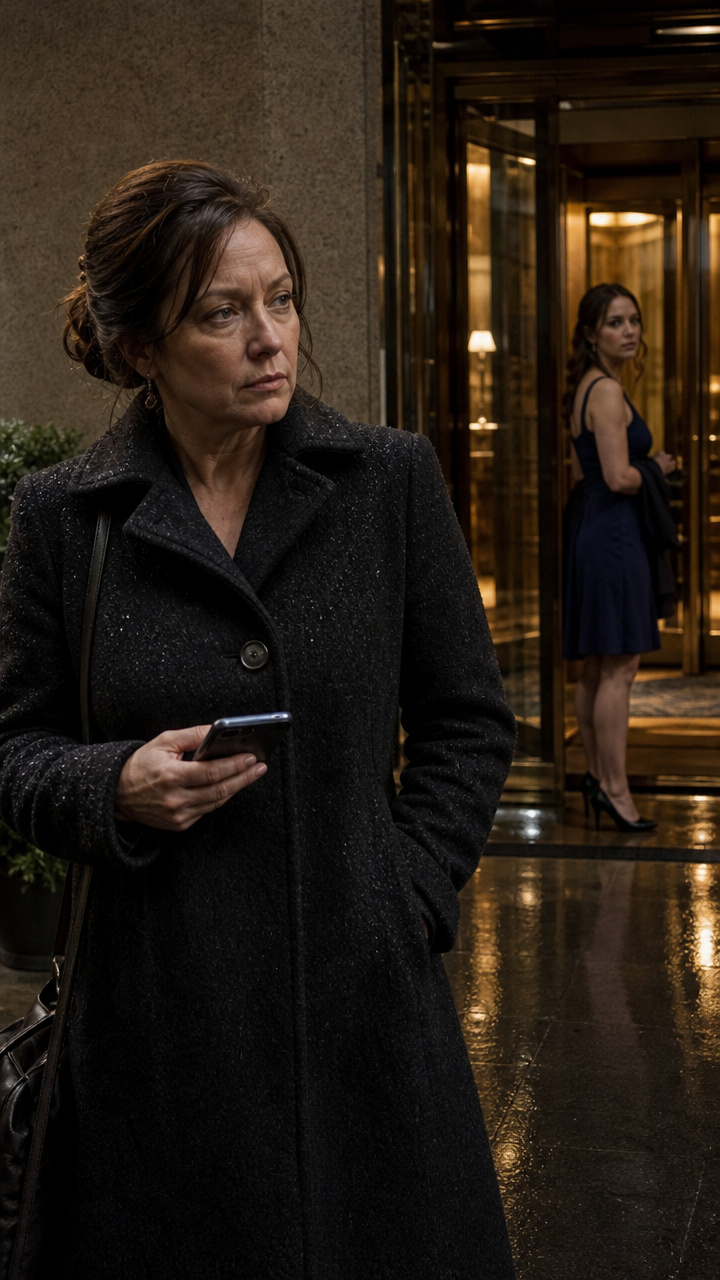
Two years later, she stood outside one of my hotels and asked me not to come inside because my coat embarrassed her.
Life has a sense of humor.
The hotel was called Bellwether House.
Alderstone had bought it four years earlier through a holding company. It occupied a restored limestone building near Union Station, with seventy-eight rooms, a rooftop restaurant, a small ballroom, and one of the most beautiful winter terraces in the city.
I loved the property.
Not because it was our most profitable.
It wasn’t.
I loved it because the renovation had been difficult enough to become personal.
We preserved the original marble staircase. We restored the brass elevator doors another owner wanted to replace. We kept the carved molding in the lobby, even after the contractors complained for months.
I knew which boiler had been replaced, which suite had suffered a plumbing failure during reopening week, and which rooftop heaters failed whenever the wind came from the west.