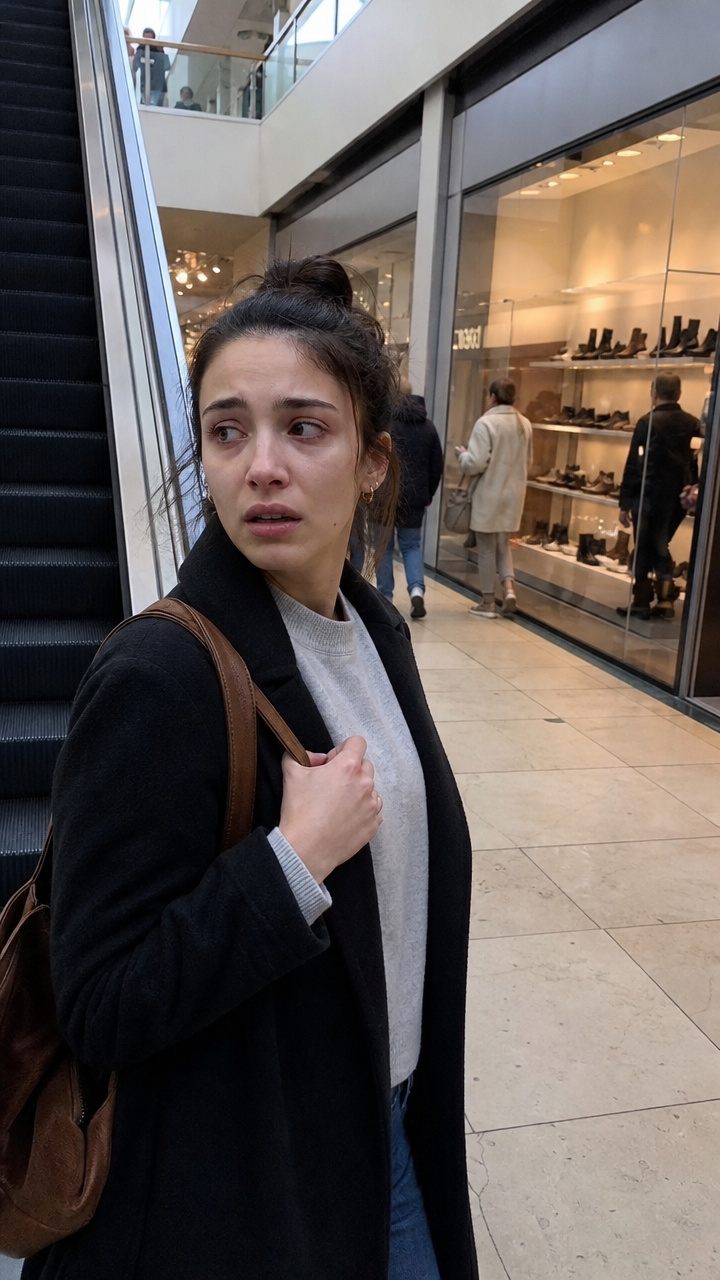
“Cruel was letting me wait for three years for something you never intended to do.”
“I never made you any specific promises.”
That was when I finally understood everything.
Technically, he was right.
He had never said, “I will divorce her on this particular date.”
He had not promised me a house.
He had not bought me a ring.
He had never given me a deadline.
He had only created the constant impression that there would be a future.
Soon.
When the children are older.
Not now.
Be patient.
Just enough hope to keep me waiting.
“Leave,” I said.
“Claire, don’t do this while you’re upset. Let’s talk calmly.”
“We’ve been talking for three years. I have heard enough.”
“You’re emotional right now.”
“Maybe I am.”
I stood up.
“But my decision is still the same. Leave. And never come here again.”
For several more minutes, he tried to explain himself.
Then he realized there was no point.
He rose.
Put on his coat.
And walked out.
The flowers remained on the table.
So did the wine.
I threw the bouquet into the trash immediately.
The bottle went in after it.
It was probably childish.
An action born of anger.
Then I sat on the floor beside the kitchen cabinet and cried.
But I was not crying only for Daniel.
I was crying for myself.
For the twenty-six-year-old woman who had believed him.
For the three years I had lost.
For every Tuesday and Thursday.
For all the evenings that could have belonged entirely to me.
For the life I might have had with someone who did not have to leave at ten.
Daniel called.
The next day.
Two days later.
A week afterward.
He sent messages.
“Claire, I need you.”
“Please, let’s talk.”
“I can’t live without you.”
At first, I read them.
Then I stopped.
I never answered a single one.
After a month, I blocked his number.
I understood that every new notification was a tiny hook.
And I did not want to be caught on it again.
I spoke to Hannah only after two months had passed.
I went to her apartment.
We sat in the kitchen.
And I told her everything.
The escalator.
His hand on his wife’s shoulder.
The little girl.
The scarf.
The laughter.
Hannah listened in silence.
She never once said, “I warned you.”
She did not say, “You brought this on yourself.”
She simply listened and kept refilling my tea.
“Do you know what the worst part is?” I asked.
“What?”
“Not even the lies.”
Hannah waited.
“The worst part is that I spent three years hating a woman I had never even met.”
I stared down into my cup.
“I invented her. I made her dull, cold, gray, dressed in an old robe and slippers. I needed to turn her into a cardboard figure because then I didn’t have to feel guilty.”
Hannah said nothing.
“But she’s real. Do you understand? She’s a living person.”
I drew a deep breath.
“She is me ten years from now.”
“What do you mean?”
“She’s just another woman. She loves her husband. She waits for him to come home. She texts, ‘Buy milk. Love you.’ She probably tells herself he was held up in a meeting. That traffic was bad. That some urgent problem came up.”
I gave a small, bitter smile.
“Meanwhile, her husband is coming to me.”
Hannah lowered her eyes.
“And she believes him,” I said. “Exactly the way I believed I was special.”
For several minutes, neither of us spoke.
Then Hannah said:
“You’re not responsible for his choices.”
I shook my head.
“No. Falling in love probably isn’t a crime. But I am responsible for something else.”
“For what?”
“For choosing not to think for three years.”
I looked at my friend.
“I didn’t want to think about her. Or the children. Or what was happening in their home while he sat with me. It was easier to think only about my feelings. About being ‘special.’ About how difficult it was to wait.”
I wiped my eyes.
“That was selfish too. Just beautifully packaged. Flowers, wine, declarations, and expensive cologne. But it was still selfish.”
“He is at least as responsible as you are.”
“Of course.”
I nodded.
“But his actions belong to him.”
Then I added:
“And mine belong to me.”