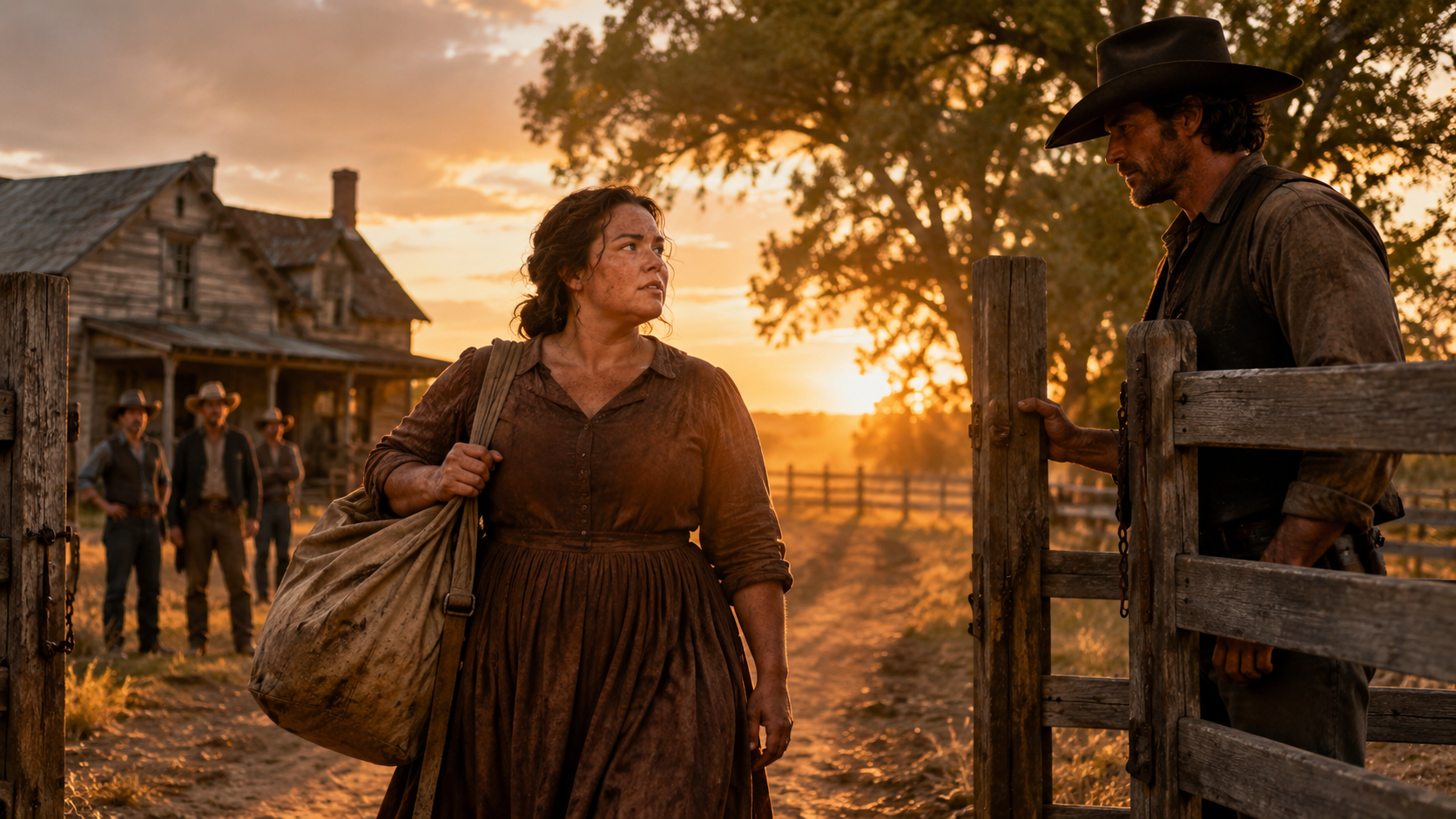
If you find this, then I have trusted silence too long, but never because I doubted you. I hid these papers where men would not look, among recipes, because men like Asa Crowe think kitchens are small places. Remember this: a kitchen is where hunger comes to be humbled. A table is where truth can sit down. Feed people if you can. Face them when you must. And never let any person convince you that taking up space is the same as taking what is not yours.
Elsie’s voice broke only once.
When the verdict came, it was not mercy.
Asa Crowe was sentenced to prison. His holdings were frozen. Fraudulent deeds were overturned. Water claims were returned. Families who had lost land began the long, imperfect work of claiming pieces of their lives again.
The Rowan farm was restored by court order.
Black Creek’s water rights were protected.
And Hollow Bend, which had spent years bowing politely before a thief, had to learn the awkward art of standing upright.
Autumn came gold and sharp.
One evening after the first frost silvered the fence rails, Gideon asked Elsie to walk with him beneath the cottonwoods.
She wore a blue shawl. He carried his hat in both hands.
“Miss Rowan,” he said.
“Mr. Hale.”
“I have been trying to say something for a month.”
“I know.”
He looked startled.
“You know?”
“You stand in the kitchen doorway like a man hoping bread will rise faster if he looks sorry enough.”
A laugh escaped him, low and surprised. It was the first full laugh she had heard from him.
Then he grew quiet.
“I hired you because I needed a cook,” he said. “But I opened my gate because you stood there tired, bruised, and proud enough to make shame look small. Since then, I have watched you feed the hungry, face the cruel, forgive slowly, speak plainly, and build a place where half this county found courage it had misplaced.”
Elsie looked toward the creek.
Gideon continued, “I loved my wife. I will always honor her. For years I thought honoring her meant leaving the house empty exactly as she left it. Then you walked into my kitchen and filled it with coffee, biscuits, argument, truth, and life.”
Her eyes burned.
He did not reach for her.
“I am asking whether, one day, when you are ready and not before, you might consider marrying me.”
Elsie closed one hand around the fence rail.
“Gideon.”
It was the first time she had used his given name.
He heard it. She knew he did.
“I will not say yes tonight.”
“I know.”
“I will take the winter. I will watch how you speak when cattle are thin and snow is mean. I will watch how you treat tired men, frightened women, stubborn horses, and bad news. I will watch whether kindness in you is a visitor or a resident.”
He nodded.
“Fair.”
“And in spring,” she said, “when the cottonwoods green, I will give you my answer.”
Gideon put his hat back on.
“I can wait for spring.”
Elsie looked at him and let herself smile.
“I believe your answer will be worth waiting for.”
Winter came hard.
Snow buried the fence lines. The men ate in the kitchen on the coldest nights. Marietta visited at Christmas with a goose and three opinions about stuffing, all of which Elsie listened to before making the stuffing her mother’s way. Marietta ate four helpings and pretended not to enjoy any of them.
Caleb Morris became the first to apologize properly.
He came to the kitchen one morning with his hat crushed in both hands.
“Miss Rowan,” he said, “I judged you before I knew you.”
“Yes.”
“I laughed because I was foolish.”
“Yes.”
“I’m sorry.”
Elsie handed him a tray of biscuits.
“Take these to Silas before they cool.”
He blinked.
“That’s all?”
“No. After that, scrub the pantry shelves.”
He smiled.
“Yes, ma’am.”
By February, the old Rowan farm had become a refuge for three families waiting on court papers. Elsie leased the pasture to Black Creek for one dollar a year and kept the smokehouse for herself. She told Widow Pike that a house once stolen should be lived in loudly.
In April, Mrs. Adelaide Finch came to the ranch.
She stood on the porch with a basket in her hands and shame written plainly across her face.
“Miss Rowan,” she said.
“Mrs. Finch.”
“I should have stopped the wagon on the bridge.”
“Yes,” Elsie said. “You should have.”
The woman’s eyes filled.
“I have spoken of mercy all my life. That day, I discovered I preferred mercy when it did not inconvenience me.”
Elsie let the truth sit between them.
Then she said, “You are here now.”
“That does not erase it.”
“No. But it begins something else.”
Mrs. Finch left flour, dried apples, and coffee in the basket. Elsie used the apples in pies the next day and sent one to the church with no note.
On the first Sunday in May, the cottonwoods opened their green leaves to the sun.
Elsie found Gideon by the porch rail.