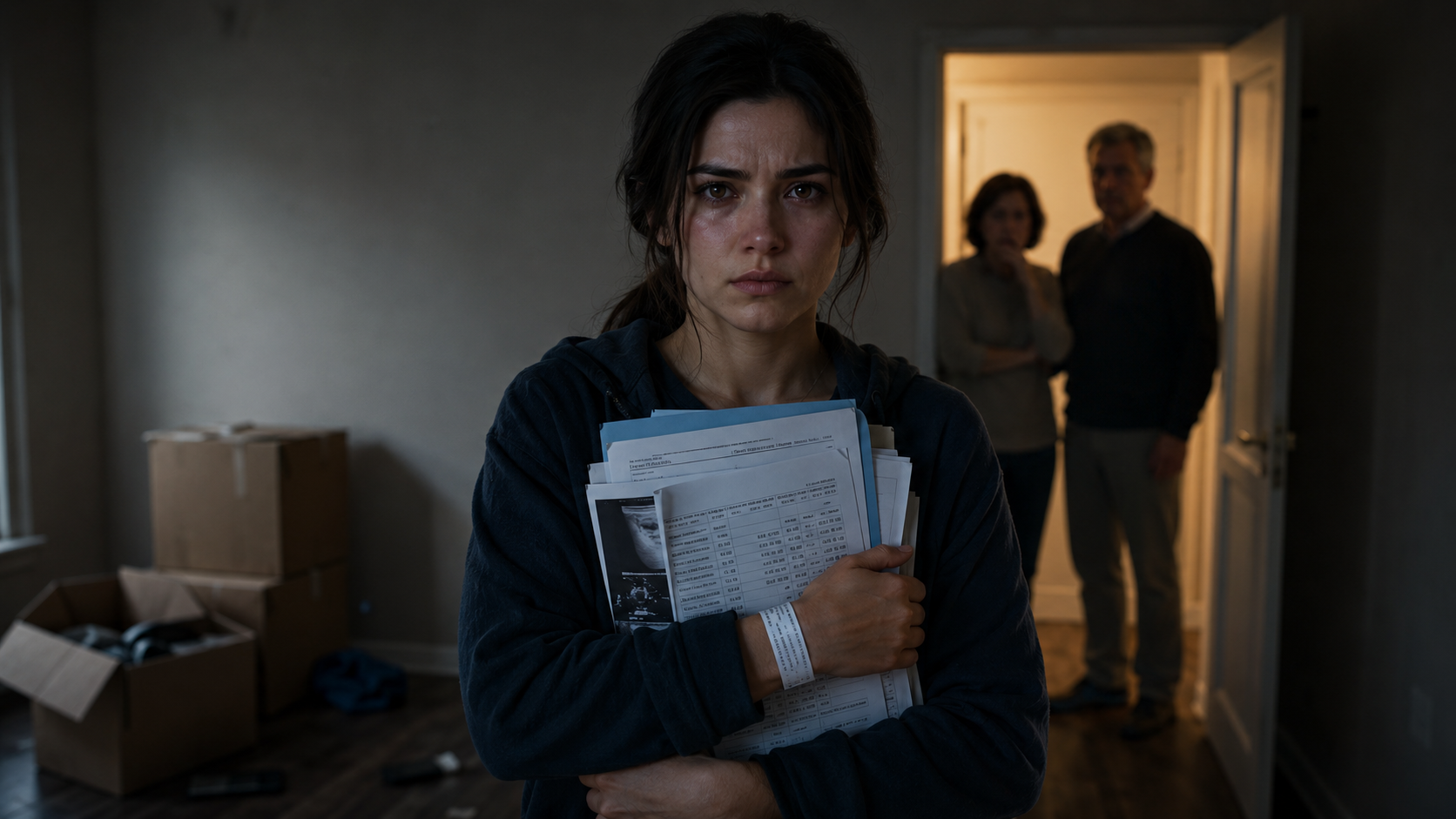
Because something rotten had been forced to feed something good.
Mr. Keane testified in a separate hearing.
He wore his cardigan.
He brought his notebook.
My father refused to look at him.
My mother looked at him like he had betrayed her personally by refusing to remain useful and poor.
Afterward, I found Mr. Keane sitting outside the courthouse, hands folded over his cane.
“I’m sorry,” he said again.
I sat beside him.
For a while, we watched people move in and out of the courthouse with folders and coffee cups and faces full of private disasters.
Then I said, “I was angry at you.”
He nodded.
“You should be.”
“I still am a little.”
“You should be that too.”
I looked at him.
“But you kept the truth.”
His eyes filled.
“My wife used to say cowardice is not always one big thing. Sometimes it’s a hundred small silences.”
I thought about Julian.
About myself.
About all the years I had swallowed words to keep dinner peaceful.
“She sounds smart,” I said.
“She was terrifying.”
I smiled.
“I would have liked her.”
“She would have liked you.”
That hurt in a good way.
Before I left, he handed me a small envelope.
“I forgot this was in the office drawer until last week.”
Inside was a photograph.
My old apartment, before everything.
My green bedroom wall visible through the open door.
My desk covered in papers.
My grandmother’s wooden watch case sitting beside my lamp.
And there, on the edge of the frame, my own reflection in the hallway mirror, blurred but unmistakable.
Alive.
Busy.
Mine.
I kept that photo.
Not because I wanted to live inside what they took.
Because I wanted proof of what I had built before they tried to turn it into a ghost story.
One year after the settlement, I moved into an apartment with better light.
Not bigger by much.
Not fancy.
But the door had a new lock, and only three people had keys.
Me.
Tessa.
The cat sitter, because my orange disaster of a cat had strong opinions about meal schedules.
Julian texted sometimes.
Not often.
Never demanding.
The first message came three months after court.
I started therapy today. I told the truth about what happened. I’m sorry I waited until consequences made honesty safer than silence.
I read it twice.
Then I put the phone down.
I did not answer that night.
But I did not block him.
That was not forgiveness.
Not exactly.
It was a door still closed, but no longer nailed shut.
Sometimes that is enough for one day.
My parents moved to another town.
They told a softer version there.
A sad version.
A version where everyone had suffered, mistakes had been made, and their daughter had been “influenced by outsiders.”
Some relatives believed them.
Some relatives did not.
A few sent me messages about forgiveness.
Most of those messages came from people who had never once asked where I slept after surgery.
I stopped answering them.
Instead, I built.
I rebuilt my design studio.
I took clients again.
At first, small ones.
Then better ones.
Then the kind I used to think were impossible.
My work changed.
It became cleaner.
Braver.
Less apologetic.
Tessa said betrayal had given me excellent brand discipline.
I told her that was an awful thing to say.
She said awful did not mean inaccurate.
We laughed until my cat ran out of the room offended.
On the second anniversary of the day they emptied my apartment, I did something strange.
I took the day off.
Not to mourn.
To mark ownership.
I bought pancakes at a café I used to avoid because twelve dollars for breakfast had once felt irresponsible.
I bought a green velvet chair because I liked it.
I framed Mr. Keane’s photo.
Then I went home, placed the chair by the window, and watched my cat claim it within thirty seconds.
That evening, I opened the first binder.
The tabs had faded.
Hospital.
Messages.
Property.
Money.
Witnesses.
Legal.
I ran my fingers over them and thought of the woman who made those labels while weak, broke, shaking, and terrified that truth would not matter if lies were loud enough.
I wanted to reach back to her.
Not to tell her everything would be easy.
It would not.
Not to tell her justice would feel clean.
It rarely does.
Not to tell her family would understand.
Some people prefer losing you to admitting what they did.
I wanted to tell her something simpler.
They can empty a room.
They can sell your tools.
They can turn your name into a memorial.
They can collect sympathy over a grave they invented.
But they cannot make you dead while you are still willing to breathe.
They cannot erase someone who learns to keep records.
They cannot bury a woman who becomes her own witness.
I closed the binder.
Not forever.
Just for the night.
Then I turned on my lamp, opened my laptop, and started a new project.
On the first blank page, before the client name, before the sketches, before the work, I typed two words for myself.
Still here.
And I smiled.
Because I was.
Not just alive in the medical sense.
Not just legally alive.
Not just breathing inside a body my parents had tried to turn into evidence against me.
Alive in an apartment no one could enter without permission.
Alive with friends who stayed.
Alive with a name I chose.
Alive with records, receipts, witnesses, and a voice that no longer shook when I used it.
My parents told everyone I died.
But what they forgot was simple.
Dead women don’t keep receipts.
Dead women don’t sign affidavits.
Dead women don’t walk into court wearing the truth like armor.
And dead women do not come back to collect what was stolen.
I was never dead.
I was gathering proof.